Uvod
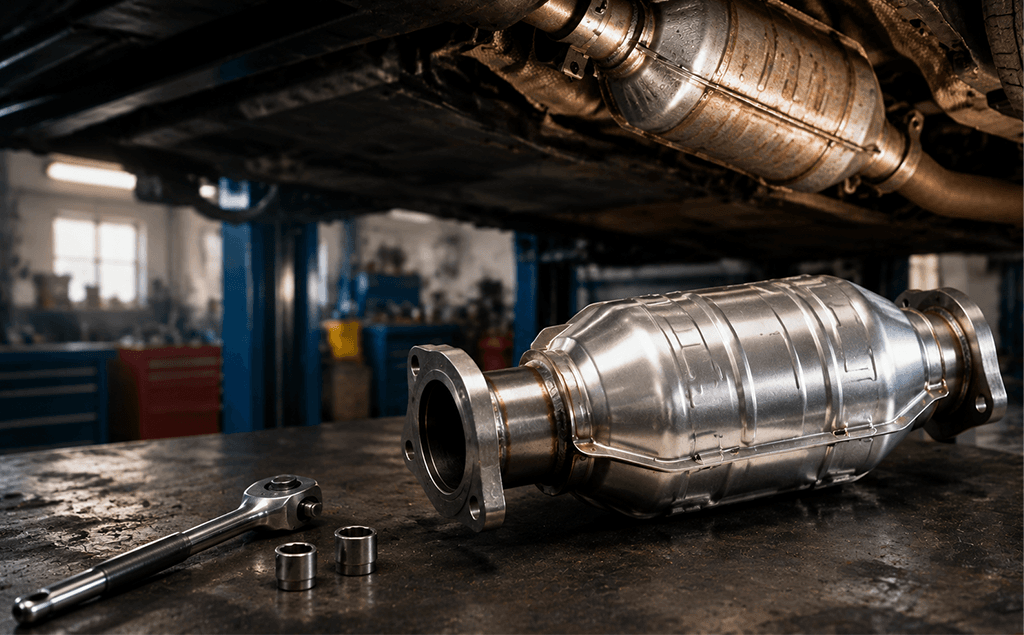
Modern automotive engineering relies heavily on the trosmjerni katalizator to manage harmful emissions. This device acts as a miniature chemical factory beneath your vehicle. It converts toxic gases into safer substances before they enter the atmosphere. The efficiency of this process depends almost entirely on Platinum Group Metals (PGMs).
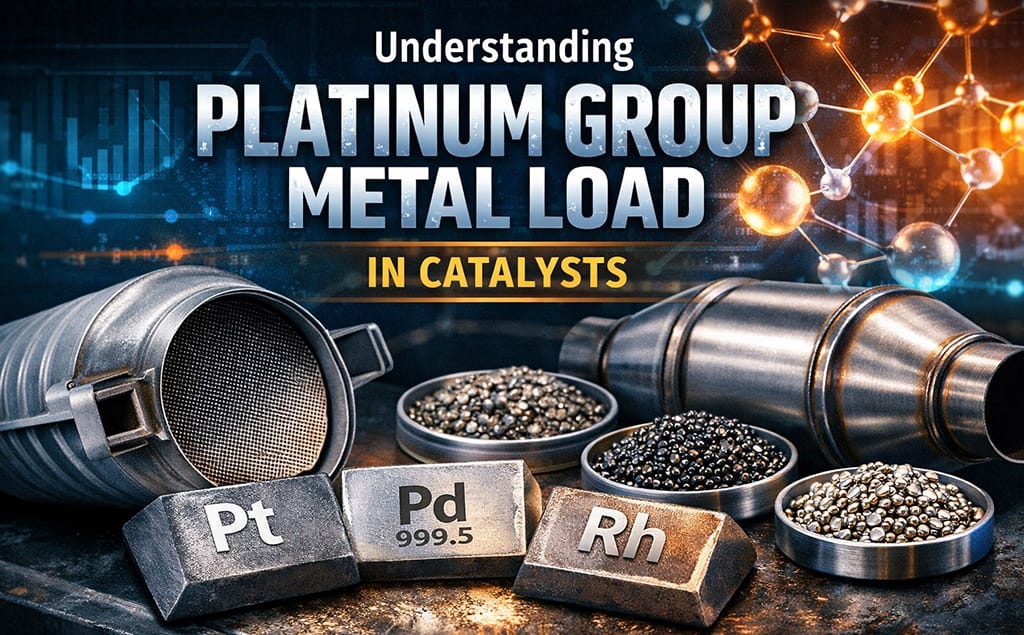
PGM load refers to the specific weight and ratio of precious metals applied to the catalyst support. Engineers must balance chemical activity with material costs. They disperse metals like Platinum, Palladium, and Rhodium on a specialized surface. This article explores how PGM loading affects performance, durability, and the global market. We will examine the technical nuances of the trosmjerni katalizator and the rare metals that power it.
What Are PGMs and Why Do They Matter?
Platinum Group Metals (PGMs) consist of six distinct elements. These include Platinum (Pt), Palladium (Pd), Rhodium (Rh), Ruthenium (Ru), Iridium (Ir), and Osmium (Os). These metals share unique physical and chemical properties. They possess high melting points and incredible resistance to corrosion. Most importantly, they act as superior catalysts.
A catalyst speeds up a chemical reaction without being consumed. In a trosmjerni katalizator, PGMs facilitate the breakdown of pollutants. Without these metals, car exhaust would contain high levels of carbon monoxide, unburnt hydrocarbons, and nitrogen oxides. The industry relies on PGMs because no other materials offer the same thermal stability and catalytic efficiency.
Technical Breakdown of the Three Way Catalytic Converter
The trosmjerni katalizator earns its name from its ability to handle three specific pollutants simultaneously. It manages Carbon Monoxide (CO), Hydrocarbons (HC), and Nitrogen Oxides (NOx). To achieve this, the device utilizes a complex internal structure.
- The Substrate: Most converters use a ceramic honeycomb structure. This design provides a massive surface area within a small volume.
- The Washcoat: Manufacturers apply a porous layer of aluminum oxide over the substrate. This layer increases the effective surface area further.
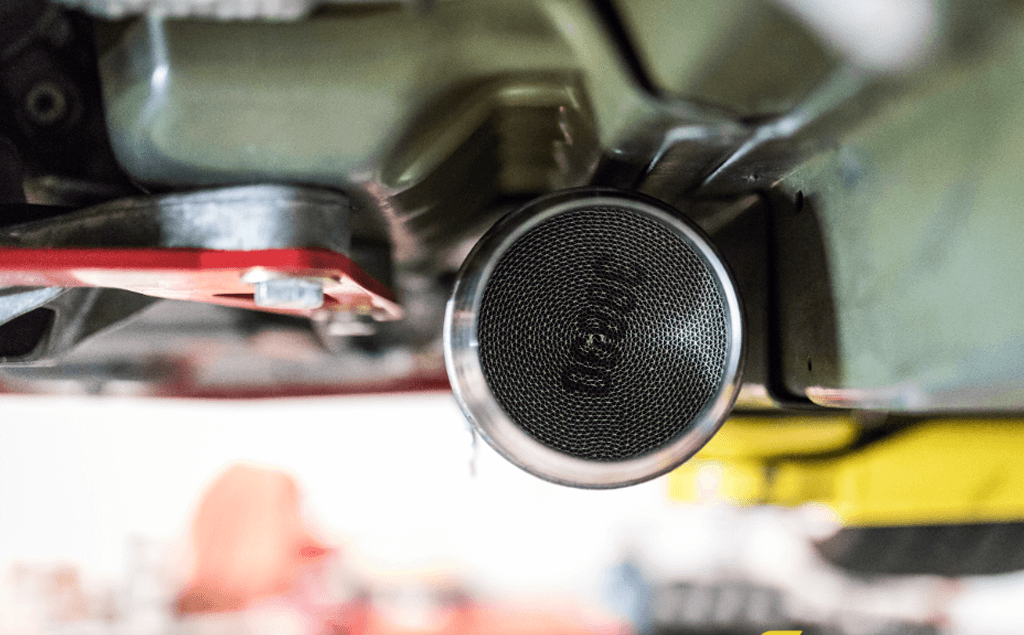
- The PGM Load: The actual precious metals sit on the washcoat. Engineers spray a solution containing Pt, Pd, or Rh onto the surface.
The “load” determines the converter’s lifespan and its ability to meet emission standards. A higher PGM load generally leads to a lower “light-off” temperature. This means the catalyst starts working sooner after you start the engine.

The Role of Washcoat Technology in PGM Distribution
Efikasnost trosmjerni katalizator depends on how engineers distribute the PGM load. A simple coating is not enough. The washcoat serves as the staging ground for chemical reactions. It often contains “promoters” like Ceria (CeO2) and Zirconia (ZrO2).
Ceria acts as an oxygen storage component. It releases oxygen when the engine runs “rich” (too much fuel). It absorbs oxygen when the engine runs “lean” (too much air). This stabilization allows the PGMs to work continuously. If the PGM load is too low, the catalyst cannot keep up with the fluctuating exhaust gas composition.
High-quality washcoats prevent the PGM particles from “sintering.” Sintering occurs when metal particles clump together at high temperatures. Clumping reduces the active surface area. Advanced washcoat technology ensures that the PGM load remains finely dispersed. This preservation of surface area extends the life of the trosmjerni katalizator for over 100,000 miles.
Comparing Platinum Group Metals: Properties and Functions
| Metal | Simbol | Melting Point (°C) | Primary Role in Three Way Catalytic Converter |
|---|---|---|---|
| Platina | Bod | 1,768 | Oxidation of CO and HC; primary for diesel systems. |
| Paladijum | Pd | 1,554 | High-temperature stability; primary for gasoline oxidation. |
| Rodij | Rh faktor | 1,964 | Essential for the reduction of NOx into Nitrogen. |
| Iridium | Ir | 2,447 | High-stress spark plugs and niche aerospace catalysts. |
| Ruthenium | Ru | 2,334 | Hard disk drives and specialized chemical processing. |
| Osmium | Os | 3,033 | Extreme wear resistance; used in specialized alloys. |
Understanding PGM Loading Levels
Loading levels vary significantly based on vehicle type and regional laws. Engineers measure PGM load in two ways. They use grams per converter or grams per cubic foot (g/ft³).
- Standard Passenger Cars: These usually contain 2 to 6 grams of total PGM. The concentration often sits between 80 and 90 g/ft³.
- Heavy-Duty Trucks: Larger engines produce more exhaust. Consequently, they require higher loading. Some trucks use up to 15 grams of PGM. Concentrations can reach 6,000 ppm (parts per million).
- Performance Vehicles: High-performance engines run hotter. They often require a denser PGM load to prevent thermal degradation.
Stricter emission standards, such as Euro 6d or EPA Tier 3, drive PGM demand. To meet these rules, manufacturers must increase the PGM load or improve the catalyst’s design. Most choose a combination of both.
The Specific Chemistry of Pollutant Conversion
The trosmjerni katalizator performs two types of reactions: oxidation and reduction.
Oxidation (Managed by Platinum and Palladium):
- 2CO + O2 → 2CO2 (Carbon Monoxide becomes Carbon Dioxide)
- HC + O2 → CO2 + H2O (Hydrocarbons become Carbon Dioxide and Water)
Reduction (Managed by Rhodium):
- 2NOx → xO2 + N2 (Nitrogen Oxides become Oxygen and Nitrogen)
Rhodium is the most expensive component of the PGM load because it is the only metal that efficiently handles NOx reduction. Without Rhodium, a three way catalytic converter would fail to meet modern environmental standards.
Evolving Global Standards and PGM Loading Trends
Government regulations act as the primary driver for PGM load innovation. In the 1970s, converters were simple oxidation catalysts. They only used Platinum and Palladium. As NOx became a concern, the industry moved to the “three way” design by adding Rhodium.
Today, regulators focus on “Real Driving Emissions” (RDE). This means cars must stay clean under all driving conditions, not just in a lab. To achieve this, engineers are increasing the Palladium load in gasoline vehicles. Palladium offers better thermal stability during high-speed driving.
Conversely, “thrifting” is a common industry practice. Thrifting involves finding ways to use less PGM without losing performance. Engineers achieve this by improving the “dispersion” of the PGM load. If they can make the metal particles smaller and more spread out, they can use fewer grams of metal. This reduces the cost of the trosmjerni katalizator.
Market Dynamics: Where Do PGMs Come From?
The supply of PGMs is geographically concentrated. This concentration creates volatility in the market.
- South Africa: This nation dominates the industry. It produces over 70% of the world’s Platinum and 80% of its Rhodium. It also controls the vast majority of Iridium and Ruthenium.
- Russia: Russia is the leader in Palladium production. It provides roughly 40% of the global supply. Geopolitical tensions often cause Palladium prices to spike.
- Zimbabwe: This country holds the world’s second-largest PGM reserves. It is a major player in Platinum and Rhodium mining.
- North America: Canada and the US produce significant amounts of Palladium and Platinum, but they cannot meet global demand alone.
The scarcity of these metals makes the three way catalytic converter a prime target for theft. A single converter contains metals worth hundreds or even thousands of dollars.
PGM Load Distribution by Application
| Application Type | Primary PGM Metals Used | Typical PGM Load (Total Grams) | Focus of the Catalyst |
|---|---|---|---|
| Gasoline Passenger Car | Pd, Rh | 2 – 5g | Three-way conversion (CO, HC, NOx) |
| Diesel Passenger Car | Pt, Pd | 3 – 7g | Oxidation and Particulate management |
| Heavy-Duty Truck | Pt, Rh | 10 – 20g | High durability and NOx reduction |
| Hybrid Vehicle | Pd, Rh | 3 – 6g | Fast “light-off” during engine restarts |
| Motocikli | Pt, Pd, Rh | 0.5 – 1.5g | Compact emission control |
The Impact of Green Technology and Hydrogen
The shift toward green energy changes the PGM landscape. While electric vehicles (EVs) do not use a trosmjerni katalizator, they are not the end of PGMs.
Proton Exchange Membrane (PEM) fuel cells require high PGM loads. These cells use Platinum to convert hydrogen into electricity. Hydrogen electrolyzers also use Iridium and Platinum to produce clean fuel. As the world moves toward a hydrogen economy, the demand for Platinum will likely increase. This shift balances the potential decline in the three way catalytic converter market.
Economic Importance and PGM Recycling
The high cost of PGMs makes recycling essential. A spent trosmjerni katalizator is not waste; it is an “urban mine.” Recyclers crush the ceramic substrate and use chemical processes to extract the metals.
Recycling accounts for about 25% to 30% of the annual PGM supply. This process is more environmentally friendly than mining. Mining one ounce of Platinum requires moving tons of earth. Recycling a three way catalytic converter recovers the same amount with much less energy.
Businesses must measure the PGM load accurately during the recycling process. Even a small error in measurement leads to significant financial loss. Specialist laboratories use X-ray Fluorescence (XRF) and Inductively Coupled Plasma (ICP) testing to verify metal content.
Future Outlook: PGM Sustainability and Circular Economy
The automotive industry is moving toward a circular economy. In this model, manufacturers design a trosmjerni katalizator for easy disassembly. This ensures that 99% of the PGM load can be recovered at the end of the vehicle’s life.
Engineers are also experimenting with “Single Atom Catalysts.” This technology places individual PGM atoms on a substrate. This approach maximizes the use of the metal. It could potentially reduce the required PGM load by 50%. However, these technologies are still in the research phase. For now, the traditional trosmjerni katalizator remains the gold standard for emission control.
Zaključak
The trosmjerni katalizator remains the most effective tool for reducing automotive pollution. Its success depends entirely on the strategic application of the PGM load. Platinum, Palladium, and Rhodium provide the chemical power necessary to clean our air. While these metals are rare and expensive, their unique properties make them irreplaceable in the modern world.
Understanding PGM loading is vital for manufacturers, environmentalists, and investors. As emission standards tighten, the demand for precise PGM application will grow. Whether in internal combustion engines or future hydrogen fuel cells, Platinum Group Metals will continue to drive industrial innovation. Accurate testing and efficient recycling will ensure that these precious resources serve us for generations to come.