A functioning catalytic converter is a non-negotiable component of your vehicle, essential for controlling harmful emissions and protecting our environment. However, when this critical part fails, the replacement cost can be a significant and unwelcome shock for many car owners. The high price tag is largely due to the precious metals—platinum, palladium, and rhodium—it contains. This comprehensive article aims to break down every factor influencing the cost of replacing a catalytic converter, from the key differences between OEM and aftermarket parts to labor costs and legal requirements. Reading this guide will empower you to make an informed, cost-effective decision, ensuring your vehicle remains legal, efficient, and environmentally friendly.
Why Are Catalytic Converters So Expensive?
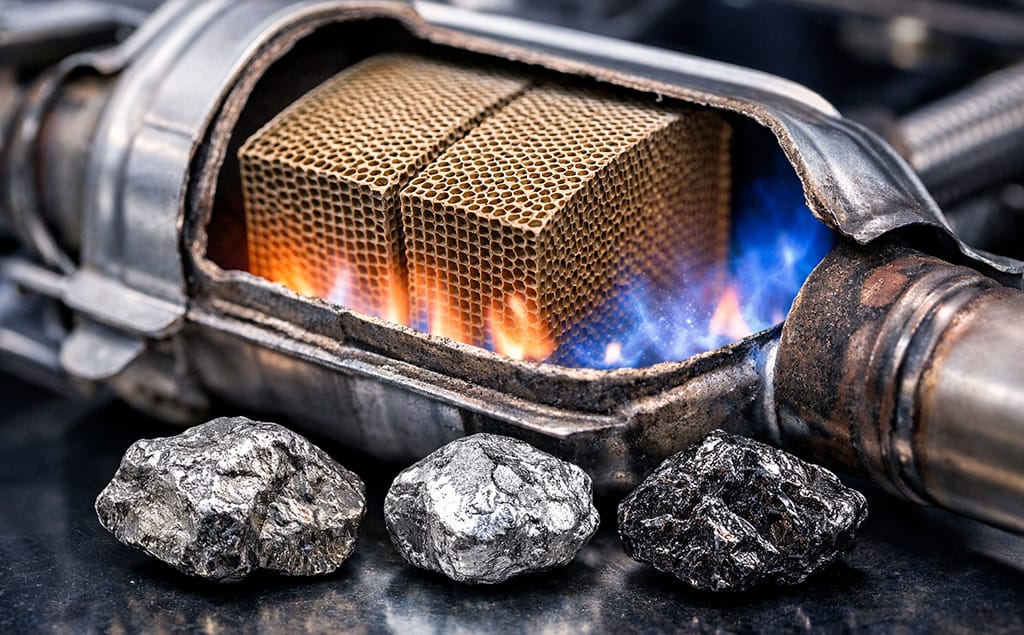
The primary reason for the steep price of a catalytic converter lies in the rare and valuable materials used in its construction. At the heart of every catalytic converter is a ceramic honeycomb structure coated with a thin layer of a catalyst. This catalyst is the key to the chemical reaction that transforms harmful exhaust gases into less harmful substances. The catalyst itself is composed of three precious metals: platinum, palladium, and rhodium. The market prices for these metals are extremely high, sometimes exceeding the price of gold, and their scarcity directly drives up the manufacturing cost of every catalytic converter.
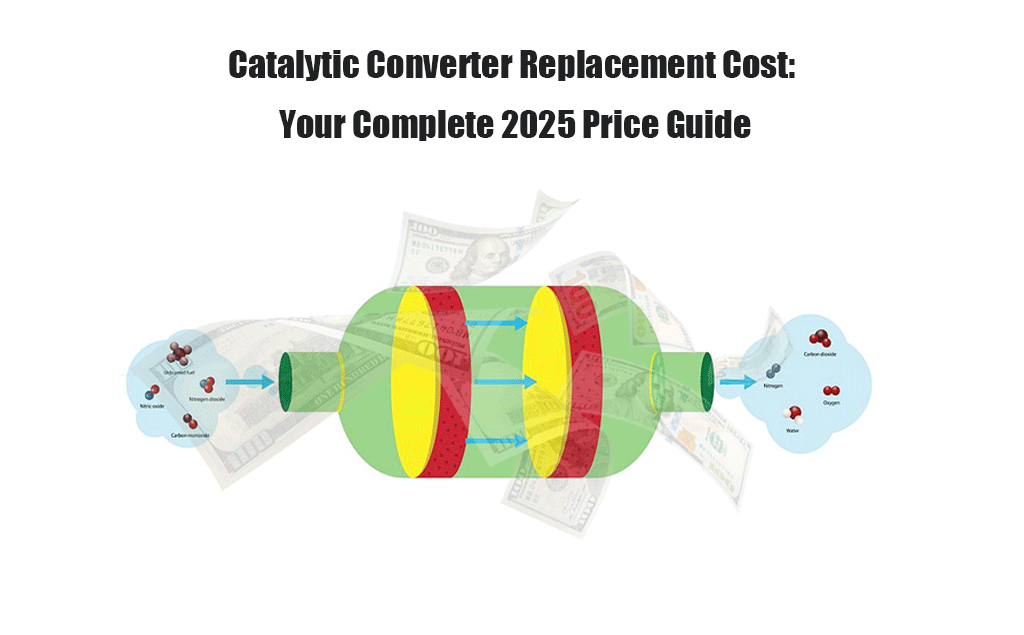
These precious metals play indispensable roles in the catalytic process. Platinum and palladium act as excellent oxidation catalysts, responsible for converting harmful carbon monoxide and unburned hydrocarbons into less harmful carbon dioxide and water vapor. Rhodium, on the other hand, serves as a reduction catalyst, breaking down smog-creating nitrogen oxides into harmless nitrogen and oxygen gas. The global demand for these metals, especially within the automotive industry, keeps their prices consistently high. Therefore, a significant portion of what you pay for a new catalytic converter is the intrinsic value of the metal inside the converter.

What is the Average Cost for a Catalytic Converter Replacement?
The cost to replace a catalytic converter can vary dramatically, ranging from a few hundred to several thousand dollars. For most standard passenger vehicles, replacing a catalytic converter with an aftermarket part will typically cost between $500 and $1,500. This price usually includes both the part itself and the labor for installation by a professional mechanic. However, if your vehicle is a luxury brand, a high-performance sports car, or a model that must meet stricter emission standards (like those in California), the replacement cost can rise sharply.
For these higher-end vehicles, or if you opt for an Original Equipment Manufacturer (OEM) part produced by the original automaker, the cost can easily exceed $2,000 and even approach $3,000 or more. Some vehicles, like larger SUVs and trucks, may be equipped with more than one catalytic converter, which can double the replacement cost. Furthermore, if the failure of the catalytic converter has caused damage to other components of the exhaust system, such as the oxygen sensor, the total repair bill will increase. It’s crucial to get a detailed quote that specifies exactly what is included in the price.
What Factors Influence the Total Replacement Bill?
Several factors influence the total cost of a catalytic converter replacement. First and foremost is your vehicle’s make, model, and year. The exhaust system design varies significantly between vehicles; some catalytic converters are easily accessible and simple to replace, while others may require the removal of multiple surrounding components, which directly impacts labor time. Your geographic location also plays a role, as labor rates at a repair shop are typically higher in major metropolitan areas.
The type of part you choose is another major cost driver. An OEM part will almost always be more expensive than an aftermarket one. Furthermore, the specific type of catalytic converter required for your vehicle will affect the price. For instance, a federal catalytic converter (compliant with EPA standards) will be cheaper than one that needs to meet the more stringent California air regulations. Lastly, the cause of the failure matters. If the catalytic converter simply wore out from age, the replacement is straightforward. However, if it was damaged by an underlying engine issue (like burning oil), that root problem must be fixed along with replacing the converter, which will significantly increase the overall repair cost.
What’s the Difference Between OEM and Aftermarket Catalytic Converters?
When it comes time to choose a new catalytic converter, you face two main options: OEM and aftermarket parts. OEM (Original Equipment Manufacturer) parts are made by your vehicle’s manufacturer or their licensed supplier. They are identical to the part your car was built with. The advantage is guaranteed quality, a perfect fit, and the proper loading of precious metals to ensure efficient, long-term control of vehicle emissions. However, they are also the most expensive option.
In contrast, aftermarket parts are produced by third-party companies. Their main appeal is a price that is often significantly lower than OEM parts. The quality, however, can be inconsistent. To cut costs, some aftermarket catalytic converters may contain a lower concentration of the precious metal catalyst, which can lead to a shorter lifespan, reduced efficiency, and could trigger your “check engine” light to come on again. That said, many reputable aftermarket brands produce high-quality products that meet or exceed the emissions requirements set by the US Environmental Protection Agency. The key is to research the brand’s reputation and ensure the part is compliant with your state’s specific emission standards.
Should I Choose a Direct-Fit or a Universal Converter?
Within the aftermarket category, you’ll also have to decide between a direct-fit or a universal catalytic converter. A direct-fit catalytic converter is engineered to be an exact replacement for your vehicle’s OEM part, complete with matching flanges, bends, and hangers. This means the installation process is straightforward, typically requiring no cutting or welding. For the DIY mechanic or the owner who wants to minimize installation time and labor costs, a direct-fit part is an excellent choice.
A universal catalytic converter, on the other hand, is not designed for any specific vehicle. It is essentially just the core converter unit and requires a technician to cut, weld, and fabricate it to fit into your vehicle’s exhaust system. While the universal converter itself may be cheaper than a direct-fit model, the additional custom labor will increase the installation cost, and the quality of the installation is highly dependent on the technician’s skill. Improper welding can lead to exhaust leaks. Overall, while a universal part may have a lower initial price, a direct-fit converter generally offers a more reliable and hassle-free installation.

How Do I Know if My Catalytic Converter Really Needs Replacing?
There are several clear signs that your catalytic converter may be failing. The most common indicator is an illuminated “check engine light” on your dashboard. Your vehicle’s onboard computer monitors the efficiency of the catalytic converter, and if its ability to convert harmful gas drops below a certain threshold, it will trigger a diagnostic trouble code and turn on the light. A common code associated with this is P0420, which indicates “catalyst system efficiency below threshold.”
Beyond the warning light, you may also notice a decline in vehicle performance. A clogged catalytic converter restricts the flow of exhaust, acting like asthma for your engine. This can lead to sluggish acceleration, a lack of power, and poor fuel economy, especially when going uphill or carrying a heavy load. You might also smell a sulfurous, rotten-egg-like odor from the exhaust pipe, which is caused by the converter failing to properly convert sulfur compounds in the exhaust gases. In severe cases, if the internal ceramic honeycomb has broken apart, you may hear a rattling sound coming from underneath your vehicle. If you experience any of these symptoms, you should have your exhaust system inspected by a professional.
How Much of the Cost is Labor?
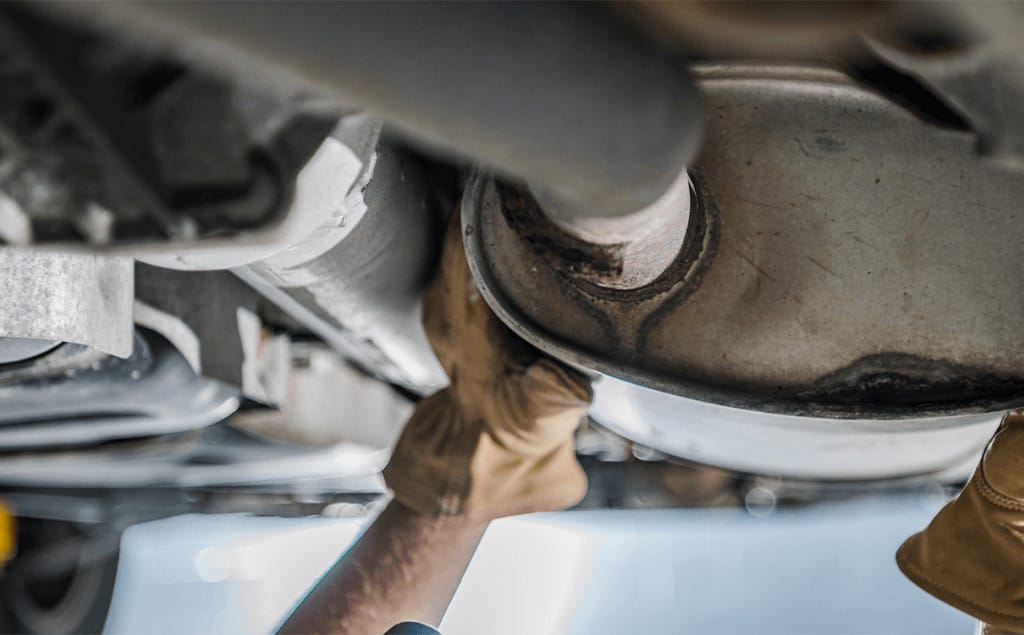
Labor is a significant component of the total replacement cost, and the amount can vary based on several factors. The time it takes to replace a catalytic converter can range from under an hour to several hours. For some vehicles with simple designs where the catalytic converter is easy to access, a technician may only need to unbolt the old unit and bolt in the new one. In these cases, labor costs will be relatively low.
However, on many modern vehicles, the catalytic converter may be integrated with the exhaust manifold or tucked tightly into the engine bay, requiring the removal of other components to gain access. If the old bolts and flanges are seized due to heat and rust, the technician will need to spend extra time cutting them off, adding to the labor hours. Furthermore, installing a universal converter that requires welding and custom fitting will take much longer than installing a direct-fit part. Generally, you can expect labor costs to fall between $100 and $400, but this can be higher for more complex jobs.
Are There Legal and Emission Standards for Replacement?
Yes, the replacement of a catalytic converter is strictly governed by legal and environmental regulations. Under the federal Clean Air Act in the United States, it is illegal to tamper with or remove a vehicle’s emission control devices. This means you must replace a failing catalytic converter; you cannot simply remove it. Your vehicle will not pass a state inspection or emission test without a functioning catalytic converter.
Furthermore, the replacement part you install must meet specific emission standards. The Environmental Protection Agency (EPA) sets the standards for aftermarket catalytic converters. Some states, most notably California, have their own, more stringent standards. Therefore, when purchasing a new catalytic converter, you must ensure that it is not only correct for your vehicle but also approved for use in your state. Installing a non-compliant part can lead to a failed emission test and potential fines. It is vital to use a reputable repair shop that will ensure the part they install is fully compliant with all federal catalytic and local regulations.
What Can I Do to Prevent Premature Damage to My Catalytic Converter?
While every catalytic converter will eventually fail due to normal wear and tear, you can take steps to extend its life and avoid a premature failure. First and foremost, keeping your engine in good tune is critical. Any engine problem that allows unburned fuel to enter the exhaust system—such as failing spark plugs, a bad ignition coil, or a faulty oxygen sensor—can cause the catalytic converter to overheat and melt its internal structure. Regular engine maintenance is the best way to protect your catalytic converter.
Second, avoid using any fuel additives that contain lead, as lead will coat the catalyst and render it ineffective. You should also address any engine oil or coolant leaks that could contaminate the exhaust system, as these substances will also foul the catalyst. Finally, try to avoid physical impacts to the undercarriage of your car, such as driving over rough roads or high curbs, as a sharp blow can crack the fragile ceramic core inside. Through good driving habits and timely vehicle maintenance, you can maximize the lifespan of this expensive component and prevent having to damage the catalytic converter prematurely.
How Can I Save Money on My Catalytic Converter Replacement?
When faced with a high replacement cost, there are several strategies you can employ to save money. First, shop around. Get quotes from multiple repair shops, including independent shops and dealerships. Independent shops often have more competitive labor rates. When comparing quotes, be sure to ask if they are using an OEM or aftermarket part and inquire about the warranty on the part and the labor.
Second, consider using a high-quality aftermarket catalytic converter. As mentioned, a direct-fit aftermarket part from a reputable brand can be significantly cheaper than its OEM counterpart while still offering reliable performance and compliance. Sometimes, you can save money by purchasing the part online and having a local shop install it, but be sure to clear this with the shop first, as some may not install customer-provided parts. Finally, if you have the mechanical skills and the right tools, replacing a direct-fit catalytic converter yourself is a viable option that eliminates labor costs entirely. Just be aware that the job, especially dealing with rusted bolts, can be more challenging than it looks.
Key Things to Remember:
- The High Cost is Due to Metals: The price of a catalytic converter is driven by the valuable precious metals inside it: platinum, palladium, and rhodium.
- Average Cost Range: Expect to pay between $500 and $3,000+, depending on your vehicle, the type of part used, and local labor rates.
- OEM vs. Aftermarket: OEM parts offer guaranteed quality at a high price; quality aftermarket parts are a more economical choice but ensure they meet local emission standards.
- Signs of Failure: Watch for the check engine light, a loss of power, a rotten-egg smell from the exhaust, or a rattling sound from under the car.
- It’s the Law: Replacing a failing catalytic converter is legally required, and the new part must meet federal and state emission standards.
- Prevention is Key: Regular engine maintenance to address misfires and leaks is the best way to extend the life of your catalytic converter.
- Ways to Save: Get multiple quotes from different repair shops and consider using a reputable direct-fit aftermarket part to significantly reduce the cost.