Johdanto
The kolmitiekatalysaattori plays a central role in modern emission control systems. Every gasoline vehicle depends on it. This device reduces harmful exhaust gases before they enter the atmosphere. Governments require it. Automakers engineer around it. Recycling industries value it.
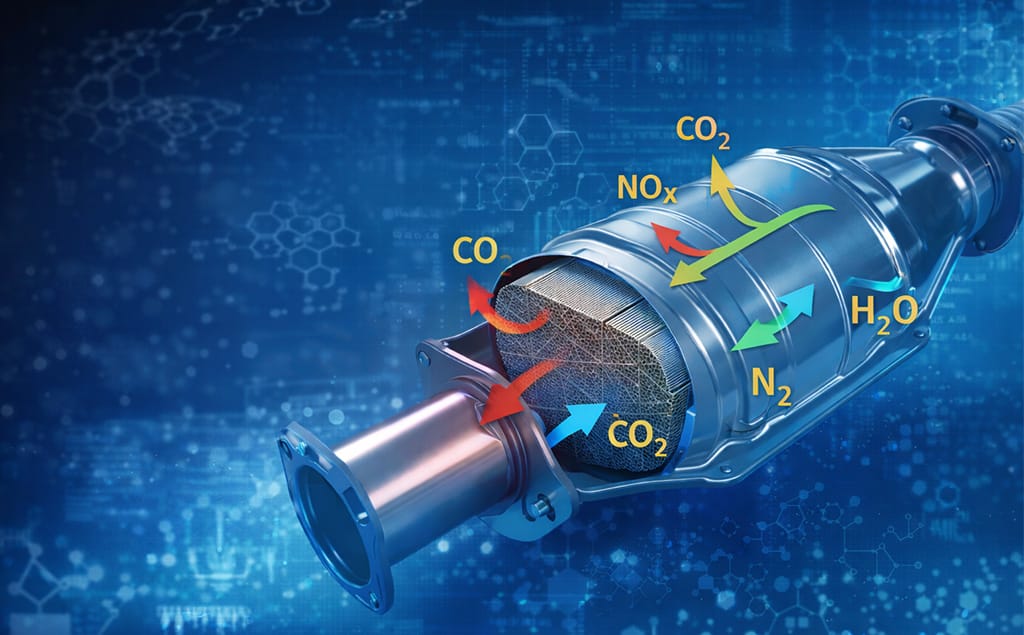
A kolmitiekatalysaattori does not rely on a single reaction. It operates through multiple stages. Each stage targets specific pollutants. It converts nitrogen oxides (NOx), carbon monoxide (CO), and hydrocarbons (HC) into safer gases.
This article explains the internal structure, chemical reactions, metal composition, regulatory framework, and recycling process of the three way catalytic converter. It presents the system in a clear scientific format.
Mikä on kolmitiekatalyyttinen muunnin?
A kolmitiekatalysaattori is an emission control device installed in the exhaust line of gasoline vehicles. It converts three major pollutants into less harmful gases.
It performs:
- Typen oksidien (NOx) vähentäminen
- Hiilimonoksidin (CO) hapettuminen
- Hiilivetyjen hapettuminen (HC)
It uses redox reactions. Precious metals accelerate these reactions. The converter does not burn pollutants. It transforms them chemically.

Position in the Exhaust System
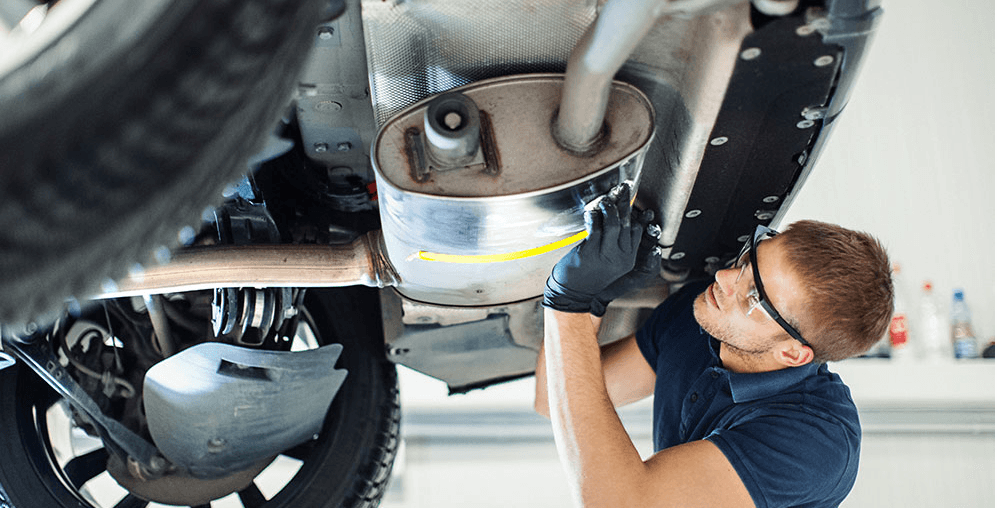
The kolmitiekatalysaattori sits between the engine and the muffler. Exhaust gases leave the combustion chamber at high temperature. They immediately enter the converter.
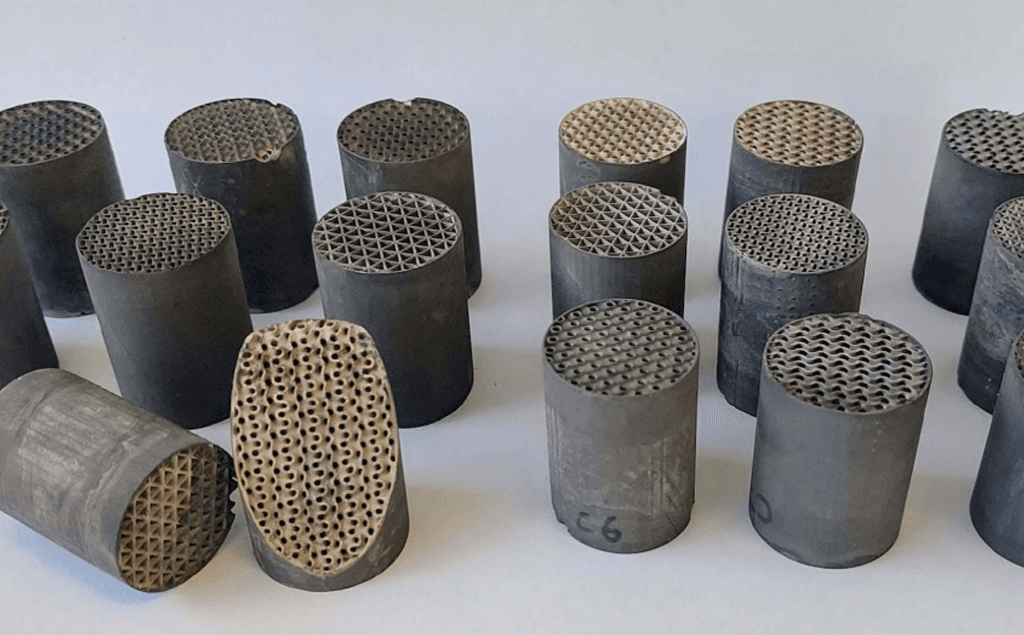
Inside the unit, gases pass through a honeycomb substrate. The catalyst coating reacts with the pollutants. Cleaned gases then exit through the tailpipe.
Without this device, vehicles would emit toxic gases at dangerous levels.
The Three Pollutants Controlled
| Saasteen | Lähde | Ympäristövaikutus |
|---|---|---|
| Hiilimonoksidi (CO) | Incomplete combustion | Toxic to humans |
| Hiilivedyt (HC) | Unburned fuel | Forms ground-level smog |
| Typen oksidit (NOx) | High combustion temperature | Causes acid rain and smog |
The kolmitiekatalysaattori addresses all three simultaneously.
Multi-Stage Structure of a Three Way Catalytic Converter
Modern systems operate in coordinated stages. Each stage performs a specific function.
Stage One: Reduction of Nitrogen Oxides
The first stage removes oxygen from nitrogen oxides.
Active Metal: Rhodium (Rh)
Rhodium drives the reduction reaction. It separates nitrogen atoms from oxygen atoms.
Reaction:
NOx → N₂ + O₂
Nitrogen releases as harmless nitrogen gas. Oxygen becomes available for later oxidation reactions.
This stage significantly reduces smog formation.
Stage Two: Oxidation of Carbon Monoxide and Hydrocarbons
The second stage adds oxygen to toxic gases.
Active Metals: Platinum (Pt) and Palladium (Pd)
These metals promote oxidation reactions.
Reactions:
CO + O₂ → CO₂
HC + O₂ → CO₂ + H₂O
Carbon monoxide becomes carbon dioxide.
Hydrocarbons convert into carbon dioxide and water vapor.
These reactions require precise oxygen levels.
Stage Three: Closed-Loop Control System
The third stage involves electronic monitoring. It ensures maximum efficiency.
Oxygen Sensor Function
An oxygen sensor measures exhaust composition.
It sends real-time data to the engine control unit (ECU).
The ECU adjusts the air-fuel ratio.
The system maintains the stoichiometric ratio of 14.7:1 for gasoline engines.
This ratio allows the kolmitiekatalysaattori to operate at peak efficiency.
Internal Anatomy of a Three Way Catalytic Converter
Understanding the structure explains its performance.
1. Outer Shell
Manufacturers build the housing from stainless steel.
It resists corrosion and extreme heat.
2. Substrate (The Core Brick)
The substrate forms the heart of the kolmitiekatalysaattori.
Two common types exist:
| Tyyppi | Materiaali | Edut |
|---|---|---|
| Keraaminen | Cordierite | Cost-effective, stable |
| Metallinen | FeCrAl alloy | Better thermal shock resistance |
The honeycomb design increases surface area.
More surface area allows more reactions.
3. Washcoat Layer
Engineers apply a porous aluminum oxide washcoat.
It multiplies surface area.
It disperses catalyst metals evenly.
4. Catalyst Layer
Platinum, palladium, and rhodium embed into the washcoat.
These metals trigger redox reactions.
They determine the converter’s value.

Why Precious Metals Matter
The kolmitiekatalysaattori depends on platinum group metals (PGMs).
| Metal | Ensisijainen toiminto | Market Importance |
|---|---|---|
| Platina | Oxidation & reduction | Industrial demand |
| Palladium | Hydrocarbon oxidation | Automotive heavy use |
| Rodium | NOx-vähennys | Highest market price |
Rhodium handles NOx reduction uniquely. No substitute performs as effectively.
Metal loading varies by converter type.
OEM vs Aftermarket Metal Loading
| Ominaisuus | OEM Converter | Aftermarket Converter |
|---|---|---|
| Jalometallien sisältö | Korkea | Alentaa |
| Päästöominaisuudet | Ylivertainen | Kohtalainen |
| Lifespan | Longer | Shorter |
| Recycling Value | Korkea | Alentaa |
OEM units contain higher rhodium concentration.
Aftermarket units reduce cost by lowering PGM content.

Chemical Laboratory Under the Vehicle
The kolmitiekatalysaattori functions like a high-temperature reactor.
Optimal Temperature Range:
400°C – 800°C
Below this range, reactions slow down.
Above it, substrate damage may occur.
Cold starts create the highest emissions.
Manufacturers design warm-up strategies to reduce this effect.
What Happens When a Three Way Catalytic Converter Fails?
Failure occurs when:
- The honeycomb melts
- The substrate cracks
- Fuel mixture runs too rich
- Oil contamination poisons the catalyst
Symptoms include:
- Reduced acceleration
- Increased fuel consumption
- Engine overheating
- Failed emissions test
- P0420 or P0430 diagnostic codes
Drivers often replace failed units with aftermarket converters. However, OEM replacements deliver better long-term compliance.
Regulatory Requirements
The United States requires emission compliance under EPA regulations.
Two standards dominate:
| Standardi | Alue | Strictness |
|---|---|---|
| EPA | Most U.S. states | Federal baseline |
| HIILIHYDRAATIT | California & select states | Stricter limits |
CARB-yhteensopiva kolmitiekatalysaattorit must meet tighter NOx thresholds.
Each legal converter must include:
- Serial number
- Merkinnät
- Installation documentation
- Takuu
Non-compliant products risk legal penalties.
Recycling Value of the Three Way Catalytic Converter
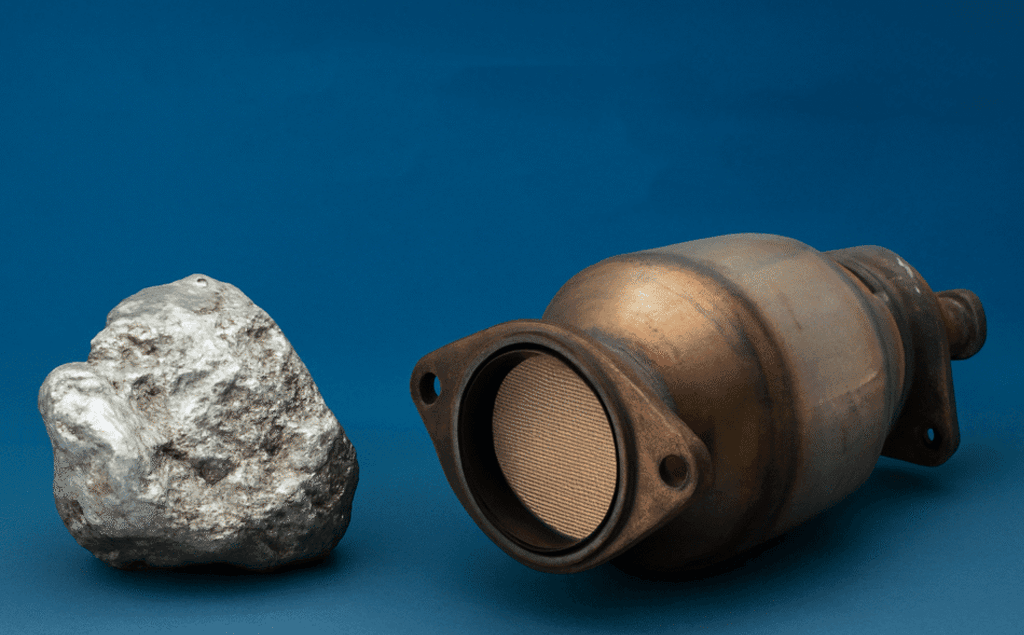
The kolmitiekatalysaattori contains recoverable platinum group metals.
Global Demand Distribution (2024 Approximation)
| Metal | % Used in Autocatalysts |
|---|---|
| Platina | ~84% |
| Palladium | ~42% |
| Rodium | ~89% |
Autocatalysts represent the dominant demand segment.
Recycling Process Overview
- Collection from scrap yards
- Grading by type
- Decanning and crushing
- Sampling and assaying
- Metal recovery via refining
Toll refining ensures accurate payout.
XRF- ja ICP-testit määrittävät metallipitoisuuden.
Kierrätys vähentää kaivostoiminnan paineita.
Se tukee kestäviä toimitusketjuja.
Lisätietoa: Miksi monivaiheinen suunnittelu parantaa tehokkuutta
Yksivaiheiset muuntimet eivät kestä vaihtelevia pakokaasuolosuhteita.
Monivaiheinen kolmitiekatalysaattorit tasapainoreaktiot.
Pelkistäminen vaatii vähän happea.
Hapettuminen vaatii käytettävissä olevaa happea.
Happianturi ylläpitää tasapainoa.
Tämä dynaaminen säätö parantaa kokonaiskonversiotehokkuutta yli 95 %:n optimaalisissa olosuhteissa.
Lisätietoa: Kolmitiekatalyyttisen muuntimen tulevaisuus
Hybridiautot käyttävät edelleen polttomoottoreita.
Siksi kolmitiekatalysaattori on edelleen välttämätön.
Tulevat parannukset keskittyvät seuraaviin:
- Nopeampi sammumislämpötila
- Alhaisempi jalometallien kuormitus
- Parannettu kestävyys
- Euro 7 -vaatimustenmukaisuus
Sähköistäminen vähentää kysyntää vähitellen.
Bensiinimoottorit tulevat kuitenkin olemaan käytössä vielä vuosikymmeniä.
Johtopäätös
The kolmitiekatalysaattori on edelleen yksi autoteollisuuden kriittisimmistä päästöteknologioista. Se vähentää typen oksideja, hiilimonoksidia ja hiilivetyjä koordinoitujen pelkistys- ja hapetusreaktioiden avulla. Se käyttää platinaa, palladiumia ja rodiumia näiden kemiallisten prosessien kiihdyttämiseen.
Sen monivaiheinen rakenne varmistaa korkean hyötysuhteen vaihtelevissa moottorin olosuhteissa. Sääntelystandardit tiukentuvat jatkuvasti. Kierrätysmarkkinat kasvavat edelleen. Molemmat trendit lisäävät sen merkitystä.
Ymmärtäminen kolmitiekatalysaattori auttaa valmistajia, kierrättäjiä, sääntelyviranomaisia ja kuluttajia tekemään tietoon perustuvia päätöksiä. Tämä laite suojaa ilmanlaatua, tukee määräysten noudattamista ja edistää maailmanlaajuista kestävää kehitystä.