1. ガソリン車の三元触媒コンバーターの紹介
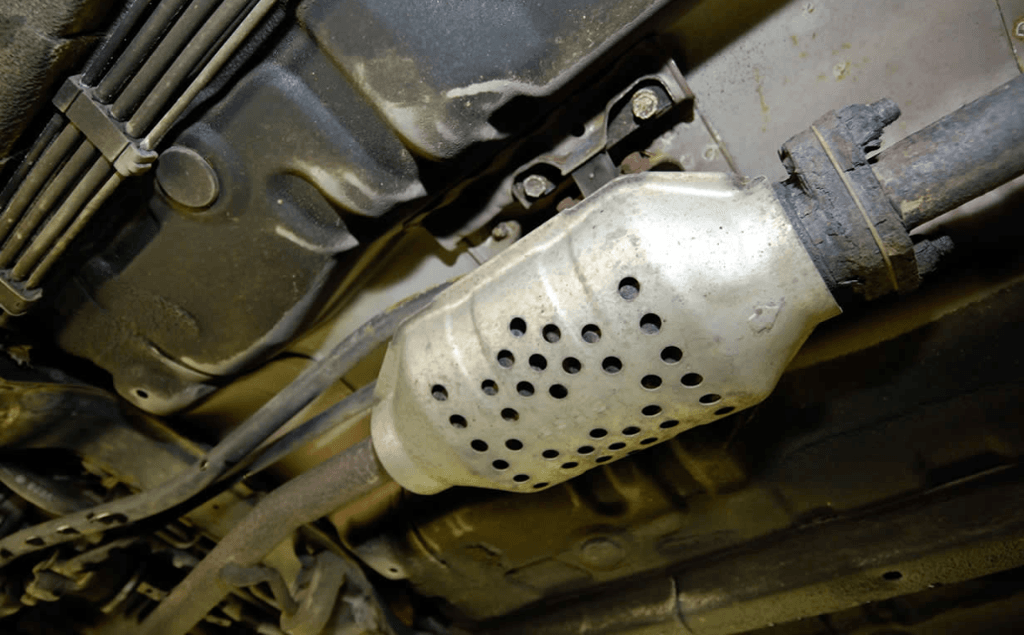
The automotive industry’s relentless pursuit of reduced environmental impact has positioned the 3-way catalytic converter (TWC) as a cornerstone technology for controlling harmful emissions from gasoline internal combustion engines. This report delves into the intricate material science and engineering behind these critical components, focusing specifically on their application in gasoline vehicles. The TWC is a sophisticated chemical reactor designed to simultaneously mitigate three primary pollutants found in engine exhaust: carbon monoxide (CO), unburnt hydrocarbons (HC), and nitrogen oxides (NOx) [1][5].
Operating within a tightly controlled environment, the TWC functions optimally when the engine’s air-fuel ratio is maintained near the stoichiometric point, precisely regulated by a lambda sensor in a closed-loop feedback system [5]. This precise control is crucial because the catalyst must facilitate both oxidation (for CO and HC) and reduction (for NOx) reactions concurrently. The evolution of TWCs has progressed from simpler oxidation catalysts to dual-bed systems, culminating in the highly efficient single-bed TWCs prevalent today, which are designed for thermal stability and rapid activation, often mounted close to the exhaust manifold [1][3]. The continuous tightening of global emission standards for CO, HC, NOx, and particulate matter is a primary driver for ongoing advancements in catalyst design and material innovation [1][6].
2. 触媒基質材料と特性
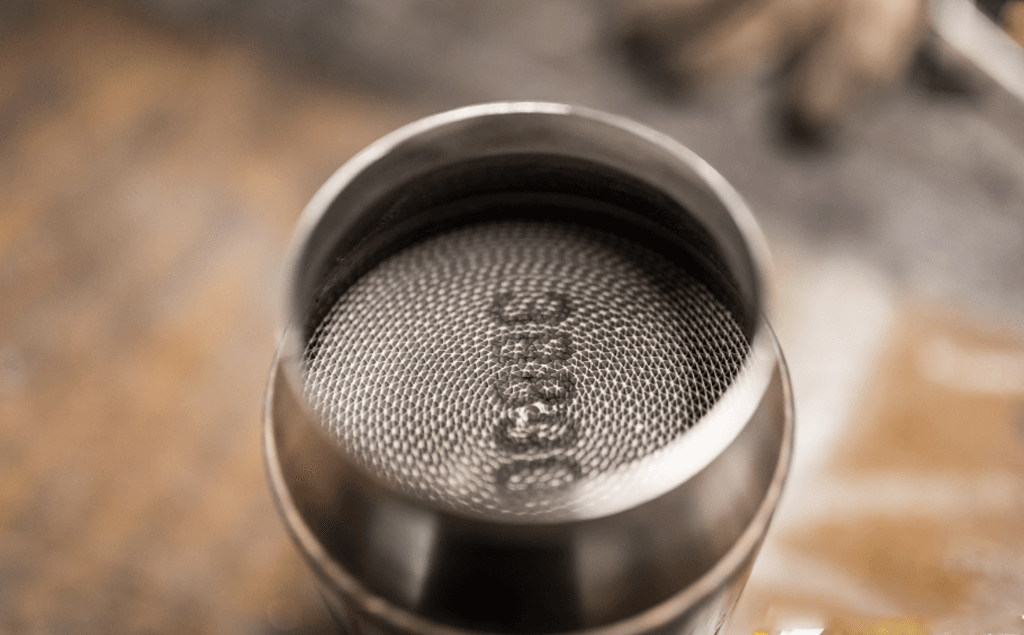
The foundation of a 3-way catalytic converter is its monolithic substrate, which provides the structural support for the catalytically active materials. While metallic substrates are also used, ceramic honeycomb structures, primarily made from cordierite, are the most common choice due to their advantageous properties [6]. Cordierite is a magnesium iron aluminum cyclosilicate mineral with the chemical formula (Mg,Fe)₂Al₄Si₅O₁₈.
独自の結晶構造により、数千もの平行チャネルを持つハニカム状の多孔質マトリックスを形成できます。コーディエライト基質の物理的構造は、その機能にとって極めて重要です。通常、高いセル密度(平方インチあたりのセル数、cpsi)を特徴としており、コンパクトな容積でありながら大きな幾何学的表面積を実現します。これにより、排気ガスと触媒ウォッシュコートとの接触が最大限に確保されます。
コーディエライトを理想的な基質材料にする主な特性は次のとおりです。
- 熱安定性: 優れた耐熱衝撃性で、常温から 1000°C を超える急激な変化にも耐えます。
- 低熱膨張: 温度勾配による応力やひび割れを防ぎます。
- 機械的強度: 振動や衝撃にも十分耐えられる堅牢性を備えています。
- 高い表面積: 効果的なウォッシュコートの塗布をサポートします。
- 低圧力損失: ストレートチャネルは排気流抵抗を最小限に抑えてエンジン性能を維持します。
Design parameters like length and cell density are often optimized using simulation software such as Solidworks [7].
3. ウォッシュコートの配合と機能的役割
ウォッシュコートは基材に塗布された多孔質の酸化物層であり、貴金属の高い分散性と安定性を実現します。
- ガンマアルミナ(γ-Al2O3): 高い表面積(100~200 m²/g)により、貴金属の分散をサポートします。
- セリア-ジルコニア (CeO₂-ZrO₂):Ceria (CeO₂) is indispensable for its remarkable oxygen storage capacity (OSC)[1][2]. It undergoes reversible redox reactions:2CeO₂ ⇌ Ce₂O₃ + ½O₂The addition of zirconia (ZrO₂) forms a solid solution, CeO₂-ZrO₂, enhancing thermal stability and oxygen mobility. Ceria-zirconia-yttria mixed oxides (CZY) are considered the industry standard .
- その他の安定剤酸化ランタン(La₂O₃)、酸化バリウム(BaO)、酸化ネオジム(Nd₂O₃)は表面安定性と耐毒性を高めます。
The washcoat is applied as a slurry and then calcined, forming a highly porous, rough surface that maximizes the contact area for the exhaust gases and provides a stable platform for the precious metals. Some advanced TWC designs utilize double-layer washcoats, where different precious metals (e.g., Pd/Pt in one layer and Rh in another) are supported on specific ceria- or zirconia-based oxides to prevent sintering and optimize their individual catalytic functions [1][3]. The development of mesoporous oxide supports with optimal pore geometries is an ongoing area of research, aiming to reduce catalyst size and weight while significantly decreasing the required precious metal loadings [7].
4. 貴金属触媒:構成とメカニズム
TWC の触媒心臓部は白金族金属 (PGM) に依存しています。
- プラチナ(Pt): 酸化を触媒する:
- CO + ½O₂ → CO₂
- CₓHᵧ + (x + y/4)O₂ → xCO₂ + y/2 H₂O
- パラジウム(Pd): 酸化と中程度のNOx還元の両方を触媒します。低温でも優れた性能を発揮し、酸素貯蔵能力も備えています。
- ロジウム(Rh): NOx削減に重要:
- 2NO + 2CO → N₂ + 2CO₂
- 2NO₂ + 4CO₂ → N₂ + 4CO₂
- 2NOₓ → N₂ + xO₂
The typical ratios of these PGMs vary depending on the specific application, engine type, and emission targets, but a common formulation might involve a higher proportion of palladium, followed by platinum, and a smaller but critical amount of rhodium. For instance, the platinum-based segment alone held over 40% of the market share in 2024 [6]. The chemical forms of these metals on the washcoat are typically highly dispersed nanoparticles, which maximize the active surface area for reactions. Modified impregnation procedures, such as using toluene, can produce well-dispersed Pt nanoparticles on various hydrophobic materials, showing good activity for CO and propane oxidation [1][2].
The reliance on PGMs presents significant cost and supply chain challenges due to their scarcity and price volatility [1][6]. This has driven extensive research into reducing PGM content or developing entirely PGM-free alternatives. While iridium, ruthenium, and osmium are also PGMs, they are generally not suitable for TWC conditions due to the volatility or toxicity of their oxide forms under exhaust conditions, effectively limiting the choice to Pt, Pd, and Rh [1].
5. ハウジングおよび梱包材
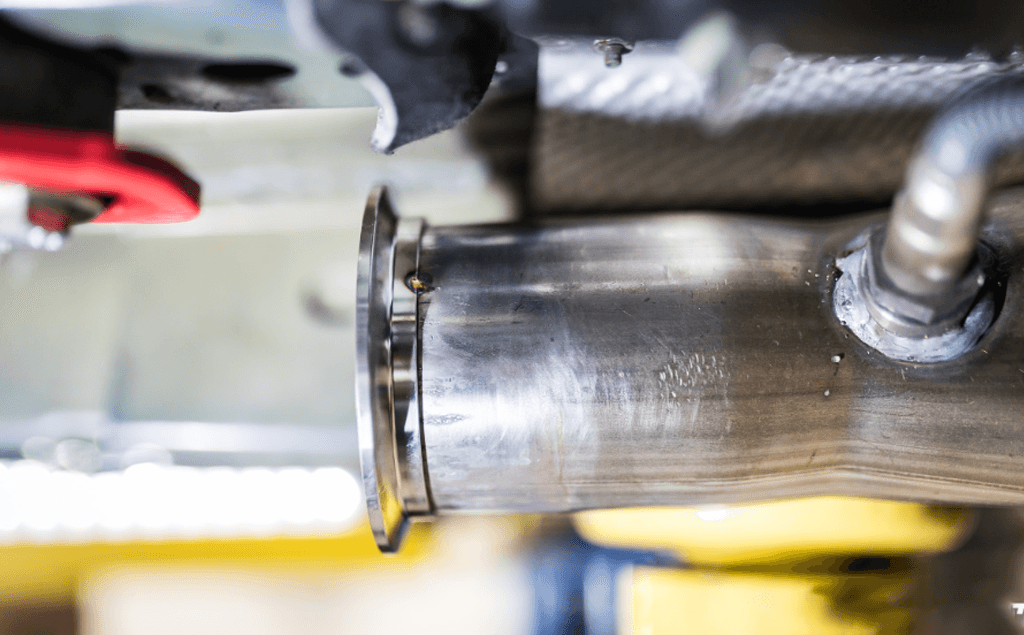
触媒コアに加え、三元触媒コンバーターの構造的完全性と熱管理は、ハウジングとパッケージング材料によって確保されています。これらの部品は、壊れやすいセラミック担体を保護し、極端な温度から遮断し、車両の排気システム内にしっかりと固定されるように設計されています。
- 外部ハウジング(シェル): 外部ハウジングは通常、 ステンレス鋼, often featuring a double-layered design with an integrated heat shield [9]. Stainless steel is chosen for its excellent corrosion resistance, particularly against the corrosive exhaust gases and external environmental factors, and its ability to withstand high temperatures. The double-layered shell serves multiple functions:
- 構造の完全性: 内部触媒ブロックに強力な機械的保護を提供し、道路の破片、衝撃、振動から保護します。
- 断熱性: 二重層間の空気隙間、または熱シールドの存在により、高温の触媒からの熱放射が低減され、周囲の車両部品が保護され、火傷のリスクが軽減されます。
- 酸化肌の予防: It prevents the formation of an oxide skin on the catalyst surface, which could otherwise block the catalytic sites and reduce efficiency [9].
- 取り付け: 排気システムへの統合に必要なフランジと接続を提供します。
- 内部膨張性マット: セラミック基板とステンレス鋼ハウジングの間には、 膨張性マット 材料が詰め込まれたマット。このマットは通常、加熱すると大きく膨張するように設計されたセラミック繊維(例:アルミナシリカ繊維)で作られています。その機能はコンバータの耐久性と性能にとって非常に重要です。
- 機械的保護とクッション: ショックアブソーバーとして機能し、脆いセラミック基板を車両の走行や排気脈動による振動や機械的ストレスから保護します。これにより、基板のひび割れや破損を防ぎます。
- 断熱性: マットにより追加の断熱性が確保され、触媒からの熱損失が低減し、触媒がより早く動作温度(着火温度)に達するようになります。
- 安全な取り付け: 加熱により膨張する膨張性マットは、セラミックレンガに圧縮力を加え、スチールケース内でしっかりと固定し、動きやガタつきを防止します。
- シーリング: It also provides a seal, preventing exhaust gases from bypassing the catalyst brick and ensuring that all gases flow through the active catalytic channels. Other vibration damping layers, such as metal mesh pads or ceramic gaskets, may also be used [9].
これらのハウジングおよびパッケージング材料を慎重に選択して統合することは、三元触媒コンバータの長期的な信頼性とパフォーマンスに不可欠であり、自動車排気システムの過酷な動作環境に耐えられることを保証します。
6. 材料の性能、耐久性、コストの考慮を統合
三元触媒コンバーターの効率は、担体、ウォッシュコート、貴金属、ハウジングといった全ての構成材料の相乗効果によって直接的に決まります。これらの総合的な性能が、触媒活性、耐熱性、機械的堅牢性、そして最終的にはシステム全体の費用対効果を左右します。
触媒活性と効率: The primary goal is to achieve high conversion efficiency for CO, HC, and NOx across a wide range of operating conditions. This is largely driven by the precious metals (Pt, Pd, Rh) and their dispersion on the high-surface-area washcoat [1]. The washcoat’s oxygen storage capacity, provided by ceria-zirconia, is crucial for maintaining high efficiency under fluctuating air-fuel ratios, acting as an oxygen buffer [1][2]. Computer models are extensively used to optimize catalyst loadings and layouts, enabling high performance even with reduced PGM content [1][3].
耐熱性: 自動車の排気ガス温度は 1000°C を超える場合があり、熱耐久性が最も重要な懸念事項となります。
- 基板: Cordierite’s low thermal expansion and high thermal shock resistance prevent cracking and structural degradation [6].
- ウォッシュコート: The incorporation of zirconia into ceria (CeO₂-ZrO₂) significantly enhances the thermal stability of the oxygen storage component, preventing sintering and loss of surface area [7]. Advanced washcoat designs, such as double layers, can also help prevent sintering of PGMs at high temperatures [1][3].
- 貴金属: PGM sintering (agglomeration of nanoparticles into larger, less active particles) is a major cause of catalyst deactivation at high temperatures. The washcoat’s ability to disperse and stabilize PGMs is critical. Novel perovskite-based catalysts, for example, have shown superior thermal stability and resistance to activity loss even after hydrothermal aging at 1273K(1000°C), compared to standard dispersed metal catalysts [3][8]. This enhanced stability is often attributed to the substitution of palladium into the perovskite structure, which makes it less prone to sintering [8].
機械的堅牢性: コンバーターは、エンジンや道路からの振動、物理的衝撃など、大きな機械的ストレスに耐える必要があります。
- ハウジング: The stainless steel shell provides the primary structural integrity and protection [9].
- 膨張性マット: This material is vital for cushioning the brittle ceramic substrate, absorbing vibrations, and securely holding the catalyst brick in place, preventing mechanical damage [9].
費用対効果: コストは自動車製造において大きな要因です。TWCにおける最も重要なコスト要因は 貴金属含有量 [6]. The market for automotive three-way catalytic converters was valued at USD 11.2 billion in 2024, with the platinum-based segment alone projected to exceed USD 7 billion by 2034 [6].
- PGM価格変動: The fluctuating prices and secure supply of platinum, palladium, and rhodium directly impact manufacturing costs [6].
- 技術革新: Manufacturers are continuously innovating to enhance fuel economy and reduce PGM loadings while maintaining or improving conversion efficiency and durability [6]. Projects like PROMETHEUS aim to reduce PGM content, potentially cutting production costs by up to 50% while maintaining or enhancing performance [1][4].
- 製造プロセスの最適化: The design and preparation techniques for catalyst supports, such as cost-effective methods for creating mesoporous materials, also contribute to overall cost reduction [7].
- 耐久性とコスト: There is a constant trade-off between achieving high durability (which often requires more robust, sometimes more expensive, materials or higher PGM loadings) and managing production costs. The development of more thermally stable catalysts, like perovskites, can extend the converter’s lifespan, offering long-term cost benefits despite potentially higher initial material costs [3][8].
The overall market growth for TWCs is driven by increasing vehicle sales, stricter emissions regulations, and the demand for fuel-efficient vehicles, all of which necessitate continuous material and process innovation [6]. On-road monitoring of TWC performance, often via oxygen storage capacity measurements, further ensures that these complex material systems meet real-world emission targets throughout their operational life [3].
7. 新興材料と将来の方向性
The landscape of catalytic converter technology is continuously evolving, driven by increasingly stringent global emission standards and the imperative to reduce reliance on expensive and scarce Platinum Group Metals (PGMs) [1][6]. Future directions in 3-way catalytic converters focus on novel materials, advanced manufacturing techniques, and integrated systems to achieve superior performance, enhanced durability, and improved sustainability.
PGM依存の低減と非PGM触媒 The high cost and limited supply of Pt, Pd, and Rh are major motivators for research into PGM-free or low-PGM alternatives [1][6].
- 遷移金属酸化物: 次のような材料 ゼオライト、酸化ニッケル、その他の金属酸化物 are being extensively explored as potential replacements for PGMs [1]. These materials offer lower cost and greater abundance.
- ペロブスカイト系触媒: ペロブスカイト構造を有する複合金属酸化物(例:ABO3 は、非PGM触媒の有望なクラスです。例えば、 銅ドープ LaCo₁−xCuxO₃ ペロブスカイト are under investigation as PGM-free catalysts for TWCs [1][4]. These materials can exhibit high thermal stability and catalytic activity, sometimes even surpassing traditional PGM catalysts in specific conditions [3][8]. Mechanochemical synthesis, including high-energy ball milling, is being used to create such perovskites [1].
- ナノテクノロジーの統合: Projects like NEXT-GEN-CAT have focused on incorporating low-cost transition metals into advanced ceramic substrates using nanotechnology to develop efficient catalysts [1][5]. Prototypes with low-PGM and no-PGM formulations have demonstrated compliance with Euro III emission standards, showcasing the viability of these approaches [1][5].
高度なウォッシュコートの開発: Washcoat and catalyst development remain critical focus areas [1].
- メソポーラス酸化物担体: Research continues into developing mesoporous oxide supports with optimized pore geometries. These structures can significantly increase the active surface area and improve the dispersion of catalytic components, potentially allowing for further reductions in metal loadings while maintaining or enhancing performance [7].
- 新しい調製方法: より効果的で耐久性の高い触媒を開発するために、高度な調製方法が研究されています。これには以下が含まれます。
- 超音波処理と電気めっきの組み合わせ: 活性物質の精密な堆積と分散を実現します。
- クエン酸法: 高い均質性を持つ混合金属酸化物を合成するための一般的なゾルゲル型法。
- プラズマ電解酸化(PEO): For creating porous oxide layers on metallic substrates, which can then be functionalized with catalytic materials [1].
将来の排出規制への対応: Global emission standards are becoming progressively stricter, pushing the boundaries of current TWC technology [1][6].
- コールドスタート排出量: 大きな課題は「コールドスタート」期間です。この期間では触媒がまだ始動温度に達しておらず、ほとんど効果がありません。今後の材料研究では、はるかに低い温度で活性化する触媒、あるいは電気加熱式触媒(EHC)や炭化水素トラップと統合してコールドスタート時の排出ガスを低減する触媒の開発を目指しています。
- 実走行排出ガス(RDE): Regulations are increasingly focusing on real-world driving emissions rather than just laboratory tests. This necessitates catalysts that perform robustly and efficiently across a wider range of temperatures, speeds, and load conditions. On-road monitoring of oxygen storage capacity is already a step in this direction [3].
- 粒子状物質(PM)制御: TWC は主にガス状汚染物質を対象としていますが、将来の規制では PM に対する統合ソリューションが必要になる可能性があり、TWC と組み合わせたガソリン微粒子フィルター (GPF) の採用が拡大したり、固有の PM 削減機能を備えた触媒が開発される可能性があります。
持続可能性と循環型経済: The transition to “green” mobility and the increasing focus on sustainability are driving efforts in recyclability and life cycle assessment (LCA) [1][5].
- リサイクル性: The NEXT-GEN-CAT project, for instance, investigated the recyclability of TWCs, examining end-of-life scenarios and using LCA to determine the environmental impact of developed materials [1][5]. Pyro-metallurgical treatment (smelting in an inert atmosphere) was explored for efficient PGM recovery from spent catalysts [1][5]. Future research will likely focus on more energy-efficient and environmentally friendly recycling processes for both PGMs and base metals.
積極的な解決策と推測: 現在の研究に加えて、将来の方向性としては次のようなものが考えられます。
- スマート触媒: 組み込みセンサーや AI 駆動型制御システムなどを使用して、リアルタイムの排気条件に応じて特性 (表面構造、酸素貯蔵容量など) を動的に調整できる触媒。
- 統合排気後処理システム: TWC 機能とその他の排出制御テクノロジー (NOx の選択触媒還元、高度な微粒子フィルターなど) を単一の高度に最適化されたユニットに組み合わせた、よりコンパクトで多機能な排気システムへの移行。
- 付加製造: 3Dプリンティングやその他の積層造形技術を用いて、高度にカスタマイズ・最適化された基板およびウォッシュコート構造を作製することで、細孔径分布、チャネル形状、触媒配置をこれまでにないレベルで制御することが可能になります。これにより、物質移動と触媒効率の大幅な向上が期待されます。
- バイオインスパイアード触媒: 生物系に見られる触媒メカニズムを調査して、新しい、高効率で、潜在的により持続可能な触媒を設計します。
材料科学と化学工学の継続的な革新により、三元触媒コンバーターの性能の限界が押し広げられ、ガソリン車はますます厳しくなる環境目標を達成しながら、環境への影響を最小限に抑えることができるようになります。