1. Introduction to 3-Way Catalytic Converters in Gasoline Vehicles
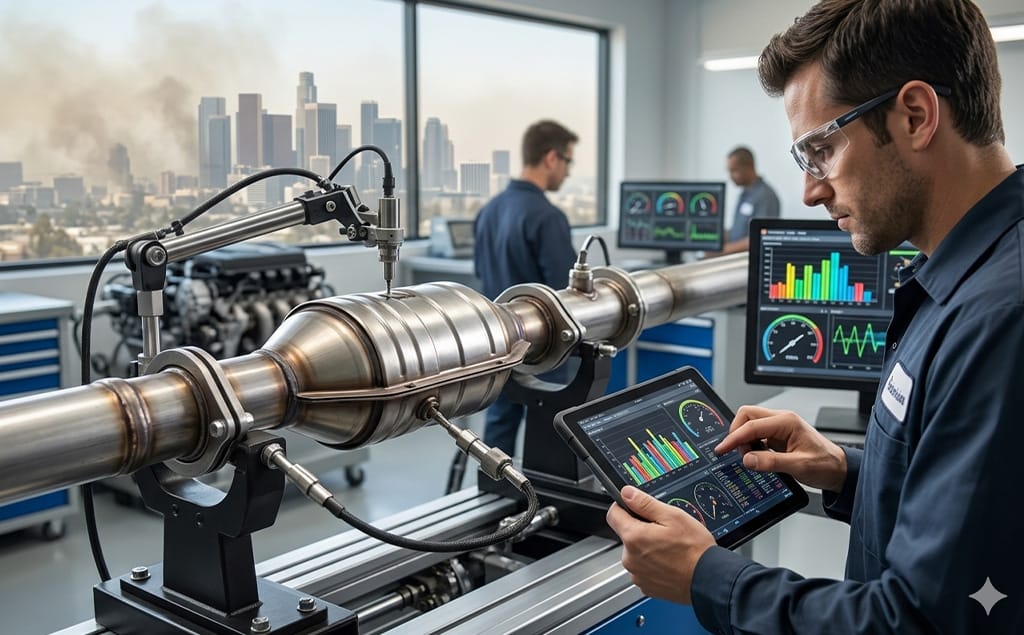
The automotive industry’s relentless pursuit of reduced environmental impact has positioned the 3-way catalytic converter (TWC) as a cornerstone technology for controlling harmful emissions from gasoline internal combustion engines. This report delves into the intricate material science and engineering behind these critical components, focusing specifically on their application in gasoline vehicles. The TWC is a sophisticated chemical reactor designed to simultaneously mitigate three primary pollutants found in engine exhaust: carbon monoxide (CO), unburnt hydrocarbons (HC), and nitrogen oxides (NOx) [1][5].
Operating within a tightly controlled environment, the TWC functions optimally when the engine’s air-fuel ratio is maintained near the stoichiometric point, precisely regulated by a lambda sensor in a closed-loop feedback system [5]. This precise control is crucial because the catalyst must facilitate both oxidation (for CO and HC) and reduction (for NOx) reactions concurrently. The evolution of TWCs has progressed from simpler oxidation catalysts to dual-bed systems, culminating in the highly efficient single-bed TWCs prevalent today, which are designed for thermal stability and rapid activation, often mounted close to the exhaust manifold [1][3]. The continuous tightening of global emission standards for CO, HC, NOx, and particulate matter is a primary driver for ongoing advancements in catalyst design and material innovation [1][6].
2. Catalytic Substrate Materials and Properties
The foundation of a 3-way catalytic converter is its monolithic substrate, which provides the structural support for the catalytically active materials. While metallic substrates are also used, ceramic honeycomb structures, primarily made from cordierite, are the most common choice due to their advantageous properties [6]. Cordierite is a magnesium iron aluminum cyclosilicate mineral with the chemical formula (Mg,Fe)₂Al₄Si₅O₁₈.
Its unique crystal structure allows for the formation of a highly porous, honeycomb-like matrix with thousands of parallel channels. The physical structure of the cordierite substrate is critical for its function. It typically features a high cell density (cells per square inch, cpsi), which translates to a large geometric surface area within a compact volume. This maximizes the contact between the exhaust gases and the catalytic washcoat.
Key properties that make cordierite an ideal substrate material include:
- Thermal Stability: Excellent thermal shock resistance, withstanding rapid changes from ambient to over 1000°C.
- Low Thermal Expansion: Prevents stress and cracking due to temperature gradients.
- Mechanical Strength: Sufficiently robust to handle vibrations and impacts.
- High Surface Area: Supports effective washcoat application.
- Low Pressure Drop: Straight channels preserve engine performance by minimizing exhaust flow resistance.
Design parameters like length and cell density are often optimized using simulation software such as Solidworks [7].
3. Washcoat Formulations and Functional Roles
The washcoat is a porous oxide layer applied to the substrate, enabling high dispersion and stability of precious metals.
- Gamma-Alumina (γ-Al₂O₃): High surface area (100–200 m²/g), supports precious metal dispersion.
- Ceria-Zirconia (CeO₂-ZrO₂):Ceria (CeO₂) is indispensable for its remarkable oxygen storage capacity (OSC)[1][2]. It undergoes reversible redox reactions:2CeO₂ ⇌ Ce₂O₃ + ½O₂The addition of zirconia (ZrO₂) forms a solid solution, CeO₂-ZrO₂, enhancing thermal stability and oxygen mobility. Ceria-zirconia-yttria mixed oxides (CZY) are considered the industry standard .
- Other Stabilizers: Lanthanum oxide (La₂O₃), barium oxide (BaO), and neodymium oxide (Nd₂O₃) enhance surface stability and poison resistance.
The washcoat is applied as a slurry and then calcined, forming a highly porous, rough surface that maximizes the contact area for the exhaust gases and provides a stable platform for the precious metals. Some advanced TWC designs utilize double-layer washcoats, where different precious metals (e.g., Pd/Pt in one layer and Rh in another) are supported on specific ceria- or zirconia-based oxides to prevent sintering and optimize their individual catalytic functions [1][3]. The development of mesoporous oxide supports with optimal pore geometries is an ongoing area of research, aiming to reduce catalyst size and weight while significantly decreasing the required precious metal loadings [7].
4. Precious Metal Catalysts: Composition and Mechanisms
The catalytic heart of a TWC relies on Platinum Group Metals (PGMs):
- Platinum (Pt): Catalyzes oxidation:
- CO + ½O₂ → CO₂
- CₓHᵧ + (x + y/4)O₂ → xCO₂ + y/2 H₂O
- Palladium (Pd): Catalyzes both oxidation and moderate NOx reduction. Performs well at lower temps and has oxygen storage capacity.
- Rhodium (Rh): Crucial for NOx reduction:
- 2NO + 2CO → N₂ + 2CO₂
- 2NO₂ + 4CO → N₂ + 4CO₂
- 2NOₓ → N₂ + xO₂
The typical ratios of these PGMs vary depending on the specific application, engine type, and emission targets, but a common formulation might involve a higher proportion of palladium, followed by platinum, and a smaller but critical amount of rhodium. For instance, the platinum-based segment alone held over 40% of the market share in 2024 [6]. The chemical forms of these metals on the washcoat are typically highly dispersed nanoparticles, which maximize the active surface area for reactions. Modified impregnation procedures, such as using toluene, can produce well-dispersed Pt nanoparticles on various hydrophobic materials, showing good activity for CO and propane oxidation [1][2].
The reliance on PGMs presents significant cost and supply chain challenges due to their scarcity and price volatility [1][6]. This has driven extensive research into reducing PGM content or developing entirely PGM-free alternatives. While iridium, ruthenium, and osmium are also PGMs, they are generally not suitable for TWC conditions due to the volatility or toxicity of their oxide forms under exhaust conditions, effectively limiting the choice to Pt, Pd, and Rh [1].
5. Housing and Packaging Materials
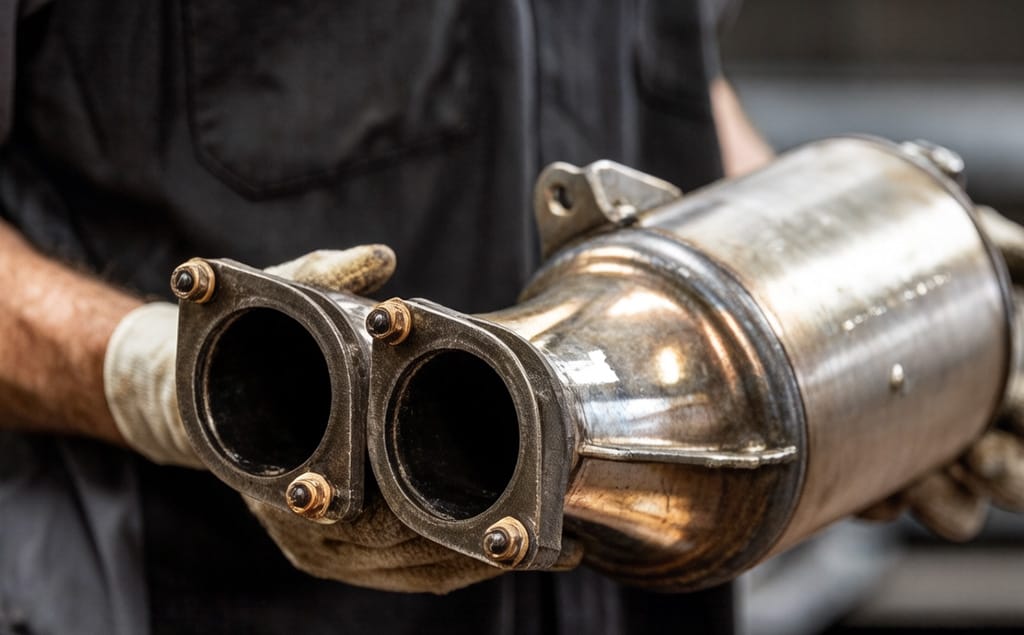
Beyond the catalytic core, the structural integrity and thermal management of the 3-way catalytic converter are ensured by its housing and packaging materials. These components are designed to protect the fragile ceramic substrate, insulate against extreme temperatures, and provide a secure mounting point within the vehicle’s exhaust system.
- External Housing (Shell): The external housing is typically constructed from stainless steel, often featuring a double-layered design with an integrated heat shield [9]. Stainless steel is chosen for its excellent corrosion resistance, particularly against the corrosive exhaust gases and external environmental factors, and its ability to withstand high temperatures. The double-layered shell serves multiple functions:
- Structural Integrity: It provides robust mechanical protection for the internal catalyst brick, safeguarding it from road debris, impacts, and vibrations.
- Thermal Insulation: The air gap between the double layers, or the presence of a heat shield, helps to reduce heat radiation from the hot catalyst, protecting surrounding vehicle components and reducing the risk of burns.
- Prevention of Oxide Skin: It prevents the formation of an oxide skin on the catalyst surface, which could otherwise block the catalytic sites and reduce efficiency [9].
- Mounting: It provides the necessary flanges and connections for integration into the exhaust system.
- Internal Intumescent Matting: Between the ceramic substrate and the stainless steel housing, an intumescent matting material is packed. This matting is typically made from ceramic fibers (e.g., alumina-silica fibers) that are designed to expand significantly when heated. Its functions are critical for the converter’s durability and performance:
- Mechanical Protection and Cushioning: It acts as a shock absorber, cushioning the brittle ceramic substrate against vibrations and mechanical stresses from the vehicle’s movement and exhaust pulsations. This prevents the substrate from cracking or breaking.
- Thermal Insulation: The matting provides additional thermal insulation, reducing heat loss from the catalyst and helping it reach its operating temperature more quickly (light-off temperature).
- Secure Mounting: As it expands upon heating, the intumescent matting exerts a compressive force on the ceramic brick, securely holding it in place within the steel casing and preventing movement or rattling.
- Sealing: It also provides a seal, preventing exhaust gases from bypassing the catalyst brick and ensuring that all gases flow through the active catalytic channels. Other vibration damping layers, such as metal mesh pads or ceramic gaskets, may also be used [9].
The careful selection and integration of these housing and packaging materials are essential for the long-term reliability and performance of the 3-way catalytic converter, ensuring it can withstand the harsh operating environment of an automotive exhaust system.
6. Integrated Material Performance, Durability, and Cost Considerations
The efficacy of a 3-way catalytic converter is a direct consequence of the synergistic interaction among all its component materials: the substrate, washcoat, precious metals, and housing. Their collective performance dictates the overall catalytic activity, thermal durability, mechanical robustness, and ultimately, the cost-effectiveness of the entire system.
Catalytic Activity and Efficiency: The primary goal is to achieve high conversion efficiency for CO, HC, and NOx across a wide range of operating conditions. This is largely driven by the precious metals (Pt, Pd, Rh) and their dispersion on the high-surface-area washcoat [1]. The washcoat’s oxygen storage capacity, provided by ceria-zirconia, is crucial for maintaining high efficiency under fluctuating air-fuel ratios, acting as an oxygen buffer [1][2]. Computer models are extensively used to optimize catalyst loadings and layouts, enabling high performance even with reduced PGM content [1][3].
Thermal Durability: Automotive exhaust temperatures can reach over 1000°C, making thermal durability a paramount concern.
- Substrate: Cordierite’s low thermal expansion and high thermal shock resistance prevent cracking and structural degradation [6].
- Washcoat: The incorporation of zirconia into ceria (CeO₂-ZrO₂) significantly enhances the thermal stability of the oxygen storage component, preventing sintering and loss of surface area [7]. Advanced washcoat designs, such as double layers, can also help prevent sintering of PGMs at high temperatures [1][3].
- Precious Metals: PGM sintering (agglomeration of nanoparticles into larger, less active particles) is a major cause of catalyst deactivation at high temperatures. The washcoat’s ability to disperse and stabilize PGMs is critical. Novel perovskite-based catalysts, for example, have shown superior thermal stability and resistance to activity loss even after hydrothermal aging at 1273K(1000°C), compared to standard dispersed metal catalysts [3][8]. This enhanced stability is often attributed to the substitution of palladium into the perovskite structure, which makes it less prone to sintering [8].
Mechanical Robustness: The converter must withstand significant mechanical stresses, including vibrations from the engine and road, as well as physical impacts.
- Housing: The stainless steel shell provides the primary structural integrity and protection [9].
- Intumescent Matting: This material is vital for cushioning the brittle ceramic substrate, absorbing vibrations, and securely holding the catalyst brick in place, preventing mechanical damage [9].
Cost-Effectiveness: Cost is a major driver in automotive manufacturing. The most significant cost factor in a TWC is the precious metal content [6]. The market for automotive three-way catalytic converters was valued at USD 11.2 billion in 2024, with the platinum-based segment alone projected to exceed USD 7 billion by 2034 [6].
- PGM Price Volatility: The fluctuating prices and secure supply of platinum, palladium, and rhodium directly impact manufacturing costs [6].
- Technological Innovation: Manufacturers are continuously innovating to enhance fuel economy and reduce PGM loadings while maintaining or improving conversion efficiency and durability [6]. Projects like PROMETHEUS aim to reduce PGM content, potentially cutting production costs by up to 50% while maintaining or enhancing performance [1][4].
- Manufacturing Process Optimization: The design and preparation techniques for catalyst supports, such as cost-effective methods for creating mesoporous materials, also contribute to overall cost reduction [7].
- Durability vs. Cost: There is a constant trade-off between achieving high durability (which often requires more robust, sometimes more expensive, materials or higher PGM loadings) and managing production costs. The development of more thermally stable catalysts, like perovskites, can extend the converter’s lifespan, offering long-term cost benefits despite potentially higher initial material costs [3][8].
The overall market growth for TWCs is driven by increasing vehicle sales, stricter emissions regulations, and the demand for fuel-efficient vehicles, all of which necessitate continuous material and process innovation [6]. On-road monitoring of TWC performance, often via oxygen storage capacity measurements, further ensures that these complex material systems meet real-world emission targets throughout their operational life [3].
7. Emerging Materials and Future Directions
The landscape of catalytic converter technology is continuously evolving, driven by increasingly stringent global emission standards and the imperative to reduce reliance on expensive and scarce Platinum Group Metals (PGMs) [1][6]. Future directions in 3-way catalytic converters focus on novel materials, advanced manufacturing techniques, and integrated systems to achieve superior performance, enhanced durability, and improved sustainability.
Reducing PGM Dependence and Non-PGM Catalysts: The high cost and limited supply of Pt, Pd, and Rh are major motivators for research into PGM-free or low-PGM alternatives [1][6].
- Transition Metal Oxides: Materials like zeolite, nickel oxide, and other metal oxides are being extensively explored as potential replacements for PGMs [1]. These materials offer lower cost and greater abundance.
- Perovskite-based Catalysts: Complex metal oxides with perovskite structures (e.g., ABO3 are a promising class of non-PGM catalysts. For instance, copper-doped LaCo₁−xCuxO₃ perovskites are under investigation as PGM-free catalysts for TWCs [1][4]. These materials can exhibit high thermal stability and catalytic activity, sometimes even surpassing traditional PGM catalysts in specific conditions [3][8]. Mechanochemical synthesis, including high-energy ball milling, is being used to create such perovskites [1].
- Nanotechnology Integration: Projects like NEXT-GEN-CAT have focused on incorporating low-cost transition metals into advanced ceramic substrates using nanotechnology to develop efficient catalysts [1][5]. Prototypes with low-PGM and no-PGM formulations have demonstrated compliance with Euro III emission standards, showcasing the viability of these approaches [1][5].
Advanced Washcoat Development: Washcoat and catalyst development remain critical focus areas [1].
- Mesoporous Oxide Supports: Research continues into developing mesoporous oxide supports with optimized pore geometries. These structures can significantly increase the active surface area and improve the dispersion of catalytic components, potentially allowing for further reductions in metal loadings while maintaining or enhancing performance [7].
- Novel Preparation Methods: Advanced preparation methods are being explored to create more effective and durable catalysts. These include:
- Ultrasonic treatment combined with electroplating: For precise deposition and dispersion of active materials.
- Citrate method: A common sol-gel type method for synthesizing mixed metal oxides with high homogeneity.
- Plasma Electrolytic Oxidation (PEO): For creating porous oxide layers on metallic substrates, which can then be functionalized with catalytic materials [1].
Addressing Future Emission Regulations: Global emission standards are becoming progressively stricter, pushing the boundaries of current TWC technology [1][6].
- Cold Start Emissions: A significant challenge is the “cold start” period, where the catalyst has not yet reached its light-off temperature and is largely ineffective. Future materials research aims to develop catalysts that activate at much lower temperatures or integrate with electrically heated catalysts (EHCs) or hydrocarbon traps to mitigate cold start emissions.
- Real-Driving Emissions (RDE): Regulations are increasingly focusing on real-world driving emissions rather than just laboratory tests. This necessitates catalysts that perform robustly and efficiently across a wider range of temperatures, speeds, and load conditions. On-road monitoring of oxygen storage capacity is already a step in this direction [3].
- Particulate Matter (PM) Control: While TWCs primarily target gaseous pollutants, future regulations may require integrated solutions for PM, potentially leading to the wider adoption of gasoline particulate filters (GPFs) in conjunction with TWCs, or the development of catalysts with inherent PM reduction capabilities.
Sustainability and Circular Economy: The transition to “green” mobility and the increasing focus on sustainability are driving efforts in recyclability and life cycle assessment (LCA) [1][5].
- Recyclability: The NEXT-GEN-CAT project, for instance, investigated the recyclability of TWCs, examining end-of-life scenarios and using LCA to determine the environmental impact of developed materials [1][5]. Pyro-metallurgical treatment (smelting in an inert atmosphere) was explored for efficient PGM recovery from spent catalysts [1][5]. Future research will likely focus on more energy-efficient and environmentally friendly recycling processes for both PGMs and base metals.
Proactive Solutions and Speculation: Beyond the current research, future directions might include:
- Smart Catalysts: Catalysts that can dynamically adjust their properties (e.g., surface structure, oxygen storage capacity) in response to real-time exhaust conditions, potentially using embedded sensors and AI-driven control systems.
- Integrated Exhaust Aftertreatment Systems: A move towards more compact, multi-functional exhaust systems that combine TWC functionality with other emission control technologies (e.g., selective catalytic reduction for NOx, advanced particulate filters) into a single, highly optimized unit.
- Additive Manufacturing: The use of 3D printing or other additive manufacturing techniques to create highly customized and optimized substrate and washcoat structures, allowing for unprecedented control over pore size distribution, channel geometry, and catalyst placement. This could lead to significantly improved mass transfer and catalytic efficiency.
- Bio-inspired Catalysis: Exploring catalytic mechanisms found in biological systems to design novel, highly efficient, and potentially more sustainable catalysts.
The ongoing innovation in materials science and chemical engineering will continue to push the boundaries of 3-way catalytic converter performance, ensuring that gasoline vehicles can meet increasingly stringent environmental targets while minimizing their ecological footprint.increasingly stringent environmental targets while minimizing their ecological footprint.