Wstęp
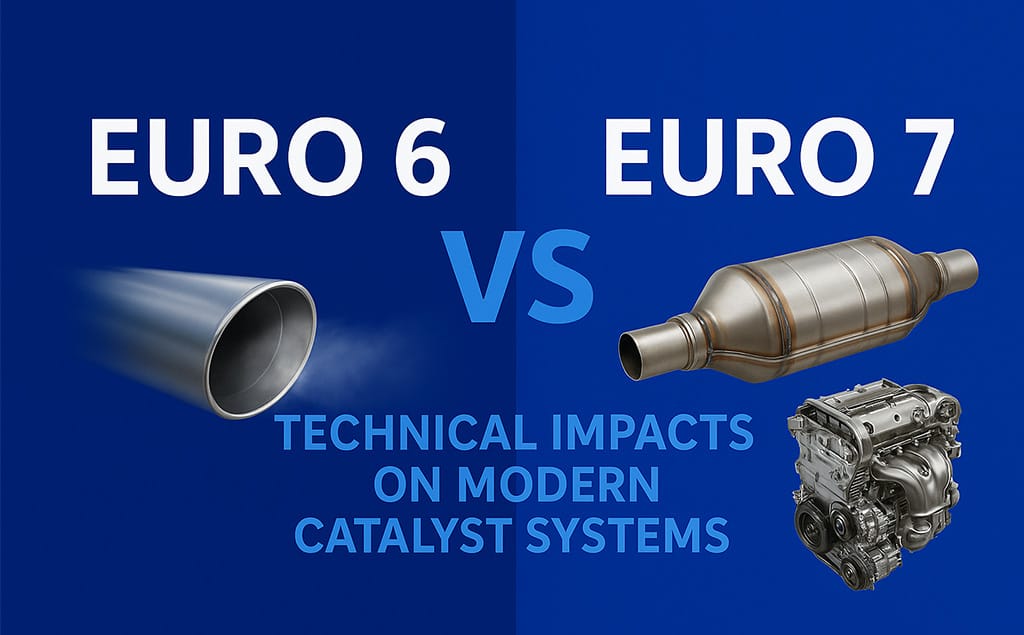
The global automotive industry is entering a new stage of emission regulation. The upcoming Euro 7 standard represents one of the most demanding environmental policies introduced in Europe. The European Commission designed Euro 7 to be fuel-neutral and technology-neutral The regulation aims to reduce harmful pollutants such as nitrogen oxides (NOx), carbon monoxide (CO), hydrocarbons (HC), and particulate matter (PM).
To achieve these goals, manufacturers must significantly improve exhaust aftertreatment systems. The katalizator trójdrożny remains the core technology used in gasoline vehicle emission control. However, Euro 7 introduces stricter emission limits, longer durability requirements, and more comprehensive testing procedures. These new requirements push the industry to develop advanced catalyst materials, improved designs, and more integrated emission control architectures.
Euro 7 therefore acts not only as a regulatory update but also as a powerful driver of technological innovation in modern catalyst systems.
The Role of the Three Way Catalytic Converter
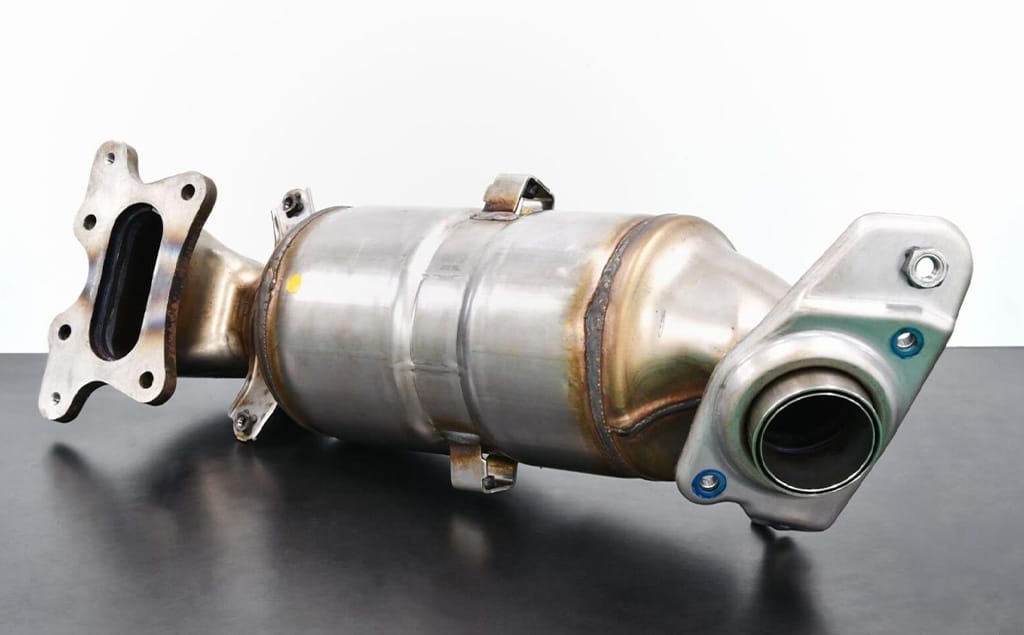
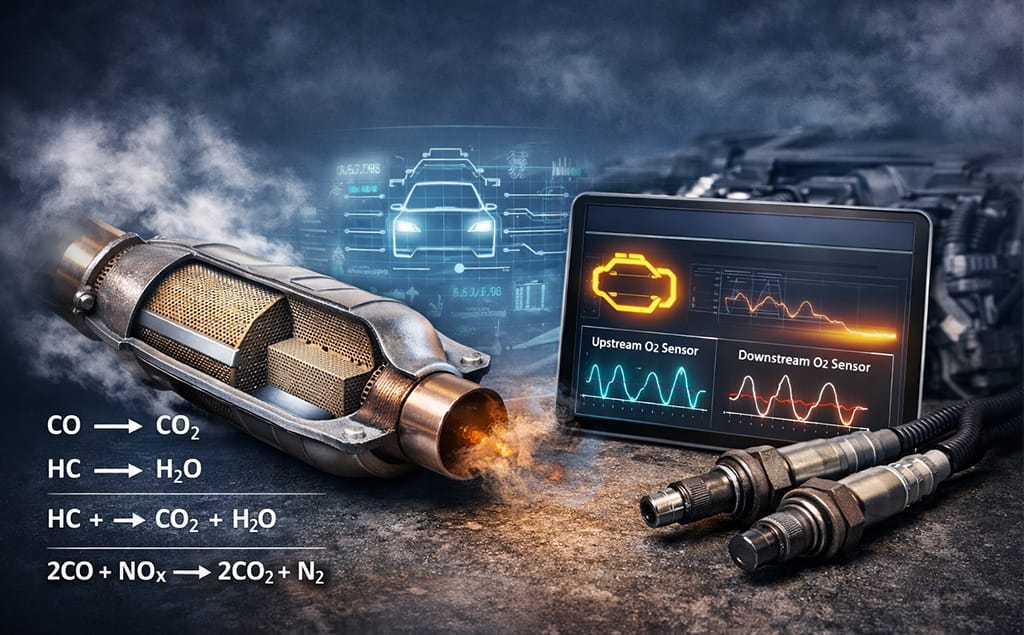
Ten katalizator trójdrożny is one of the most important technologies used to reduce emissions from gasoline engines. It converts three major harmful pollutants into less harmful gases through catalytic reactions.
These reactions include:
Conversion of carbon monoxide (CO) into carbon dioxide (CO2)
Oxidation of hydrocarbons (HC) into water and carbon dioxide
Reduction of nitrogen oxides (NOx) into nitrogen
This process occurs when exhaust gases pass through a ceramic or metallic substrate coated with precious metals such as platinum, palladium, and rhodium. These materials accelerate chemical reactions without being consumed.
Because of its efficiency and reliability, the katalizator trójdrożny has become the foundation of gasoline engine emission control systems worldwide.

Evolution of European Emission Standards
European emission standards have gradually become stricter since the early 1990s. Each stage has pushed vehicle manufacturers to improve emission control technologies.
| Norma emisji | Implementation Year | Main Objective |
|---|---|---|
| Euro 1 | 1992 | Introduction of unified emission limits |
| Euro 3 | 2000 | Improved catalytic converter efficiency |
| Euro 5 | 2009 | Stronger particulate emission control |
| Euro 6 | 2014 | Significant reduction of NOx emissions |
| Euro 7 | Expected 2026 | Ultra-low emissions and long durability |
Euro 7 introduces stricter real-world testing requirements and longer durability standards. These changes require major improvements in the performance of the katalizator trójdrożny and related aftertreatment technologies.
Electrically Heated Catalysts for Cold Start Emissions
Cold start emissions represent one of the largest challenges in vehicle emission control. When the engine starts, the exhaust system remains cold and the catalyst cannot operate efficiently.
Electrically heated catalysts solve this problem. These systems use electric heating elements powered by a 48-volt vehicle electrical system. The heater warms the catalyst before the engine begins operation.
This approach offers several benefits.
Ten katalizator trójdrożny reaches operating temperature much faster
Cold start emissions decrease significantly
Hydrocarbon and carbon monoxide emissions are reduced during engine startup
As a result, electrically heated catalysts play an important role in helping vehicles meet Euro 7 standards.
Ultra High Porosity Catalyst Substrates
Another important innovation involves the development of ultra high porosity catalyst substrates. Traditional ceramic substrates must balance surface area with exhaust gas flow resistance.
Euro 7 requires higher catalytic efficiency without increasing exhaust backpressure. Ultra high porosity materials provide a solution to this challenge.
These advanced substrates provide several advantages.
Larger catalyst surface area
Improved gas diffusion through the substrate walls
Higher catalytic activity in compact designs
These benefits allow engineers to enhance the performance of the katalizator trójdrożny while maintaining efficient exhaust flow.
Low Temperature Catalyst Materials
Modern vehicles increasingly operate at lower exhaust temperatures. Hybrid vehicles often switch the engine on and off, which reduces the average temperature of exhaust gases.
Traditional catalysts perform best at higher temperatures. For this reason researchers are developing new materials that remain active at lower temperatures.
Vanadium based catalyst systems have gained attention in heavy duty vehicle applications. These catalysts offer stable performance and reduced formation of nitrous oxide while maintaining strong emission reduction capability.
Low temperature catalyst technologies help ensure that the katalizator trójdrożny remains effective even under modern engine operating conditions.
Advancements in Gasoline Particulate Filters
Gasoline direct injection engines can produce very small particulate emissions. Euro 7 introduces stricter particle size limits that target particles as small as 10 nanometers.
To address this challenge, engineers have improved gasoline particulate filter technology.
Modern filters can achieve filtration efficiency levels between 95 percent and 98 percent. These systems also reduce exhaust resistance and improve long term durability.
In many modern vehicles the gasoline particulate filter works together with the katalizator trójdrożny to control both gaseous pollutants and particulate matter simultaneously.

Catalyst Durability and Ageing Requirements
Euro 7 introduces significantly stronger durability requirements for emission control systems. Catalytic converters must maintain their emission reduction performance for up to 200000 kilometers or approximately 10 years of vehicle operation.
This requirement pushes manufacturers to develop more durable catalyst materials and improved structural designs.
Key development areas include
More stable precious metal catalyst formulations
Improved washcoat technologies
Stronger substrate structures
These improvements help ensure that the katalizator trójdrożny maintains its efficiency throughout the entire life of the vehicle.
Catalyst Ageing Testing Technologies
Reliable testing is essential for verifying catalyst durability. Engineers must simulate long term vehicle use under controlled laboratory conditions.
Several common ageing testing methods are used in the automotive industry.
| Testing Method | Opis | Purpose |
|---|---|---|
| Bench reactor testing | Simulates exhaust gas chemistry in laboratory conditions | Accelerated catalyst ageing |
| Chassis dynamometer testing | Evaluates complete vehicles under driving cycles | Real world performance verification |
| Recirculating gas reactor systems | Controls temperature gas concentration and flow rate | Repeatable ageing cycles |
These technologies allow engineers to evaluate the long term performance of the katalizator trójdrożny without waiting for years of real world driving.
Impact of Euro 7 on OEM Manufacturers
The introduction of Euro 7 creates new technical and financial challenges for original equipment manufacturers.
Vehicle producers must redesign emission control systems and invest heavily in advanced catalyst technologies.
Major impacts include
Higher production costs due to advanced materials
More complex aftertreatment system architecture
Stricter compliance testing procedures
Although these changes increase costs, they also encourage innovation and accelerate the development of cleaner vehicle technologies.
Increasing Complexity of Aftertreatment Systems
Future vehicle exhaust systems will likely include multiple emission control components working together.
A typical system may include
Primary katalizator trójdrożny
Filtr cząstek stałych benzyny
Ammonia slip catalyst
Passive SCR catalyst
These integrated systems allow vehicles to reduce multiple pollutants across a wide range of operating conditions.
Global Influence of Euro 7 Standards
European emission standards often influence environmental regulations in other parts of the world. Countries such as China and India frequently study European policies when designing their own emission rules.
Because of this influence, Euro 7 will likely become a global benchmark for advanced emission control technologies.
Manufacturers that develop high performance katalizator trójdrożny systems for Euro 7 will gain strong advantages in global automotive markets.
Future Research in Catalyst Technology
Researchers continue to explore new directions in catalyst design. Future developments may include
Nano structured catalyst materials
Reduced precious metal loading technologies
Improved thermal stability coatings
Artificial intelligence assisted catalyst development
These innovations will further improve the efficiency and cost effectiveness of the katalizator trójdrożny.
Wniosek
Euro 7 represents a major step forward in global vehicle emission regulation. The standard introduces stricter pollutant limits, stronger durability requirements, and more comprehensive testing procedures.
To meet these demands the automotive industry must significantly improve catalyst technology and exhaust aftertreatment systems.
Innovations such as electrically heated catalysts, ultra high porosity substrates, improved particulate filters, and advanced ageing testing methods will all contribute to this progress.
Ten katalizator trójdrożny will remain the cornerstone of gasoline vehicle emission control for many years. Continuous technological innovation will ensure that this essential component continues to evolve and meet future environmental challenges.