مقدمة
The global automotive industry is entering a new stage of emission regulation. The upcoming Euro 7 standard represents one of the most demanding environmental policies introduced in Europe. The European Commission designed Euro 7 to be fuel-neutral and technology-neutral The regulation aims to reduce harmful pollutants such as nitrogen oxides (NOx), carbon monoxide (CO), hydrocarbons (HC), and particulate matter (PM).
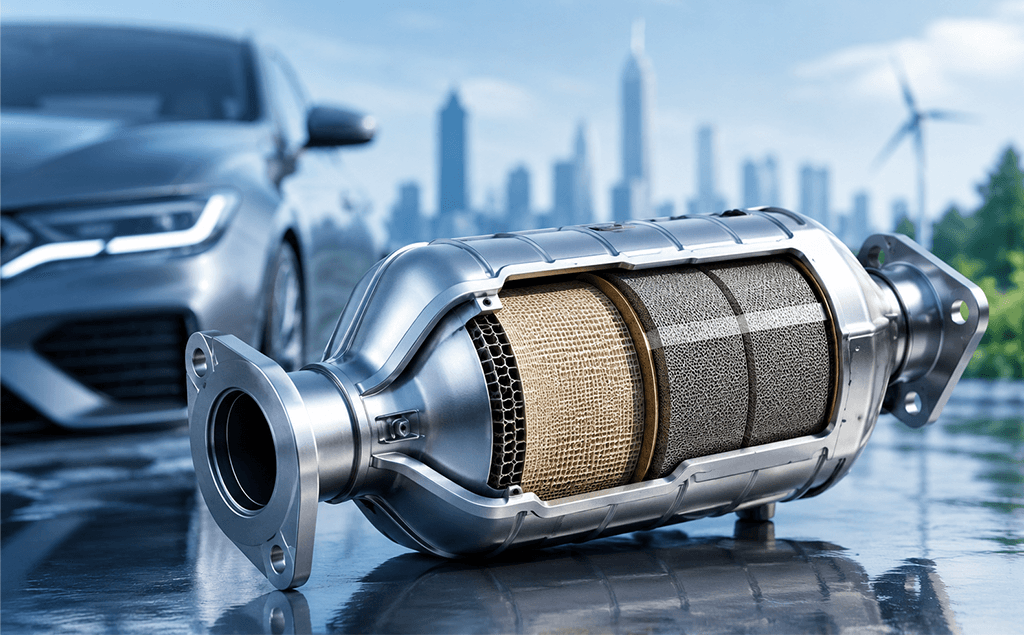
To achieve these goals, manufacturers must significantly improve exhaust aftertreatment systems. The محول حفاز ثلاثي الاتجاهات remains the core technology used in gasoline vehicle emission control. However, Euro 7 introduces stricter emission limits, longer durability requirements, and more comprehensive testing procedures. These new requirements push the industry to develop advanced catalyst materials, improved designs, and more integrated emission control architectures.
Euro 7 therefore acts not only as a regulatory update but also as a powerful driver of technological innovation in modern catalyst systems.
The Role of the Three Way Catalytic Converter
ال محول حفاز ثلاثي الاتجاهات is one of the most important technologies used to reduce emissions from gasoline engines. It converts three major harmful pollutants into less harmful gases through catalytic reactions.
These reactions include:
Conversion of carbon monoxide (CO) into carbon dioxide (CO2)
Oxidation of hydrocarbons (HC) into water and carbon dioxide
Reduction of nitrogen oxides (NOx) into nitrogen
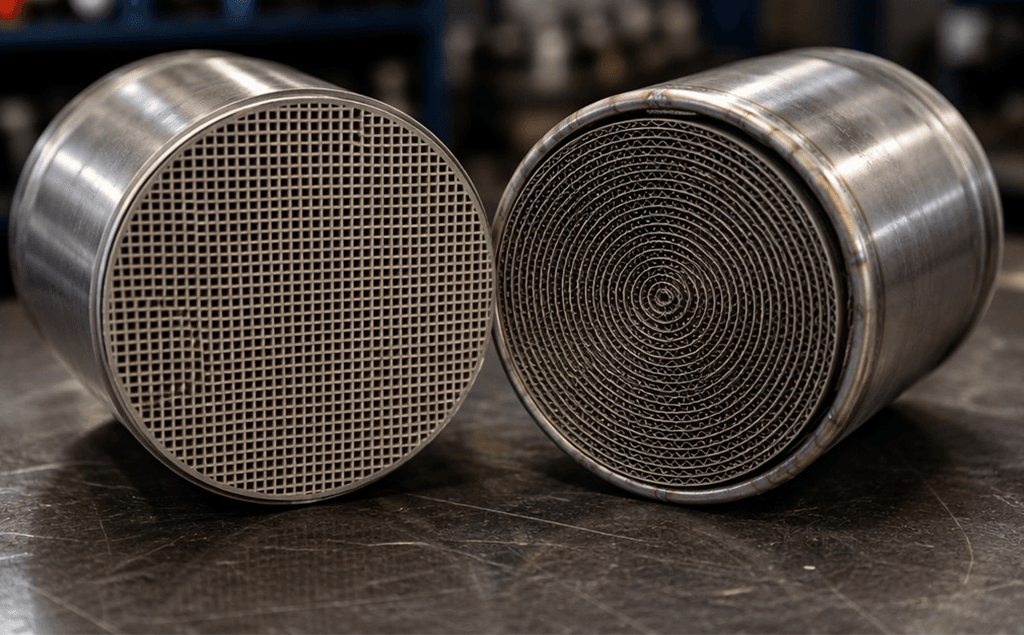
This process occurs when exhaust gases pass through a ceramic or metallic substrate coated with precious metals such as platinum, palladium, and rhodium. These materials accelerate chemical reactions without being consumed.
Because of its efficiency and reliability, the محول حفاز ثلاثي الاتجاهات has become the foundation of gasoline engine emission control systems worldwide.

Evolution of European Emission Standards
European emission standards have gradually become stricter since the early 1990s. Each stage has pushed vehicle manufacturers to improve emission control technologies.
| معيار الانبعاث | Implementation Year | Main Objective |
|---|---|---|
| Euro 1 | 1992 | Introduction of unified emission limits |
| Euro 3 | 2000 | Improved catalytic converter efficiency |
| Euro 5 | 2009 | Stronger particulate emission control |
| يورو 6 | 2014 | Significant reduction of NOx emissions |
| يورو 7 | Expected 2026 | Ultra-low emissions and long durability |
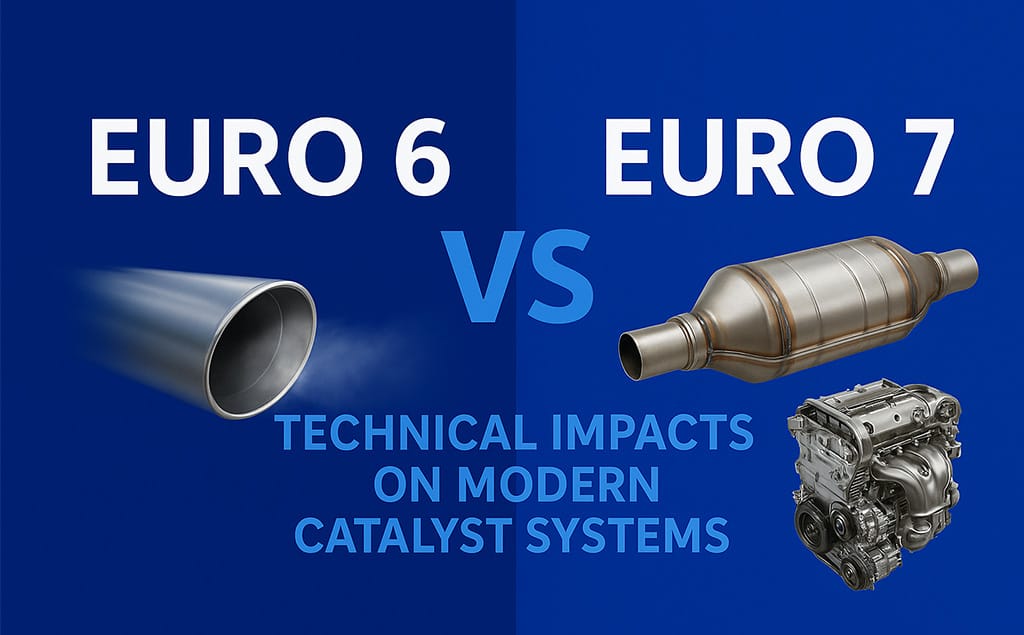
Euro 7 introduces stricter real-world testing requirements and longer durability standards. These changes require major improvements in the performance of the محول حفاز ثلاثي الاتجاهات and related aftertreatment technologies.
Electrically Heated Catalysts for Cold Start Emissions
Cold start emissions represent one of the largest challenges in vehicle emission control. When the engine starts, the exhaust system remains cold and the catalyst cannot operate efficiently.
Electrically heated catalysts solve this problem. These systems use electric heating elements powered by a 48-volt vehicle electrical system. The heater warms the catalyst before the engine begins operation.
This approach offers several benefits.
ال محول حفاز ثلاثي الاتجاهات reaches operating temperature much faster
Cold start emissions decrease significantly
Hydrocarbon and carbon monoxide emissions are reduced during engine startup
As a result, electrically heated catalysts play an important role in helping vehicles meet Euro 7 standards.
Ultra High Porosity Catalyst Substrates
Another important innovation involves the development of ultra high porosity catalyst substrates. Traditional ceramic substrates must balance surface area with exhaust gas flow resistance.
Euro 7 requires higher catalytic efficiency without increasing exhaust backpressure. Ultra high porosity materials provide a solution to this challenge.
These advanced substrates provide several advantages.
Larger catalyst surface area
Improved gas diffusion through the substrate walls
Higher catalytic activity in compact designs
These benefits allow engineers to enhance the performance of the محول حفاز ثلاثي الاتجاهات while maintaining efficient exhaust flow.
Low Temperature Catalyst Materials
Modern vehicles increasingly operate at lower exhaust temperatures. Hybrid vehicles often switch the engine on and off, which reduces the average temperature of exhaust gases.
Traditional catalysts perform best at higher temperatures. For this reason researchers are developing new materials that remain active at lower temperatures.
Vanadium based catalyst systems have gained attention in heavy duty vehicle applications. These catalysts offer stable performance and reduced formation of nitrous oxide while maintaining strong emission reduction capability.
Low temperature catalyst technologies help ensure that the محول حفاز ثلاثي الاتجاهات remains effective even under modern engine operating conditions.
Advancements in Gasoline Particulate Filters
Gasoline direct injection engines can produce very small particulate emissions. Euro 7 introduces stricter particle size limits that target particles as small as 10 nanometers.
To address this challenge, engineers have improved gasoline particulate filter technology.
Modern filters can achieve filtration efficiency levels between 95 percent and 98 percent. These systems also reduce exhaust resistance and improve long term durability.
In many modern vehicles the gasoline particulate filter works together with the محول حفاز ثلاثي الاتجاهات to control both gaseous pollutants and particulate matter simultaneously.

Catalyst Durability and Ageing Requirements
Euro 7 introduces significantly stronger durability requirements for emission control systems. Catalytic converters must maintain their emission reduction performance for up to 200000 kilometers or approximately 10 years of vehicle operation.
يدفع هذا الشرط المصنعين إلى تطوير مواد محفزة أكثر متانة وتصاميم هيكلية محسنة.
تشمل مجالات التطوير الرئيسية ما يلي:
تركيبات أكثر استقرارًا للمحفزات المعدنية الثمينة
تقنيات الطلاء المحسّنة
هياكل ركائز أقوى
تساعد هذه التحسينات على ضمان أن محول حفاز ثلاثي الاتجاهات يحافظ على كفاءته طوال عمر المركبة.
تقنيات اختبار تقادم المحفزات
يُعدّ الاختبار الموثوق به أمراً ضرورياً للتحقق من متانة المحفز. يجب على المهندسين محاكاة استخدام المركبات على المدى الطويل في ظل ظروف مختبرية مضبوطة.
تُستخدم عدة طرق شائعة لاختبار التقادم في صناعة السيارات.
| طريقة الاختبار | وصف | غاية |
|---|---|---|
| اختبار المفاعل على طاولة الاختبار | يحاكي كيمياء غازات العادم في ظروف المختبر | تسارع شيخوخة المحفز |
| اختبار دينامومتر الهيكل | يقوم بتقييم المركبات الكاملة في ظل دورات القيادة | التحقق من الأداء في العالم الحقيقي |
| أنظمة مفاعلات الغاز المعاد تدويرها | يتحكم في درجة الحرارة وتركيز الغاز ومعدل التدفق | دورات تقادم قابلة للتكرار |
تتيح هذه التقنيات للمهندسين تقييم الأداء طويل الأجل لـ محول حفاز ثلاثي الاتجاهات دون انتظار سنوات من القيادة في العالم الحقيقي.
تأثير معيار يورو 7 على مصنعي المعدات الأصلية
يُشكّل تطبيق معيار يورو 7 تحديات تقنية ومالية جديدة لمصنعي المعدات الأصلية.
يتعين على مصنعي السيارات إعادة تصميم أنظمة التحكم في الانبعاثات والاستثمار بكثافة في تقنيات المحفزات المتقدمة.
تشمل التأثيرات الرئيسية ما يلي:
ارتفاع تكاليف الإنتاج بسبب المواد المتقدمة
بنية نظام معالجة لاحقة أكثر تعقيدًا
إجراءات اختبار امتثال أكثر صرامة
على الرغم من أن هذه التغييرات تزيد التكاليف، إلا أنها تشجع الابتكار وتسرع من تطوير تقنيات المركبات الأنظف.
تزايد تعقيد أنظمة المعالجة اللاحقة
من المرجح أن تتضمن أنظمة عادم المركبات المستقبلية مكونات متعددة للتحكم في الانبعاثات تعمل معًا.
قد يتضمن النظام النموذجي ما يلي
أساسي محول حفاز ثلاثي الاتجاهات
مرشح جسيمات البنزين
محفز انزلاق الأمونيا
محفز SCR السلبي
تتيح هذه الأنظمة المتكاملة للمركبات تقليل الملوثات المتعددة عبر نطاق واسع من ظروف التشغيل.
التأثير العالمي لمعايير يورو 7
غالباً ما تؤثر معايير الانبعاثات الأوروبية على اللوائح البيئية في أجزاء أخرى من العالم. وتدرس دول مثل الصين والهند السياسات الأوروبية بشكل متكرر عند وضع قواعد الانبعاثات الخاصة بها.
وبسبب هذا التأثير، من المرجح أن يصبح معيار يورو 7 معيارًا عالميًا لتقنيات التحكم المتقدمة في الانبعاثات.
الشركات المصنعة التي تطور أداءً عاليًا محول حفاز ثلاثي الاتجاهات ستكتسب أنظمة Euro 7 مزايا قوية في أسواق السيارات العالمية.
البحوث المستقبلية في تكنولوجيا المحفزات
يواصل الباحثون استكشاف اتجاهات جديدة في تصميم المحفزات. وقد تشمل التطورات المستقبلية ما يلي:
مواد محفزة ذات بنية نانوية
تقنيات تقليل تحميل المعادن الثمينة
طلاءات ذات استقرار حراري محسّن
تطوير المحفزات بمساعدة الذكاء الاصطناعي
ستساهم هذه الابتكارات في زيادة كفاءة وفعالية التكلفة لـ محول حفاز ثلاثي الاتجاهات.
خاتمة
يمثل معيار يورو 7 خطوة هامة إلى الأمام في تنظيم انبعاثات المركبات على مستوى العالم. ويفرض هذا المعيار حدوداً أكثر صرامة للملوثات، ومتطلبات متانة أقوى، وإجراءات اختبار أكثر شمولاً.
ولتلبية هذه المتطلبات، يجب على صناعة السيارات تحسين تكنولوجيا المحفزات وأنظمة معالجة غازات العادم بشكل كبير.
ستساهم الابتكارات مثل المحفزات المسخنة كهربائياً، والركائز ذات المسامية العالية للغاية، ومرشحات الجسيمات المحسنة، وطرق اختبار التقادم المتقدمة في هذا التقدم.
ال محول حفاز ثلاثي الاتجاهات سيظل هذا العنصر حجر الزاوية في التحكم بانبعاثات مركبات البنزين لسنوات عديدة. وسيضمن الابتكار التكنولوجي المستمر استمرار تطور هذا المكون الأساسي ومواكبته للتحديات البيئية المستقبلية.