Введение
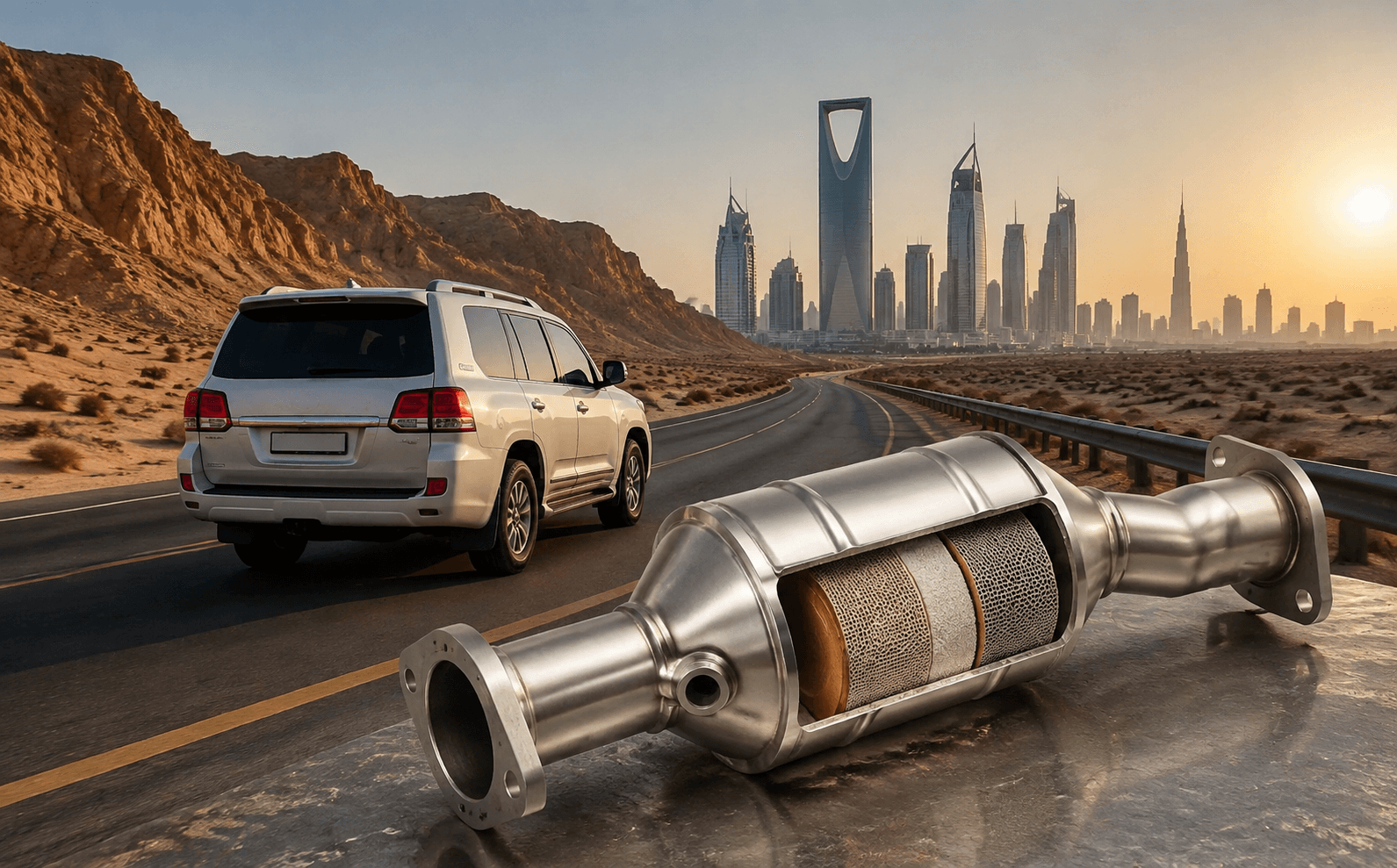
Cars are a normal part of daily life across the Middle East. In cities such as Riyadh, Dubai, Abu Dhabi, and Doha, road traffic has expanded alongside population and business growth. Trucks and commercial fleets are also important because much of the region’s transport still depends on roads.
That creates a less obvious requirement: controlling vehicle emissions.
А каталитический нейтрализатор has a fairly simple job to describe. It treats harmful gases in engine exhaust before they leave the vehicle. The actual engineering is more complicated. Catalyst chemistry, substrate design, exhaust temperature, engine calibration, and vehicle usage all affect how well the system works.
This is one reason the Middle East catalytic converter market deserves a closer look. The region does not have one uniform vehicle market or one common operating environment. Saudi Arabia has a very large fleet and long driving distances. The UAE has a strong premium vehicle and imported-car segment. Other GCC countries have their own mix of passenger cars, commercial vehicles, and heavy equipment.
Regulations are changing as well. Governments are paying more attention to air quality and vehicle emissions, while manufacturers are adopting cleaner engine and exhaust technologies.
Industry estimates have placed the regional market on a growth path through 2031, with a projected CAGR of about 7.6%. Regulation is one reason. The growing vehicle population and replacement market are two others.
The result is a market with opportunities for both original equipment and aftermarket suppliers. These factors also support the long-term development of the Middle East catalytic converter market.
1. Middle East Catalytic Converter Market Overview and Growth
The size of the vehicle fleet is a useful starting point when looking at the Middle East catalytic converter market.
More vehicles generally mean more emission control equipment. New cars require compliant exhaust systems from the factory. Older vehicles eventually need maintenance or replacement parts. Commercial vehicles can create another layer of demand because they often accumulate mileage much faster than private cars.
The regional product mix is fairly broad, which makes the Middle East catalytic converter market different from many other automotive emission markets.Gasoline vehicles commonly use three-way catalytic systems. Diesel applications may rely on diesel oxidation catalysts, particulate filters, or selective catalytic reduction systems.
So, the term catalytic converter covers several different technologies.
For gasoline engines, the трехкомпонентный каталитический нейтрализатор remains one of the established solutions. It targets carbon monoxide, hydrocarbons, and nitrogen oxides in a single exhaust treatment system.
A simplified view of the market looks like this:
| Market Factor | Situation |
|---|---|
| Forecast Period | 2025-2031 |
| Estimated CAGR | About 7.6% |
| Основные рынки | Saudi Arabia, UAE, Qatar and other GCC countries |
| Main Vehicle Groups | Passenger cars, LCVs, trucks and buses |
| Key Technologies | TWCC, DOC, DPF and SCR |
| Main Growth Factors | Regulations, vehicle population and replacement demand |
The figures above describe the general market direction rather than a specification for every country. Local regulations and vehicle fleets can differ considerably.
That distinction matters to suppliers. A converter designed for one vehicle application cannot automatically be treated as a suitable replacement for another simply because the engine size looks similar.
2. What Is Behind the Market Growth?
2.1 Emission Rules Are Changing the Requirements
Environmental regulation is becoming more relevant to the Middle East catalytic converter market.
For a long time, vehicle ownership and fuel consumption received more attention than exhaust treatment. That balance is changing. Governments are now looking more closely at emissions from the growing vehicle fleet.
Saudi Arabia and the UAE are particularly important examples. Their environmental programs and vehicle regulations are pushing manufacturers toward cleaner solutions.
The effect can be seen at several points in the supply chain.
A vehicle manufacturer needs a compliant emission system. An importer needs to understand the requirements attached to the vehicle. A workshop needs replacement parts that actually match the original application.
That last point is easy to overlook.
A catalytic converter may look correct from the outside and still perform poorly if its internal catalyst formulation or substrate specification does not suit the engine.
For this reason, emission compliance is becoming more closely linked to product engineering rather than simply product appearance.
2.2 More Vehicles Mean More Exhaust Components
Vehicle ownership remains high in several Middle Eastern markets.
Saudi Arabia is particularly significant because of its large geographical area and strong dependence on road transportation. SUVs and passenger vehicles are common, while commercial vehicles support logistics, construction, and other industries.
The UAE has a different profile. Dubai and Abu Dhabi have large numbers of imported vehicles and premium models. That creates demand for a wide range of replacement components rather than one standard product type.
Then there are smaller GCC markets such as Qatar, Kuwait, Oman, and Bahrain. Their individual volumes are lower, but together they form an important regional customer base.
For catalytic converter suppliers, this means there is no single “Middle East vehicle specification.”
Vehicle age, engine type, fuel, driving pattern, and emission requirement all need to be considered before choosing a replacement catalyst.
2.3 The Replacement Market Is Worth Watching
The aftermarket is where vehicle age starts to matter.
A catalytic converter can deteriorate for several reasons. Long-term exposure to high exhaust temperatures can affect the substrate and catalyst coating. Engine problems can be even more damaging. A persistent misfire, excessive oil consumption, or an incorrect air-fuel mixture may shorten catalyst life.
Climate adds another variable.
High ambient temperatures do not automatically cause a converter to fail. They do, however, leave less thermal headroom for the exhaust system, especially when the vehicle is carrying a heavy load or driving for long periods.
Eventually, some vehicles will need a replacement converter.
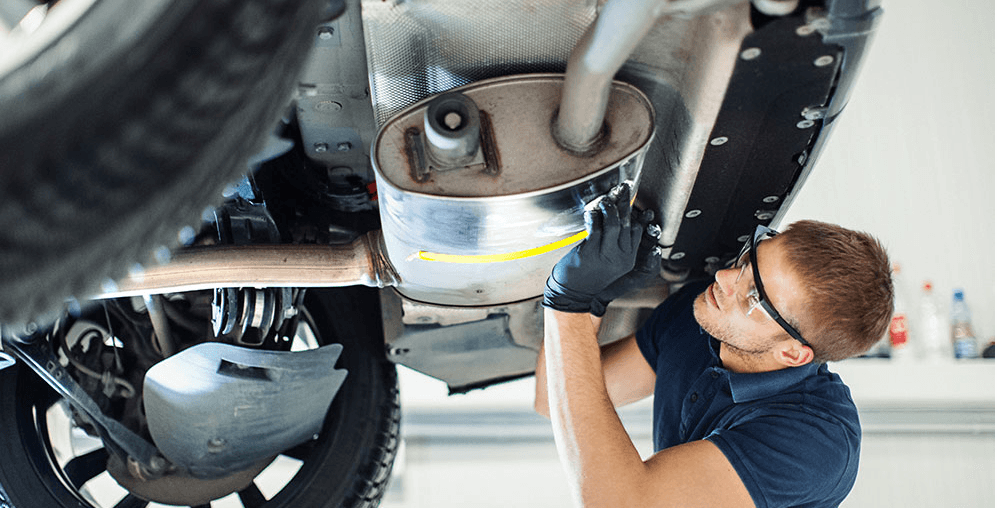
This is particularly relevant for distributors and workshops. Customers usually want a part that fits without major modification, works with the existing exhaust system, and offers predictable service life.
Price matters, but it is only one part of the purchase decision.
3. Heat and Catalyst Design in the Middle East
The climate deserves separate attention because the Middle East catalytic converter market must serve vehicles operating in a high-temperature environment.
Inside a running engine, exhaust gas can become extremely hot. The catalytic converter then has to handle that heat while maintaining the structure of the substrate and the activity of its catalyst coating.
Repeated temperature changes can create stress.
This is why substrate selection matters.
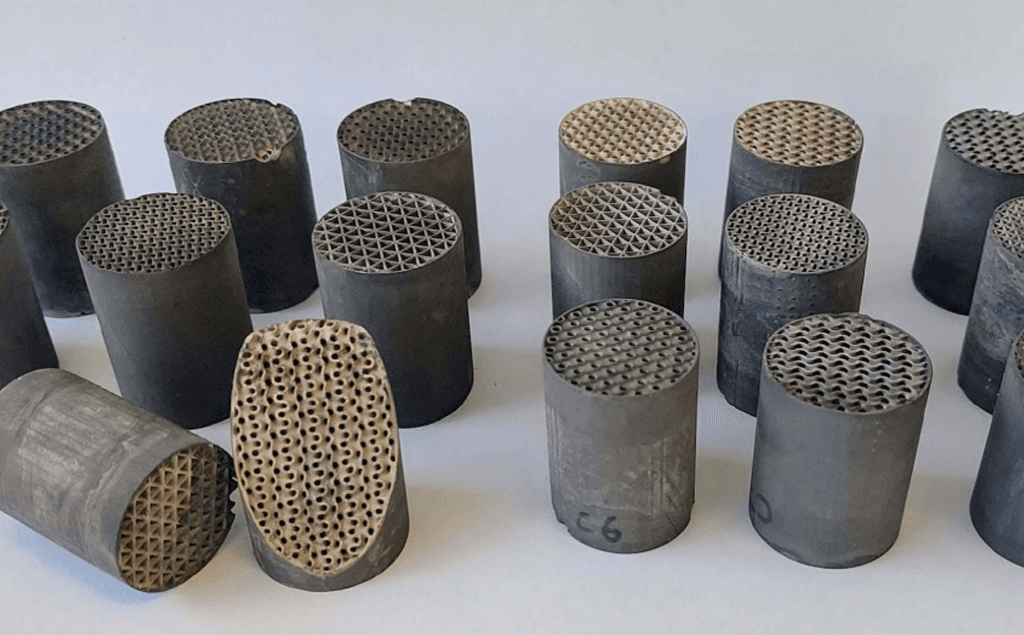
Ceramic cordierite is widely used in gasoline applications. It offers a practical combination of thermal performance, weight, cost, and manufacturing convenience. Metallic substrates work differently. They transfer heat quickly and can tolerate mechanical stress well, although their cost is generally higher.
Neither material is automatically better.
| Особенность | Ceramic Cordierite | Металлическая подложка |
|---|---|---|
| Typical Cost | Ниже | Выше |
| Heat Transfer | Умеренный | Быстрый |
| Mechanical Strength | Good, but brittle | Very high |
| Typical Use | Passenger vehicles | Performance and specialized applications |
| Главное преимущество | Good cost-performance balance | Quick heat-up and strong structure |
Cell density is another consideration.
A higher cell count gives the catalyst more surface area. That can help emission conversion. But the exhaust also has to pass through the substrate. Push the cell density too far and backpressure can rise.
Engineers therefore have to compromise.
The best design is not necessarily the one with the highest CPSI. It is the one that gives the engine enough exhaust flow while providing sufficient catalyst surface for the required emission performance.
4. Precious Metals and Catalyst Cost
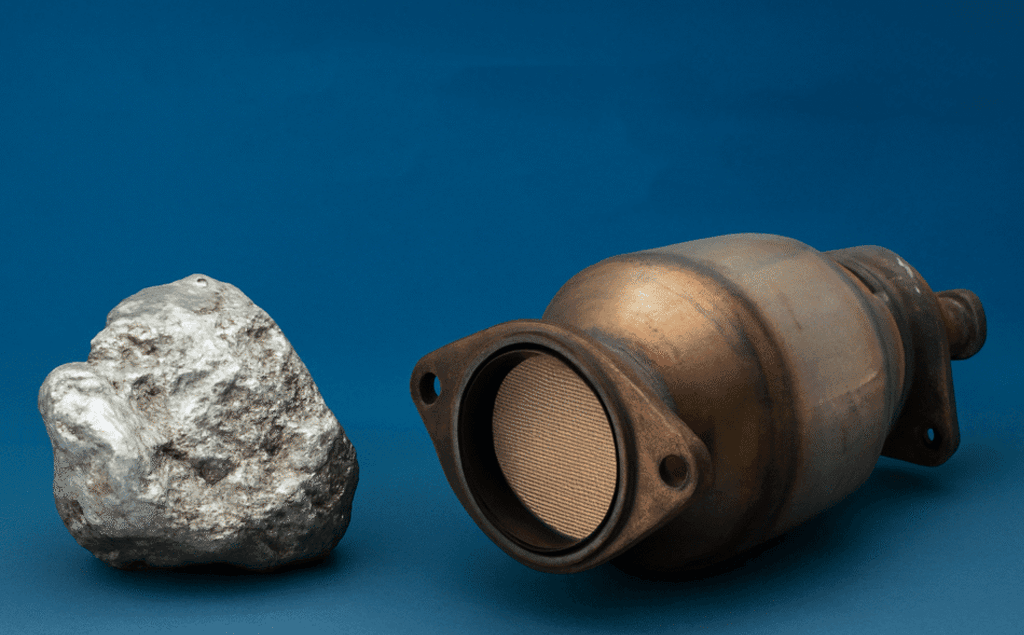
The chemistry inside a catalytic converter depends heavily on металлы платиновой группы.
Palladium is commonly associated with oxidation reactions involving carbon monoxide and hydrocarbons. Rhodium is particularly important for NOx reduction. Platinum also has strong oxidation properties and is widely used in diesel emission systems.
These metals are expensive for a reason: very small quantities can have a major effect on catalyst performance.
Their prices also move independently of the rest of the exhaust system. A change in PGM prices can therefore affect converter manufacturing costs even when steel, labor, and logistics costs remain stable.
Manufacturers have several ways to respond.
One is catalyst formulation. Another is washcoat development. Substrate design also matters because the catalyst needs enough effective surface area to interact with the exhaust gas.
Simply adding more precious metal is not always the most sensible solution.
The better approach is to use the available catalyst efficiently while maintaining the required conversion performance.
That will remain an important engineering issue as manufacturers try to control cost without sacrificing emission results.
5. Saudi Arabia, UAE and Other GCC Markets
Саудовская Аравия
Saudi Arabia is likely to remain one of the largest opportunities in the Middle East catalytic converter market.
The country has a substantial vehicle population and a strong need for road transportation. SUVs, passenger cars, trucks, and commercial vehicles all contribute to demand.
Saudi Vision 2030 is another factor worth following. Industrial localization and automotive investment could gradually change the structure of the local supply chain.
For component manufacturers, that may create opportunities beyond simply exporting finished parts. Local distribution, warehousing, assembly, and manufacturing partnerships could become more relevant.
Gasoline vehicles will remain an important part of the fleet, so demand for products such as the трехкомпонентный каталитический нейтрализатор should continue to have a place in the aftermarket.
UAE
The UAE has a somewhat different market profile.
Dubai and Abu Dhabi are major centers for imported vehicles, premium cars, logistics, and automotive services. Buyers can be demanding when it comes to fitment and product quality.
The country is also putting more attention on sustainability and cleaner transportation.
Hybrid vehicles are particularly interesting from a catalyst perspective. Their combustion engines do not necessarily run continuously. Frequent engine stops can leave the exhaust system cooler, which changes the conditions under which the catalyst has to operate.
Faster light-off and good low-temperature activity therefore become more valuable.
Qatar and Other GCC Countries
Qatar, Kuwait, Oman, and Bahrain are smaller markets, but they should not be treated as one category.
Their vehicle fleets and industrial activities differ.
Commercial transportation and construction remain relevant in several of these markets. Diesel emission systems therefore deserve attention alongside gasoline catalyst products.
DOC, DPF, and SCR technologies can become important depending on the vehicle and applicable regulations.
For suppliers, a broad product range can be useful, but accurate application data is just as important.
6. Where Is the Technology Heading?
Technology development will also influence the Middle East catalytic converter market over the next several years.
Manufacturers are working on catalyst chemistry, washcoat structure, substrate geometry, and thermal management. These areas are closely connected. Changing one part of the system can affect the others.
Low-temperature performance is one example.
A catalyst cannot deliver its full conversion capability immediately after a cold start. It needs to reach an effective operating temperature first.
That becomes more complicated in hybrid vehicles because the combustion engine may shut down during normal driving.
Electrically heated catalysts and other rapid light-off approaches could become more useful as hybrid adoption increases.
Vehicle diagnostics will also continue to improve. Oxygen sensors already help modern vehicles monitor combustion and catalyst performance. More advanced diagnostic strategies can identify declining catalyst efficiency earlier.
For the aftermarket, the trend may be just as practical as it is technical.
Buyers are likely to pay closer attention to vehicle-specific fitment, material specifications, test data, and warranty conditions. A low-priced converter that does not work correctly is an expensive purchase in the end.
Заключение
The Middle East catalytic converter market is developing alongside the region’s growing vehicle fleet and changing environmental requirements.
Saudi Arabia offers scale. The UAE provides a strong market for imported and higher-value vehicles. Qatar and the other GCC countries add opportunities across passenger and commercial applications.
The climate should not be ignored. High temperatures and long driving distances put additional demands on exhaust components, making thermal durability an important part of product selection.
The трехкомпонентный каталитический нейтрализатор will remain relevant for gasoline vehicles, while diesel applications will continue to rely on technologies such as DOC, DPF, and SCR.
Looking toward 2031, the strongest opportunities may not necessarily belong to the supplier with the lowest price. Product fitment, catalyst performance, material consistency, delivery capability, and knowledge of local applications can all influence the final buying decision.
For manufacturers and distributors entering the region, understanding those details is likely to be more useful than simply looking at the headline market growth rate.