Introduction
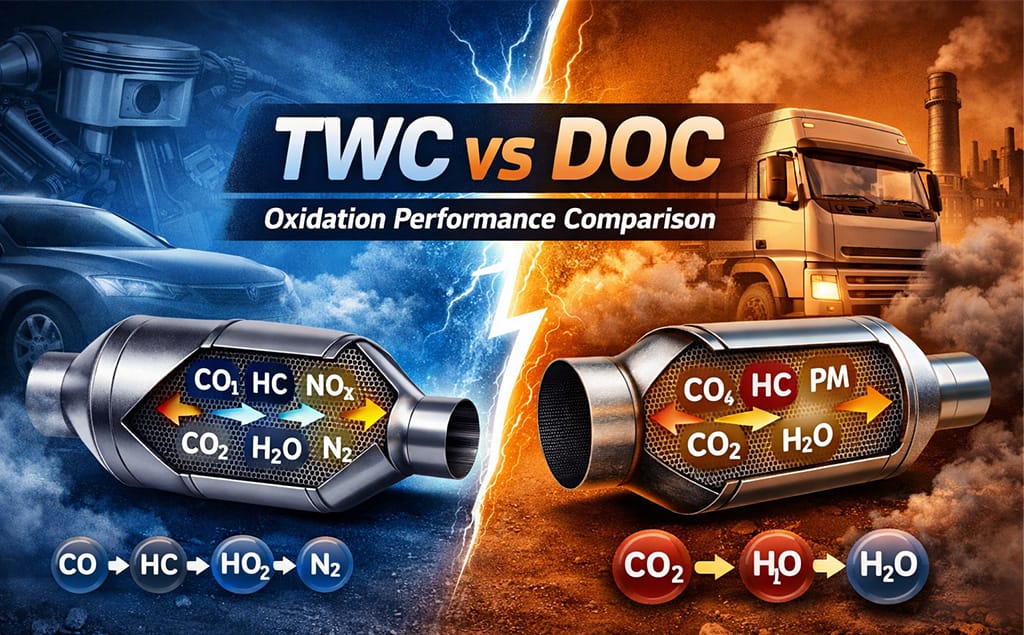
Modern industrial emissions control relies on sophisticated chemical engineering. The global push for carbon neutrality drives the evolution of exhaust after-treatment systems. Two technologies lead this field: the Diesel Oxidation Catalyst (DOC) and the three way catalytic converter (TWC). Each serves a distinct role based on engine combustion chemistry. The DOC traditionally dominates the diesel sector. However, the three way catalytic converter remains the standard for gasoline engines.
Recent shifts in fuel composition, such as the rise of B100 biodiesel, challenge these traditional boundaries. Engineers now re-evaluate how these catalysts perform under extreme conditions. High-concentration biofuels change the exhaust temperature and chemical makeup. This article provides an exhaustive comparison of DOC and TWC performance. We analyze oxidation efficiency, light-off temperatures, and the impact of precious metal loading. This guide serves as a technical benchmark for SEO professionals and emissions engineers alike.
The Core Chemistry of the Three Way Catalytic Converter
The three way catalytic converter performs a complex balancing act. It manages three primary pollutants simultaneously. These include nitrogen oxides (NOx), carbon monoxide (CO), and unburnt hydrocarbons (HC). The device operates most efficiently at the stoichiometric point. This is the precise air-fuel ratio where complete combustion occurs.
Inside the three way catalytic converter, specific chemical reactions take place. The reduction of NOx into nitrogen and oxygen happens on the surface of rhodium. Simultaneously, platinum or palladium promotes the oxidation of CO and HC. This dual-action nature makes the three way catalytic converter a versatile tool. However, it requires a narrow operating window. If the oxygen concentration fluctuates, the conversion efficiency drops significantly.
In modern applications, engineers use an oxygen sensor to maintain this balance. This sensor provides feedback to the engine control unit (ECU). The ECU then adjusts the fuel injection in real-time. This ensures the three way catalytic converter stays within its peak performance zone. Without this precise control, the TWC cannot reduce NOx effectively.

The Specialized Function of Diesel Oxidation Catalysts
Diesel engines operate differently from gasoline engines. They use a lean-burn process. This means the exhaust always contains excess oxygen. Because of this high oxygen environment, the DOC cannot perform reduction reactions. It focuses exclusively on oxidation.
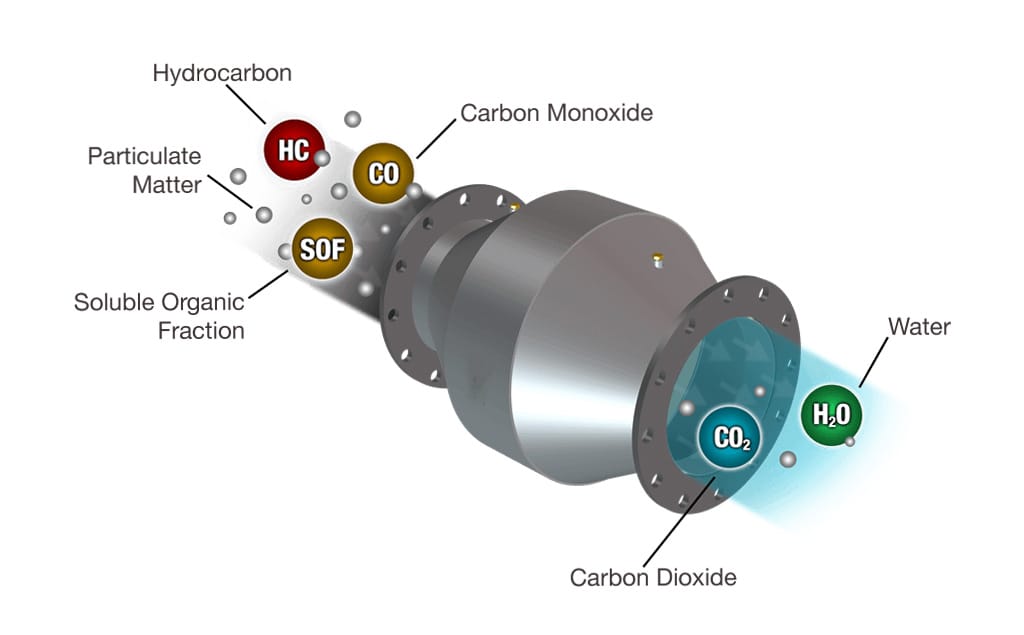
The DOC excels at removing the organic fraction of particulate matter (PM). It also converts carbon monoxide and gas-phase hydrocarbons into water and carbon dioxide. In many diesel systems, the DOC acts as the first stage of the after-treatment chain. It prepares the exhaust for subsequent components like the Diesel Particulate Filter (DPF).
However, the DOC has physical limits. It shows poor performance when dealing with methane (CH4). In many tests, methane conversion rates stay below 30%. Furthermore, the DOC requires significant heat to start the reaction. This “light-off” temperature is a critical metric for cold-start emissions. If the engine runs too cool, the DOC remains inactive, allowing raw pollutants to escape.
The Impact of Precious Metal Loading on Catalyst Longevity
Precious metal loading determines the lifespan and efficiency of the catalyst. These metals belong to the Platinum Group (PGM). Manufacturers use platinum, palladium, and rhodium in varying concentrations. For the three way catalytic converter, the ratio of these metals is vital.
Higher PGM loading lowers the light-off temperature. This allows the catalyst to start working sooner after the engine starts. It also increases the number of active sites on the substrate. More active sites mean the catalyst can handle a higher volume of exhaust gas. In the context of the three way catalytic converter, increasing PGM loading directly improves the oxidation of complex hydrocarbons.
Longevity also depends on the washcoat stability. The washcoat holds the PGM in place. Over time, high temperatures can cause the metal particles to “sinter” or clump together. This reduces the effective surface area. Advanced TWC designs use stabilizers like ceria and zirconia. These materials prevent sintering and enhance oxygen storage capacity. This ensures the three way catalytic converter maintains high conversion efficiency for over 100,000 miles.

Thermal Management Strategies in Modern Exhaust Systems
Temperature control is the most important factor in catalyst performance. Every three way catalytic converter has an optimal thermal window. Below 250°C, the catalyst is usually dormant. Above 800°C, the internal structures may suffer permanent thermal damage.
Engineers use several strategies to manage this heat. First, they place the catalyst close to the exhaust manifold. This “close-coupled” position captures the maximum heat from the combustion chamber. Second, they use insulated exhaust piping. This prevents heat loss before the gas reaches the three way catalytic converter.
Active thermal management is also common. Some systems use late-cycle fuel injection. This sends a small amount of unburnt fuel into the exhaust. When this fuel hits the catalyst, it burns and raises the temperature. This technique is particularly useful for regenerating diesel filters or waking up a cold TWC. Effective thermal management ensures the three way catalytic converter remains effective across all driving conditions, from city idling to highway cruising.
Detailed Performance Comparison Matrix
The following table summarizes the operational differences between standard DOC and TWC units. This data reflects findings from the 2025 SAE World Congress study.
| Performance Metric | Diesel Oxidation Catalyst (DOC) | Three Way Catalytic Converter (TWC) |
|---|---|---|
| Combustion Type | Lean-Burn (Compression) | Stoichiometric (Spark) |
| NOx Conversion | Negligible | Very High (>95%) |
| CO Oxidation | High (at >300°C) | Superior (at Stoichiometry) |
| Hydrocarbon Control | Excellent for Diesel HC | Excellent for Gasoline HC |
| Methane Efficiency | Poor (<30%) | Moderate (Varies with PGM) |
| Biodiesel (B100) Adaptability | Limited at low temps | High (with increased volume) |
| Substrate Material | Ceramic/Metallic Honeycomb | High-Density Ceramic |
| Oxygen Sensitivity | Low (Thrives in O2) | High (Requires balance) |
| Typical Application | Heavy-Duty Trucks/Tractors | Passenger Vehicles/Gas Engines |
Challenging Fuels: The Biodiesel (B100) Case Study
The transition to renewable fuels like B100 biodiesel introduces new variables. Biodiesel has a higher boiling point than ultra-low sulfur diesel (ULSD). It also contains more oxygen within its molecular structure. Recent studies show that a standard DOC struggles with B100 under high-flow, low-temperature conditions.
At temperatures below 340°C, the DOC outlet temperature often drops when using B100. This indicates a failure to maintain the exothermic oxidation reaction. As the biodiesel concentration increases, the light-off temperature also climbs. This creates a “performance gap” during the most critical phases of engine operation.
The three way catalytic converter offers a surprising solution. Researchers tested TWC units on diesel engines running B100. They found that a single TWC brick outperformed a standard DOC. When they used two TWC bricks—effectively doubling the catalyst volume—the results improved drastically. The increased residence time allows the three way catalytic converter to fully oxidize the heavy molecules in biodiesel. This proves that high-volume TWC systems can solve the performance issues associated with modern renewable fuels.
Mechanical Design and Installation Guidelines
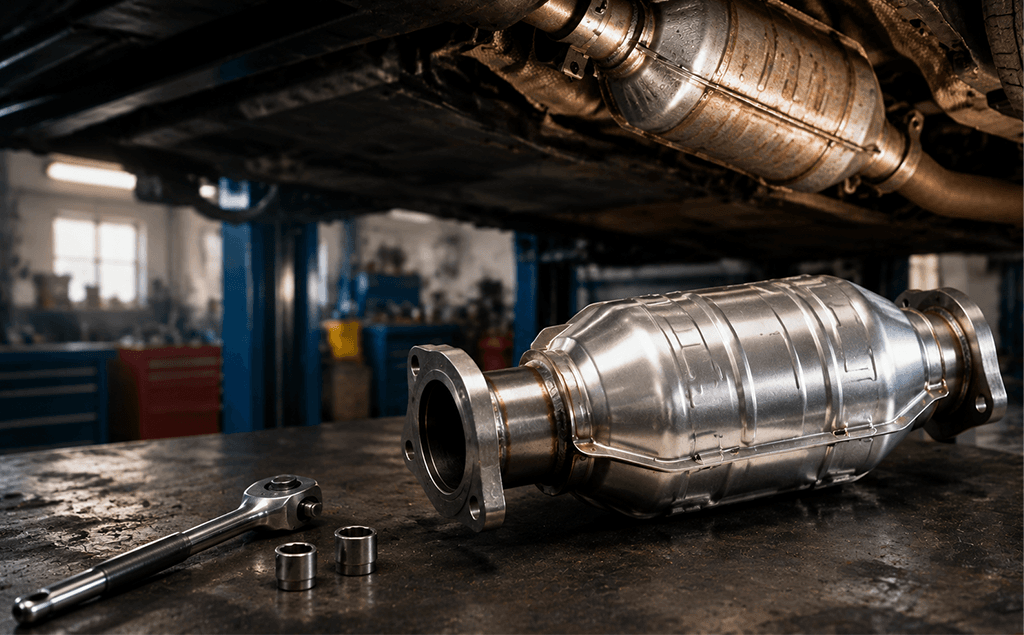
Caterpillar and other major manufacturers emphasize structural integrity. A three way catalytic converter must withstand intense vibration and thermal shock. Most units feature a stainless steel enclosure. This housing protects the fragile ceramic honeycomb substrate.
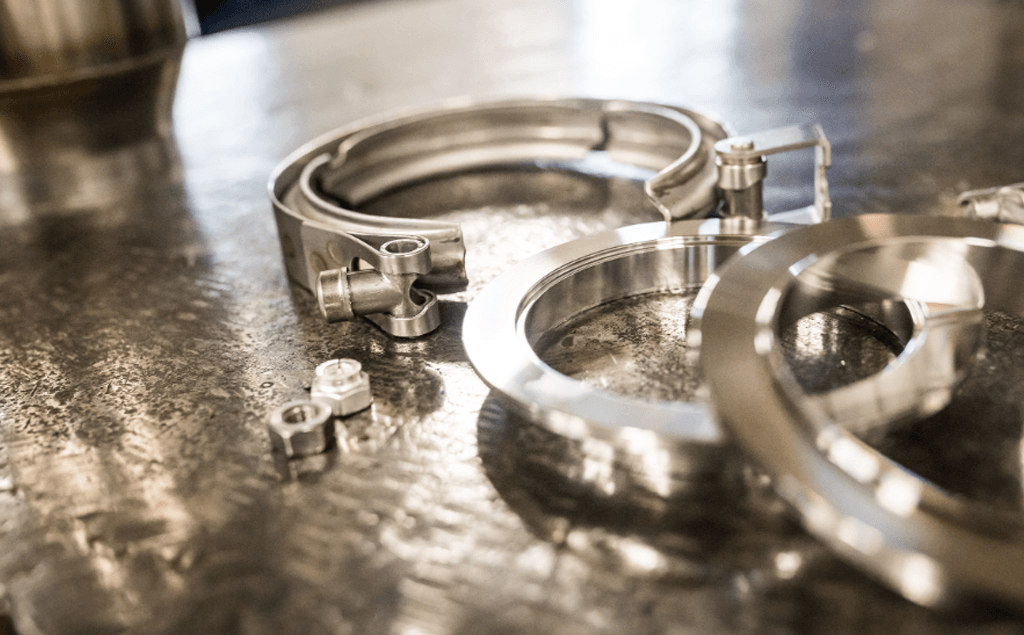
The installation process follows strict protocols. If you use a stock muffler, you must install the three way catalytic converter upstream of the muffler. This position ensures the catalyst receives the hottest possible exhaust. Installers use standard clamps for most units. However, they must exercise extreme caution with graphite gaskets. These gaskets are very brittle. Any crack or deformation will lead to a leak.
Technicians must tighten all mounting bolts to exactly 200 in-lbs. This specific torque prevents the unit from shifting while allowing for thermal expansion. Proper alignment reduces the mechanical stress on the substrate. A well-installed three way catalytic converter provides reliable service for years with minimal maintenance.
Conversion Efficiency and Substrate Science
Conversion efficiency is the ratio of pollutants removed to pollutants entered. A high-performance three way catalytic converter often achieves 98% efficiency for CO and HC. The substrate design plays a key role here.
The honeycomb structure maximizes the surface area. Typical substrates have 400 to 600 cells per square inch (CPSI). Higher cell density provides more area for the catalyst washcoat. However, it also increases backpressure. Engineers must balance the need for surface area with the need for engine breathing.
The “residence time” is the duration the exhaust gas stays inside the catalyst. A longer residence time generally leads to better conversion. This is why increasing the volume of a three way catalytic converter helps with difficult fuels like B100. By adding a second brick, you double the time the gas spends in contact with the active metals. This ensures complete oxidation even at lower temperatures.
Conclusion
The choice between a DOC and a three way catalytic converter depends on the specific goals of the emission system. The DOC remains a cost-effective and reliable choice for standard lean-burn diesel applications. It handles the organic fraction of particulates well and reduces diesel odor.
However, the three way catalytic converter offers superior multi-pollutant control. It is the only technology that handles NOx, CO, and HC in a single unit. Furthermore, recent research proves the TWC’s adaptability. By increasing catalyst volume and PGM loading, the TWC overcomes the limitations of the DOC in biodiesel applications. For high-performance needs and the use of B100 fuels, the three way catalytic converter provides a more robust and efficient solution. As global standards tighten, the industry will likely see broader adoption of TWC technology across diverse engine types.