giriiş
Modern cars can’t legally hit the road without solid emission tech to back them up, especially as environmental regulations tighten. The big hero here is the üç yollu katalitik konvertör. It tackles the harmful bypass from the engine head-on, keeping vehicles perfectly in line with worldwide standards.
What is a catalytic converter and how does a three-way system operate? We answer that here, along with a tear-down of its main components and typical red flags to watch out for. We also break down why it remains the go-to gear for cleaning up car exhaust.
What Is a Catalytic Converter?
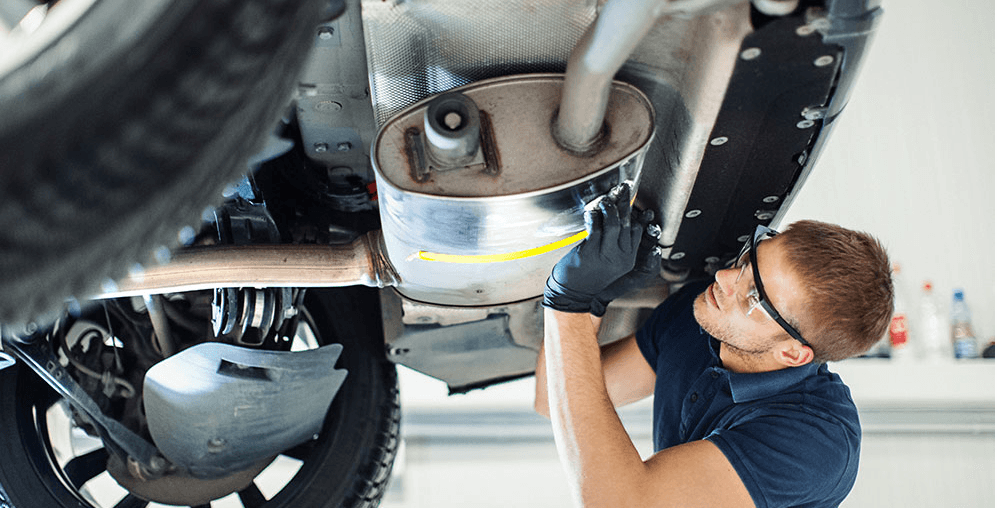
In essence, the catalytic converter acts as the definitive gatekeeper for the exhaust stream. Tucked beneath the chassis midway between the engine and the muffler, it’s there to catch and neutralize harmful pollutants before they ever hit the open air.It intercepts harmful exhaust gases as they flow through and chemically converts them into safer stuff before they hit the open air.
The magic behind this is a special catalyst that sparks the reaction but never actually gets used up itself.In short, it traps toxic gases and neutralizes them on contact, eliminating the pollution well before it can escape the system.
The primary outputs of a catalytic converter include:
- Carbon dioxide (CO₂)
- Water vapor (H₂O)
- Nitrogen gas (N₂)
By the time the exhaust gets this final cleanup, That’s a hell of a lot safer for us and the environment than letting the engine spit raw, nasty pollutants straight into the air.
Why Is a Three Way Catalytic Converter Important?
Bir standart üç yollu katalitik konvertör simultaneously removes three major pollutants from gasoline engine exhaust:
| Kirletici | Kaynak | Conversion Result |
|---|---|---|
| Karbon Monoksit (CO) | Incomplete fuel combustion | Carbon Dioxide (CO₂) |
| Hidrokarbonlar (HC) | Yanmamış yakıt | Water (H₂O) and Carbon Dioxide (CO₂) |
| Azot Oksitler (NOx) | High-temperature combustion | Nitrogen (N₂) and Oxygen (O₂) |
Because it handles all three emissions at the same time, engineers call it a “three way” catalytic converter.
Modern vehicles depend on this technology to satisfy regulations established by environmental agencies worldwide.
How Does a Three Way Catalytic Converter Work?
The operation of a üç yollu katalitik konvertör is driven entirely by simultaneous oxidation and reduction reactions.
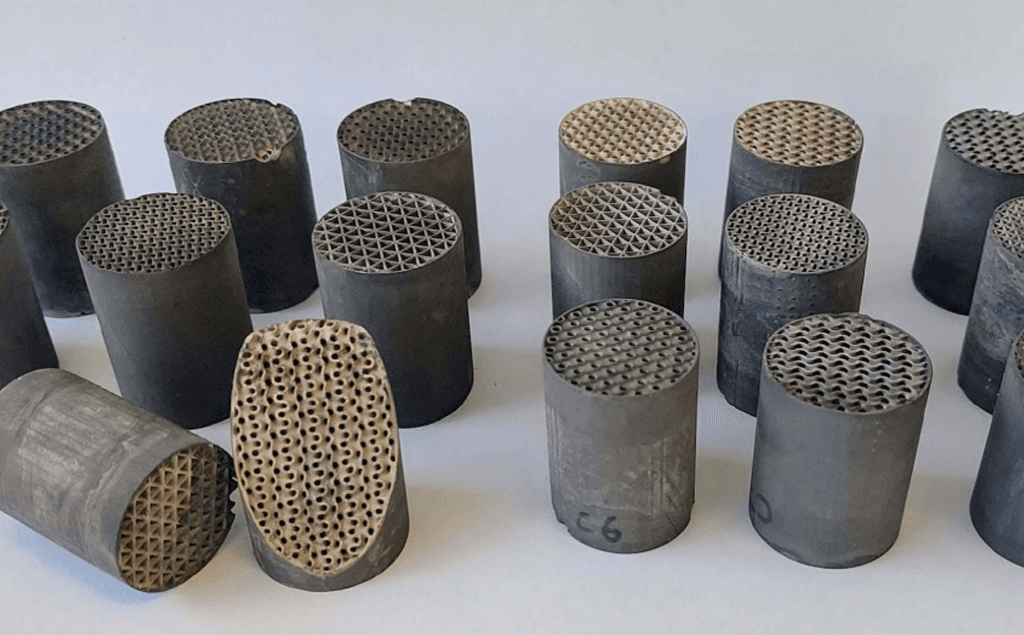
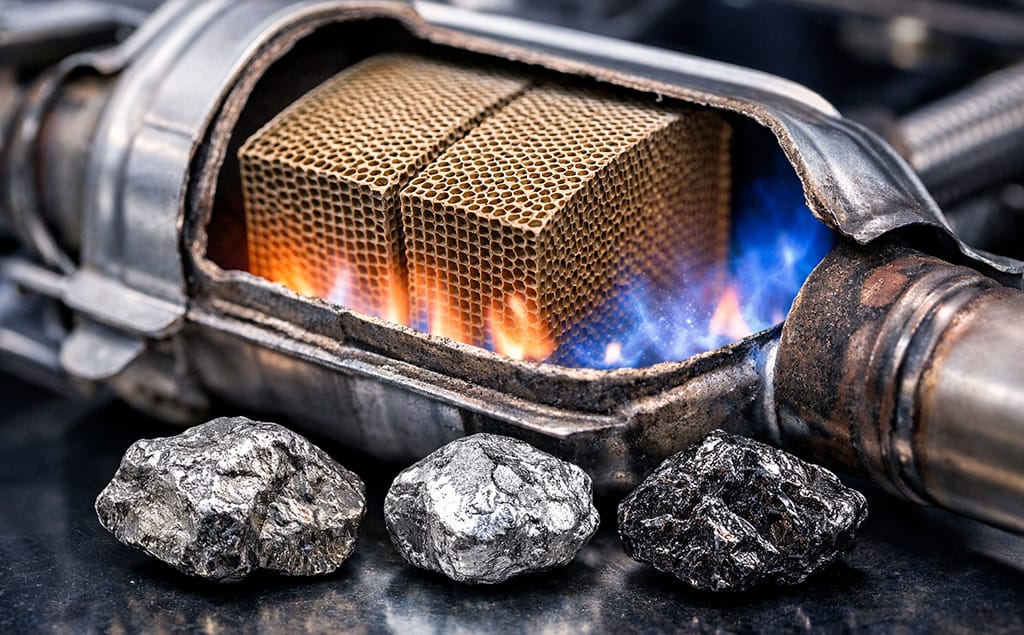
Inside the housing, there’s a honeycomb block coated in precious metals.This setup jams the exhaust through thousands of micro-passages, maximizing the real estate where the gas actually hits the catalyst.
By forcing the exhaust to split into thousands of miniature pathways, this grid structure ensures that every bit of gas gets maximum exposure to the catalyst.
Karbon Monoksitin Oksidasyonu
Carbon monoxide is highly lethal. But once the catalyst steps in, it forces that CO to team up with oxygen—completely flipping a deadly poison into harmless carbon dioxide. Tepki:
2CO2 + O₂ → 2CO2
Hidrokarbonların Oksidasyonu
Unburned hydrocarbons contribute to smog formation and air pollution.
The catalyst converts these hydrocarbons into water vapor and carbon dioxide.
Tepki:
HC + O₂ → CO₂ + H₂O
Azot Oksitlerin Azaltılması
Nitrogen oxides form when combustion temperatures become extremely high.
Rhodium catalysts remove oxygen atoms from NOx compounds, producing harmless nitrogen gas.
Tepki:
2NOx → N₂ + O₂
The Role of Precious Metals
It’s the micro-layer of precious metals bonded to the substrate that actually drives the entire catalytic process.
These metals include:
| Değerli Metal | İşlev |
|---|---|
| Platin (Pt) | Oxidation catalyst |
| Paladyum (Pd) | Oxidation catalyst |
| Rodyum (Rh) | Reduction catalyst |
Every single metal has its own job to do. Together, they work like a finely tuned team—cutting down emissions by over 99% when everything is running just right.
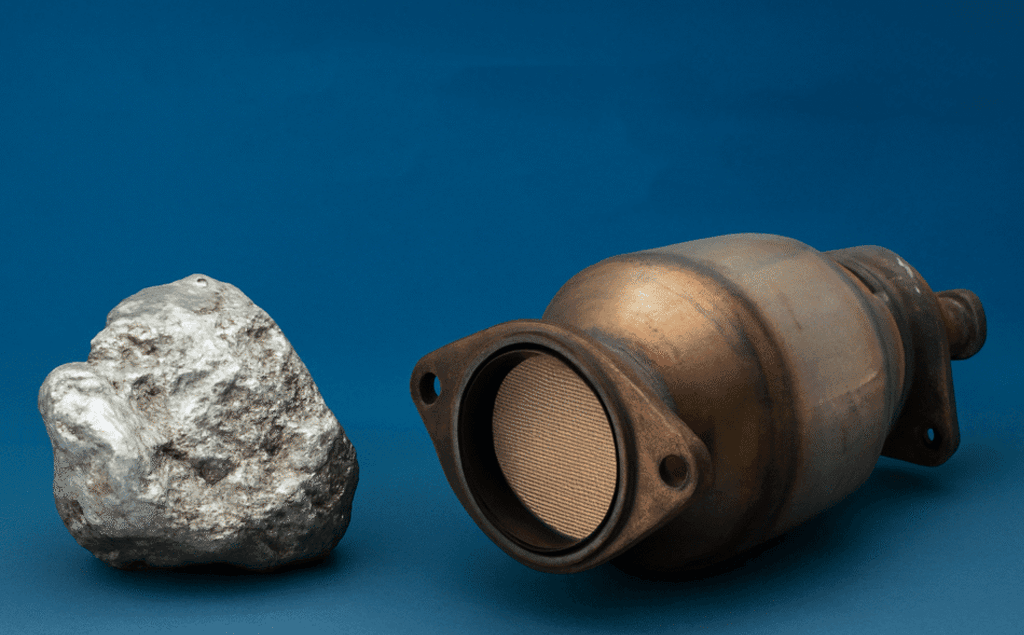
Because these metals are worth a fortune, it’s no wonder catalytic converter theft has turned into a massive, worldwide headache.
Main Components of a Catalytic Converter
Deceptively simple on the outside, the converter is a highly sophisticated system of interconnected, high-precision parts.
1. Stainless Steel Shell
Built for the harshest conditions, a rock-solid exterior shields the sensitive inner core, isolating it from road debris, corrosion, and extreme thermal stress. Manufacturers usually run these unique ridges across the outer casing—it’s a simple yet clever way to stamp out warping and give the whole structure a lot more backbone.
2. Honeycomb Substrate
The substrate serves as the converter’s foundation.
Most manufacturers use ceramic materials because they provide:
- High temperature resistance
- Excellent durability
- Large surface area
- Efficient exhaust flow
The honeycomb design contains thousands of microscopic channels that expose exhaust gases to catalytic surfaces.
3. Yıkama Katmanı
The washcoat covers the substrate and dramatically increases available surface area.
This layer stores oxygen and supports the catalytic materials.
Without the washcoat, catalyst efficiency would decrease significantly.
4. Catalyst Cushioning Mat
A specialized mat surrounds the substrate.
Its functions include:
- Preventing vibration damage
- Holding the substrate in position
- Allowing thermal expansion
- Creating an exhaust-tight seal
5. Heat Shields
Catalytic converters operate at temperatures exceeding 800°C (1472°F).
The heat shield isolates adjacent vehicle components, preventing thermal damage from localized excessive heat.
6. Oxygen Sensors
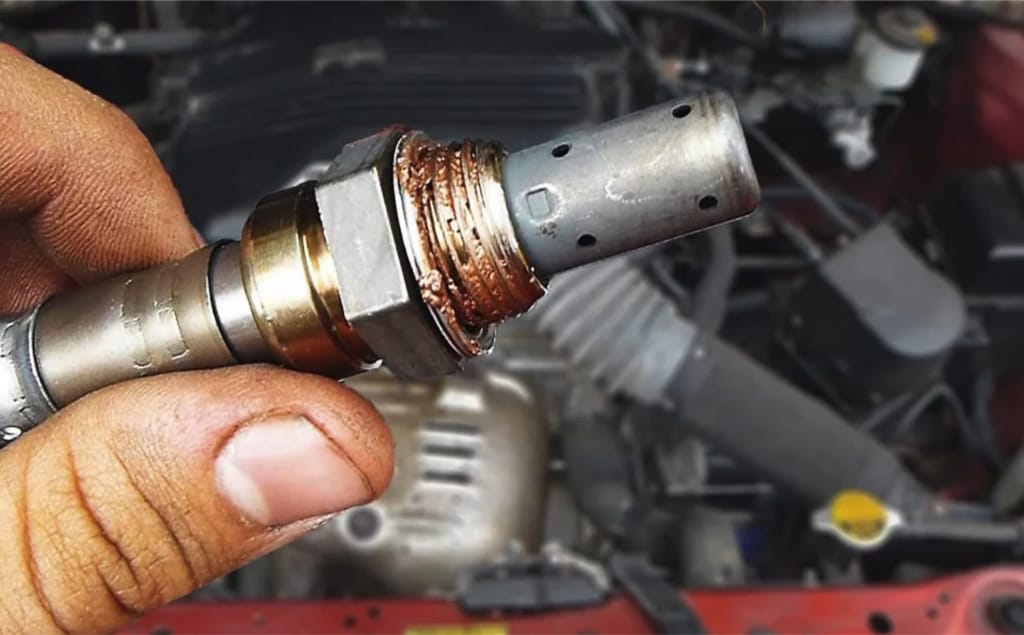
Dual oxygen sensors flank the converter—positioned both upstream and downstream—to continuously audit its real-time performance. These sensors provide feedback to the engine control module (ECM), allowing precise fuel mixture adjustments.
How OBD-II Systems Monitor Catalytic Converter Efficiency
Modern vehicles use OBD-II (On-Board Diagnostics II) systems to continuously monitor emission-control performance.
The system compares readings from oxygen sensors positioned before and after the catalytic converter.
If the cat’s efficiency drops below the legal limit, the car’s computer will immediately log a fault code and slap that “Check Engine” light right on your dash.
Common diagnostic codes include:
| Kod | Tanım |
|---|---|
| P0420 | Katalizör Sistemi Verimliliği Eşik Değerinin Altında (Bank 1) |
| P0430 | Katalizör Sistemi Verimliliği Eşik Değerinin Altında (Bank 2) |
As emission regulations become stricter, OBD systems have become increasingly sensitive to catalyst degradation.
Conditions Required for Maximum Efficiency
To get peak performance out of the converter, the engine needs to lock into that perfect stoichiometric balance.
For gasoline engines, this ratio is approximately:
14.7 parts air to 1 part fuel
At this ratio:
- Sufficient oxygen exists for oxidation reactions.
- Enough reducing agents remain for NOx conversion.
- Catalyst efficiency reaches maximum levels.
Engine management systems constantly adjust fuel delivery to maintain this balance.
Common Symptoms of Catalytic Converter Failure
Operating in a punishing environment of intense heat and stress, a converter inevitably wears down. Over the years, carbon deposits, thermal spikes, or road debris impacts will take a heavy toll on its efficiency.
Drivers often notice several warning signs.
Reduced Engine Performance
A clogged converter restricts exhaust flow.
The engine struggles to expel exhaust gases, leading to:
- Poor acceleration
- Reduced power
- Sluggish throttle response
Lower Fuel Economy
The engine may consume more fuel when exhaust restrictions increase.
Fuel efficiency often drops noticeably.
Motor Arıza Işığı
Fault codes related to catalyst efficiency commonly trigger the Check Engine Light.
Professional diagnostic equipment can identify the exact cause.
Çürük Yumurta Kokusu
A failed converter may produce a sulfur-like odor.
A rotten-egg odor typically points to incomplete conversion of sulfur compounds within the exhaust stream.
Failed Emissions Test
A deteriorated converter often causes excessive emissions and failed inspection results.
Factors That Shorten Catalytic Converter Life
Several issues can accelerate catalyst degradation.
Motor Arızaları
Unburned fuel entering the converter can cause overheating.
Excessive temperatures may melt the ceramic substrate.
Oil Contamination
Leaking valve seals or worn piston rings allow oil to enter the exhaust stream.
Oil deposits coat catalyst surfaces and reduce efficiency.
Coolant Leaks
Internal coolant leaks introduce contaminants that poison catalyst materials.
Impact Damage
Road debris or improper lifting procedures can physically damage the converter housing.
Poor Fuel Quality
Dirty fuel carries trace contaminants that can inevitably degrade the catalyst’s performance with every mile you drive.
Three Way Filters: The Next Evolution
Vehicle emission technology continues to evolve.
Many modern gasoline direct injection engines now use a Three Way Filter (TWF).
A TWF combines:
- Traditional three way catalytic converter functions
- Gasoline particulate filtration
This design reduces particulate emissions while maintaining conventional NOx, HC, and CO conversion performance.
Benefits of Three Way Filters
| Özellik | Conventional TWC | Three Way Filter |
|---|---|---|
| CO Reduction | Evet | Evet |
| HC Reduction | Evet | Evet |
| NOx Azaltımı | Evet | Evet |
| Particulate Filtration | HAYIR | Evet |
| Emisyon Uyumluluğu | Yüksek | Daha yüksek |
Studies show that advanced TWF systems can reduce particulate numbers by up to 95%.
As global regulations tighten, these systems will become increasingly common.
The Future of Three Way Catalytic Converter Technology
Automakers continue developing more efficient catalyst technologies.
Current research focuses on:
- Faster light-off performance
- Daha düşük değerli metal yüklemesi
- Improved cold-start emissions control
- Enhanced durability
- Reduced manufacturing costs
Future catalyst designs will likely support hybrid vehicles, plug-in hybrids, and other advanced powertrain systems.
Despite the clear momentum behind vehicle electrification, the legacy fleet of millions of internal combustion engines will demand high-efficiency catalytic converters for a long time yet.
Çözüm
Even now, the üç yollu dönüştürücü is the benchmark for gasoline emission control. It targets and defuses the main culprits—carbon monoxide, hydrocarbons, and NOx—clearing the air and helping brands clear regulatory hurdles without a hitch.
Under the hood, those precious metals trigger a reaction that clears out over 99% of toxic exhaust the moment conditions are right.Combined with oxygen sensors and OBD-II monitoring, you’ve got the core defense system for modern vehicle emissions.
Tighter rules, rapid tech leaps, and evolving hardware—that’s just what innovation looks like. Through it all, the mission stays dead simple: clean up the tailpipe and save the planet for our kids.