Modern automotive engineering demands precision. The exhaust system represents a critical component of this engineering. At the heart of emissions control lies the three way catalytic converter. This device performs a complex chemical function. It transforms toxic byproducts of combustion into inert gases. BMW vehicles utilize sophisticated engine management systems. These systems rely heavily on the efficient operation of the catalytic converter. A failure in this component compromises performance. It also increases environmental impact.
Owners often misunderstand the complexity of this device. It is not merely a filter. It is a chemical reactor. It operates under extreme temperatures. It utilizes precious metals to facilitate molecular changes. This guide explores the science behind the BMW three-way catalytic converter. We analyze the differences between an OEM catalytic converter and an aftermarket catalytic converter. We also provide a technical protocol for installation and maintenance. Understanding these mechanisms ensures long-term vehicle health.
The Science of the Three Way Catalytic Converter
The internal combustion engine burns fossil fuels. Ideally, this process produces only carbon dioxide, water, and energy. Real-world combustion is imperfect. It generates harmful pollutants. The three way catalytic converter targets three specific toxic compounds. This is the origin of its name.
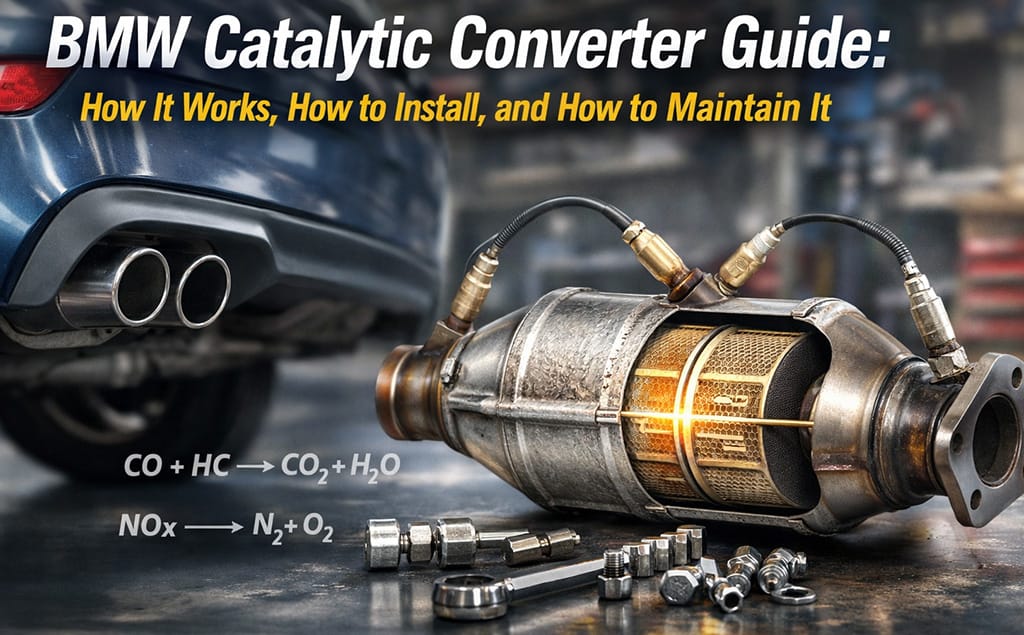
- Reduction of Nitrogen Oxides (NOx) Nitrogen oxides form at high cylinder temperatures. They contribute to smog and acid rain. The first stage of the converter targets these molecules. The catalyst uses platinum and rhodium. These metals strip the nitrogen atom from the molecule. The catalyst holds the nitrogen. It releases the oxygen. Two nitrogen atoms then bond. They form harmless nitrogen gas ( ).
- Oxidation of Carbon Monoxide (CO) Carbon monoxide acts as a poison to oxygen-breathing organisms. It results from incomplete combustion. The second stage involves oxidation. Platinum and palladium serve as the catalysts here. They aid the reaction between carbon monoxide and oxygen. This reaction produces carbon dioxide ( ).
- Oxidation of Unburnt Hydrocarbons (HC) Hydrocarbons represent unburnt fuel. They are raw organic compounds. They contribute to smog. The oxidation catalyst also targets these. It facilitates their reaction with remaining oxygen. The result is carbon dioxide and water vapor ( ).

The Substrate and Washcoat
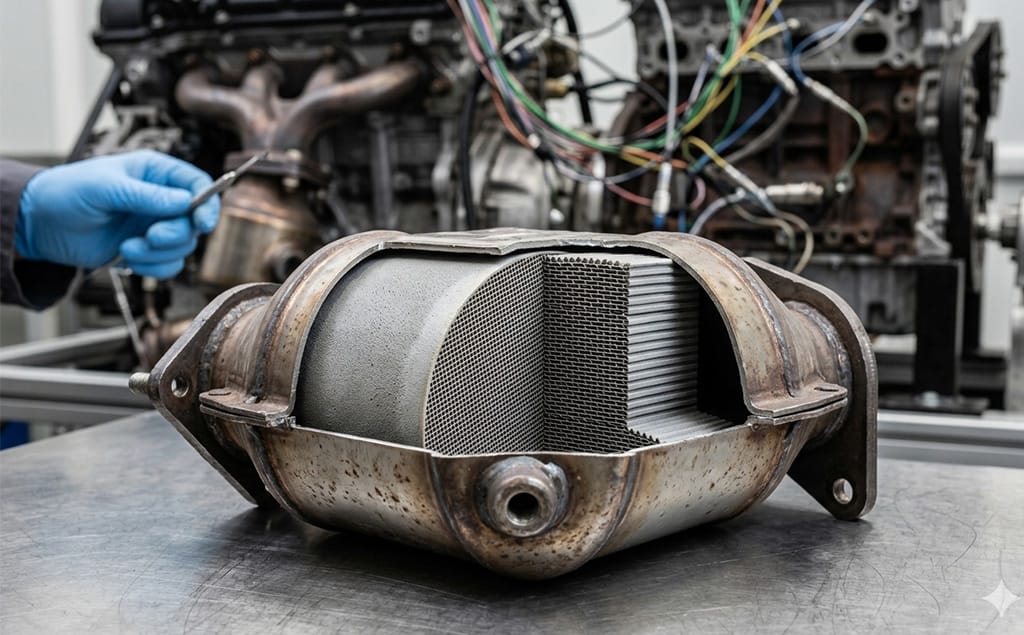
These reactions require a specific environment. The converter houses a ceramic monolith. This structure resembles a honeycomb. It provides a massive surface area. A “washcoat” covers this ceramic. This washcoat contains the active precious metals. The design maximizes gas contact with the catalyst. It minimizes exhaust flow restriction.
The Importance of Stoichiometry
The three way catalytic converter requires specific conditions. It functions efficiently only near the stoichiometric point. This is the ideal air-fuel ratio. For gasoline, this is approximately 14.7:1. The Engine Control Unit (ECU) monitors this ratio. It uses oxygen sensors. If the mixture is too rich (too much fuel), unburnt fuel enters the exhaust. This overwhelms the oxidation process. If the mixture is too lean (too much air), nitrogen oxides increase. The reduction catalyst fails to keep up.
BMW Specific Exhaust Architecture
BMW engineers its exhaust systems for performance. This creates unique challenges for the catalytic converter. Many modern BMW engines place the converter very close to the engine. We call this a “close-coupled” design. This placement ensures the catalyst heats up quickly. A converter must reach “light-off” temperature to function. This usually occurs around 400°C to 600°C.
However, close coupling exposes the unit to extreme thermal stress. High-performance engines, such as the N54 or B58, generate significant heat. The turbochargers add to this thermal load. The BMW three-way catalytic converter must withstand these variances. It must maintain structural integrity under vibration. It must also resist thermal shock.
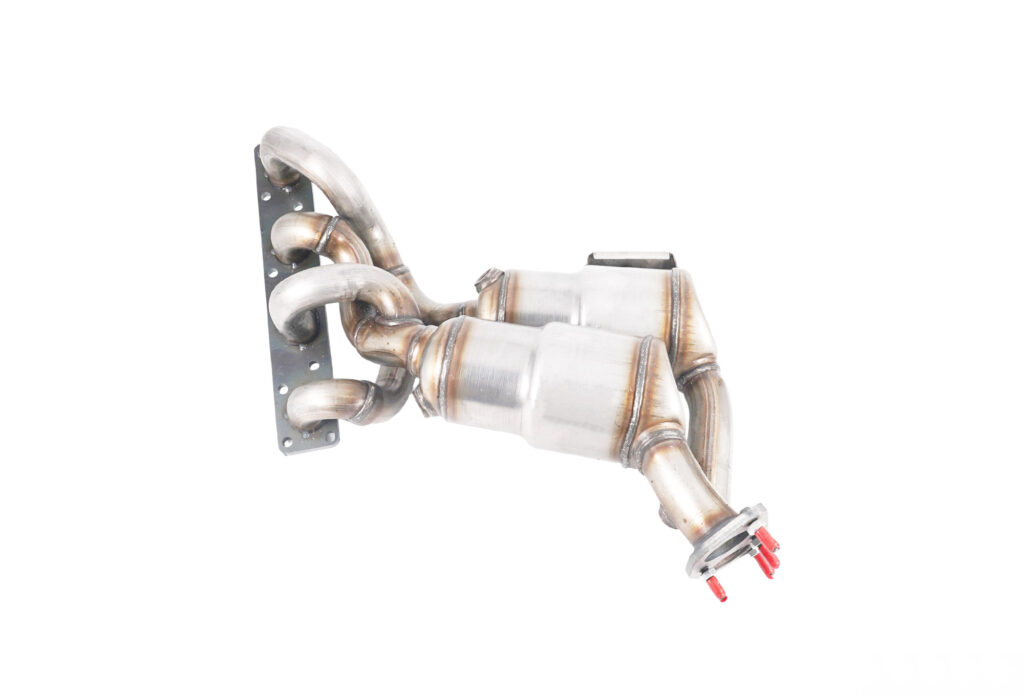
OEM Catalytic Converter vs. Aftermarket Catalytic Converter
Owners face a choice during replacement. They can choose an OEM catalytic converter or an aftermarket catalytic converter. The price difference is often substantial. The technical differences dictate this gap.
The OEM Standard Original Equipment Manufacturer (OEM) parts come from the dealership. They match the exact specifications of the car’s initial design. They typically use a high density of precious metals. The ceramic cells are dense. This ensures longevity. It guarantees compliance with strict emission standards like Euro 6.
The Aftermarket Solution An aftermarket catalytic converter offers a cost-effective alternative. Companies like Catman engineer these units to meet specific standards. High-quality aftermarket units function identically to OEM parts. However, variances exist in the market. Some cheap units use lower metal loadings. They may trigger check engine lights. A premium aftermarket provider ensures the correct “washcoat” density. This matches the ECU’s expectations.
Comparison of Converter Types
The following table illustrates technical differences between standard market options.
Feature OEM Catalytic Converter Premium Aftermarket (e.g., Catman) Budget Aftermarket Substrate Material High-Grade Ceramic High-Grade Ceramic / Metal Low-Grade Ceramic Cell Density (CPSI) 400 – 600 400 – 600 200 – 300 Precious Metal Load High (Pt, Pd, Rh) High (Optimized) Low / Minimal Thermal Durability Extreme High Moderate Flow Rate Restrictive (Emissions Focus) Balanced (Flow/Emissions) High Flow (Poor Filtration) Warranty 12-24 Months 12 Months Limited / None Cost High (£650–£1,100+) Moderate (£400–£700) Low (£150–£300) Analyzing Failure Modes
A three way catalytic converter has no moving parts. Ideally, it lasts the life of the vehicle. Failure usually indicates an upstream engine problem.
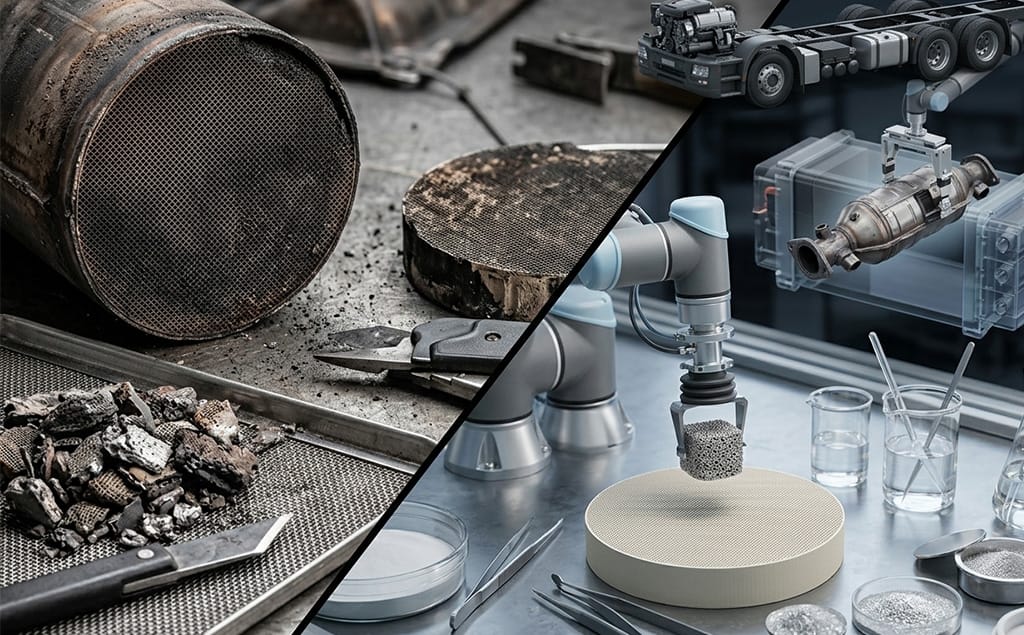
- Thermal Sintering Excessive heat melts the ceramic substrate. This blocks exhaust flow. Misfires often cause this. Unburnt fuel ignites inside the converter. This creates a temperature spike.
- Chemical Poisoning Contaminants coat the precious metals. The chemical reaction stops. Common poisons include sulfur, phosphorus, and silicone. Oil leaks introduce phosphorus. Coolant leaks introduce silicone.
- Structural Fracture Physical impact causes damage. Thermal shock also cracks the ceramic. A rattling noise typically signals this failure. The honeycomb breaks apart. Pieces block the exhaust pipe.
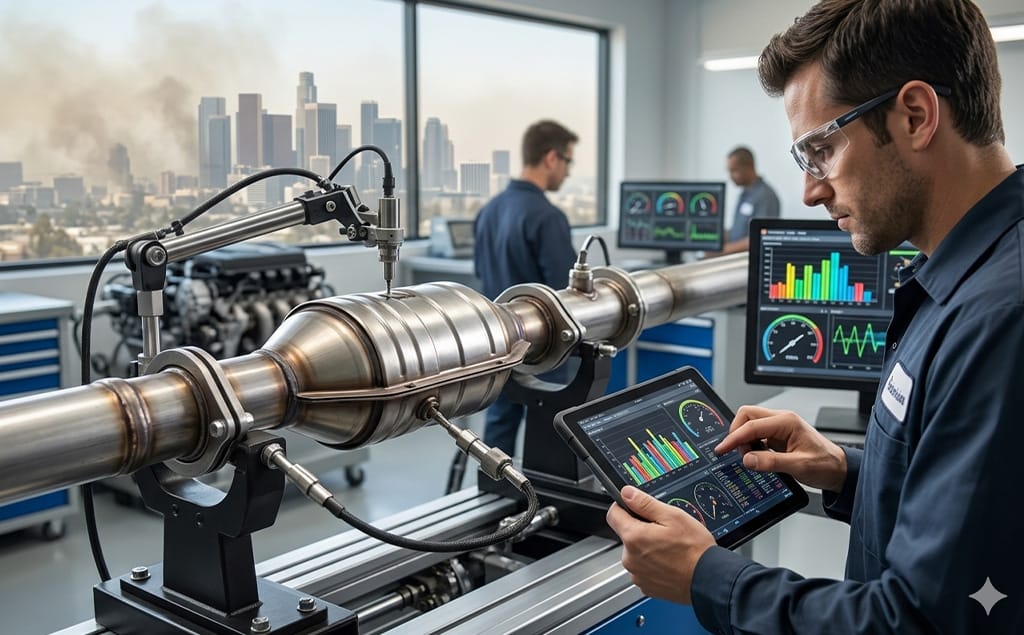
A functioning converter relies on data. Oxygen sensors provide this data. An upstream sensor measures exhaust gas before it enters the converter. A downstream sensor measures the gas after processing. The ECU compares these readings.
The upstream sensor voltage oscillates rapidly. This shows the ECU adjusting the fuel mix. The downstream sensor should show a steady voltage. This indicates the three way catalytic converter is smoothing out the oxygen content. It proves the chemical reaction is consuming oxygen. If the downstream sensor oscillates like the upstream sensor, the converter has failed. The ECU sets a code (P0420 or P0430). Replacing the sensors is often a necessary step during converter replacement. Old sensors react slowly. They compromise the new converter’s lifespan.
Diagnostic Protocol
Accurate diagnosis prevents unnecessary spending. Do not rely solely on fault codes.
Verify Codes: Scan the ECU. Look for efficiency codes (P0420/P0430).
Check Fuel Trims: Analyze Long Term Fuel Trim (LTFT). High positive trims indicate vacuum leaks. High negative trims indicate leaking injectors. Fix these issues first.
Temperature Check: Use an infrared thermometer. Measure the inlet and outlet pipes of the converter. The outlet should be hotter than the inlet. This proves the exothermic reaction is occurring.
Backpressure Test: Remove the upstream oxygen sensor. Install a pressure gauge. Excessive pressure indicates a clogged substrate.
Governments regulate emissions strictly. The three way catalytic converter is the primary compliance tool. In Europe, the Euro 6 standard imposes tight limits. It restricts NOx and particulate matter. In the United States, EPA and CARB standards apply. Removing a catalytic converter is illegal in most jurisdictions.
A failing converter releases exponentially more pollution. It allows carbon monoxide and NOx to escape. A high-quality aftermarket catalytic converter maintains legal compliance. It ensures the vehicle passes MOT or smog tests. Catman supplies units that meet these rigorous type-approval standards.
Installation Guide: Technical Procedure
Replacing a BMW three-way catalytic converter requires adherence to protocol. Deviating from these steps leads to leaks or sensor damage.
Phase 1: Preparation and Safety
Thermal Safety: Allow the engine to cool completely. The exhaust system retains heat for hours.
Electrical Isolation: Disconnect the negative battery terminal. This prevents short circuits.
Vehicle Elevation: Raise the vehicle on a hydraulic lift. Alternatively, use jack stands on a level surface. Never rely on a hydraulic jack alone.
Phase 2: Removal
Sensor Protection: Locate the oxygen sensors. Disconnect the wiring harnesses first. Do not twist the wires. Use a slotted sensor socket to remove the sensors.
Hardware Removal: Apply penetrating fluid to flange bolts. Rust often seizes these fasteners. Allow the fluid to work.
Support: Support the exhaust mid-pipe. Use a transmission jack or stand. This prevents stress on the exhaust manifold studs.
Extraction: Unbolt the converter from the manifold. Unbolt it from the mid-pipe. Remove the unit. Inspect the mating surfaces. Remove all old gasket material.
Phase 3: Installation
Gasket Placement: Always use new gaskets. Metal crush gaskets are single-use items.
Positioning: Lift the new three way catalytic converter into place. Observe the flow direction arrow.
Fastening: Install bolts by hand. Do not tighten them yet. Ensure proper alignment.
Torque Sequence: Tighten the bolts gradually. Alternate between sides to ensure an even seal. Use a torque wrench. Adhere to BMW specifications (typically 25-35 Nm for exhaust flanges).
Sensor Reinstallation: Apply copper anti-seize to sensor threads. Do not get anti-seize on the sensor tip. Torque the sensors to specification. Reconnect the wiring.
Phase 4: Initialization
Electrical Connection: Reconnect the battery.
ECU Reset: Clear old adaptation values. The ECU must learn the characteristics of the new converter.
Leak Check: Start the engine. Listen for hissing sounds. Feel for exhaust pulses near the flanges (without touching hot metal).
Thermal Cycle: Allow the engine to reach operating temperature. Take a test drive.
Maintenance and Prevention
Extending the life of a three way catalytic converter involves holistic engine care.
Ignition Health: Replace spark plugs and coils on schedule. A single misfire event can overheat the catalyst substrate.
Fuel Quality: Use top-tier fuel. It contains detergents that keep injectors clean. Dirty injectors cause poor atomization.
Fluid Integrity: Fix oil leaks immediately. Valve cover gaskets are common leak points on BMWs. Oil vapor poisons the washcoat.
Sensor Monitoring: Replace oxygen sensors every 100,000 miles. Lazy sensors cause incorrect fuel mixtures.
Conclusion
The three way catalytic converter defines the modern clean-burning engine. It utilizes complex chemistry to protect the environment. For BMW owners, maintaining this component ensures peak performance. It preserves fuel economy. It keeps the vehicle legal.
Choosing between an OEM catalytic converter and an aftermarket catalytic converter depends on budget and goals. Premium aftermarket solutions, such as those from Catman, bridge the gap. They offer durability and compliance at a reasonable cost. Correct installation is paramount. Accurate diagnosis is critical. Treating the converter as part of a larger system guarantees success. Respect the engineering. Maintain the machine. The vehicle will reward you with reliability.