تعارف
The automotive industry faces a critical transition toward sustainable fuels. Among these, E85 stands out as a popular biofuel choice. E85 is a blend of 85% ethanol and 15% gasoline. Drivers and fleet owners alike are questioning how this high-ethanol blend actually treats the catalytic converter over time—and whether it’ll shorten its lifespan. While E85 offers distinct chemical advantages, its interaction with the emission system depends heavily on engine calibration.
This article examines the relationship between E85 combustion and the physical durability of the three way catalytic converter. We explore why this biofuel often extends the life of internal components compared to standard petroleum.

Lower Combustion Temperatures and Thermal Protection
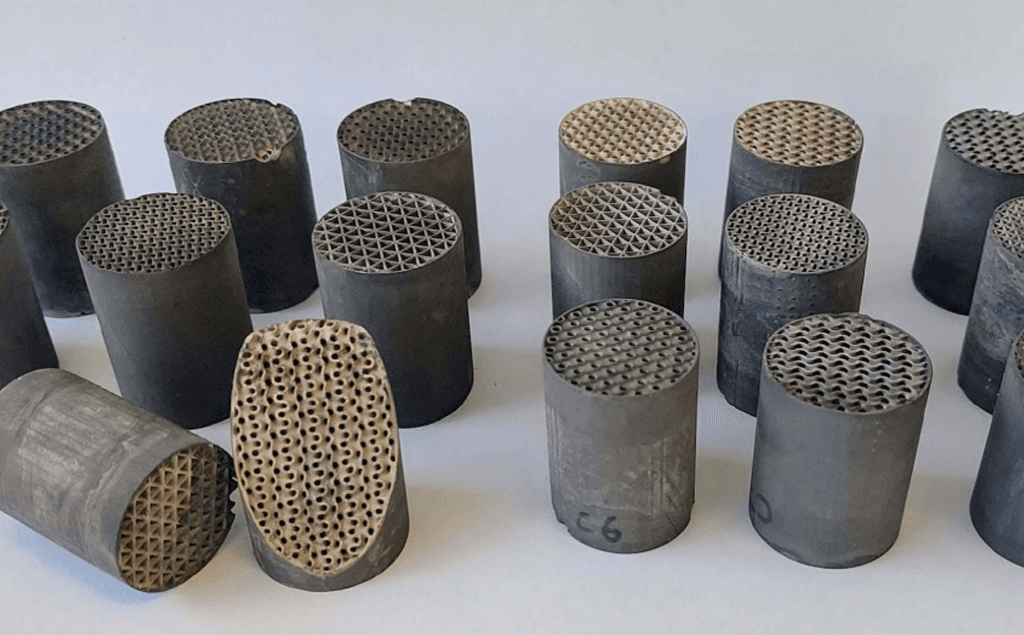
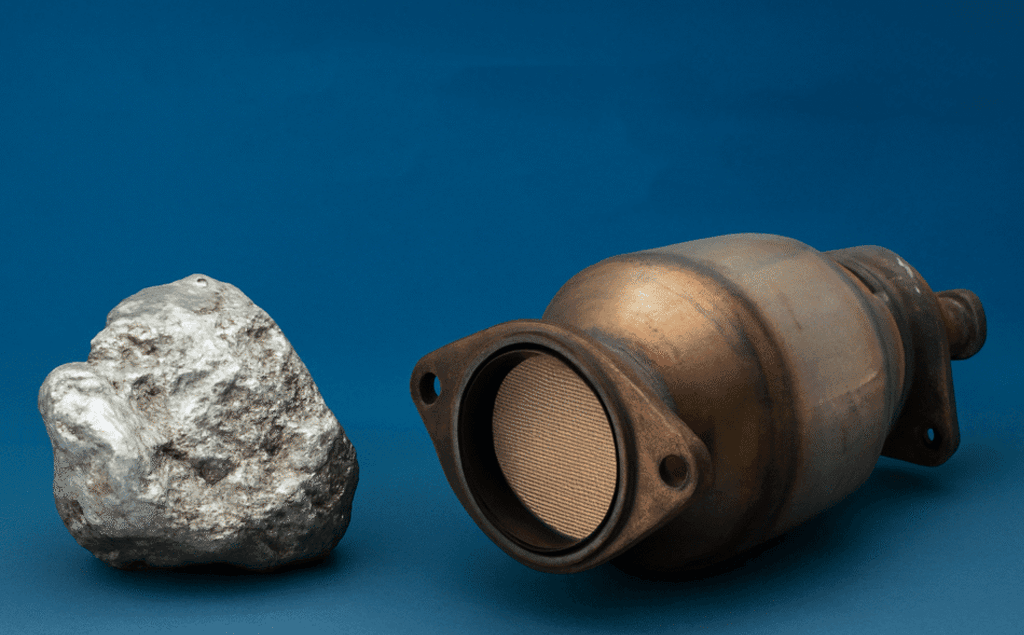
The three way catalytic converter relies on a delicate internal structure. High exhaust temperatures typically cause “sintering.” Sintering occurs when extreme heat melts the microscopic precious metal particles on the washcoat. Once these particles clump together, the catalyst loses its effective surface area.
E85 provides a natural solution to this problem. Ethanol has a higher latent heat of vaporization than gasoline. The fuel absorbs more heat during the intake stroke. Consequently, the engine produces cooler exhaust gases. By lowering the thermal load, E85 reduces the rate of thermal aging. The three way catalytic converter remains efficient for a longer period. The precious metals stay dispersed. Active cooling through fuel chemistry directly protects the honeycomb substrate from structural failure.
Chemical Purity and Reduced Poisoning
Chemical “poisoning” is a leading cause of premature failure in a three way catalytic converter. Traditional gasoline often contains trace amounts of sulfur. Over time, sulfur deposits coat the active sites of the catalyst. This coating prevents the conversion of NOx, CO, and HC.
Biofuels like E85 contain significantly lower sulfur levels. Using E85 minimizes the chemical contamination of the washcoat. This cleaner burn ensures that the three way catalytic converter maintains its chemical activity. Furthermore, E85 reduces the total volume of raw pollutants entering the exhaust manifold. When the engine produces fewer emissions, the catalyst performs less “work.” This reduced workload preserves the integrity of the oxygen storage components within the device.
Strategic Material Comparison: E85 vs. Standard Gasoline
The following table compares the emission profiles and thermal effects of different fuel types.
| Feature | Standard Gasoline (E10) | Biofuel (E85) | تھری وے کیٹلیٹک کنورٹر پر اثر |
|---|---|---|---|
| Exhaust Temp | Higher (800°C+) | Lower (700°C – 750°C) | E85 reduces thermal stress and sintering. |
| Sulfur Content | اعتدال پسند | بہت کم | E85 prevents chemical poisoning of PGMs. |
| NOx Production | Baseline | زیریں | E85 reduces the reduction workload. |
| کولڈ اسٹارٹ اخراج | زیریں | Higher (Acetaldehyde) | E85 requires faster “light-off” efficiency. |
| PGM Stability | Standard Aging | Extended Stability | E85 preserves the washcoat surface area. |
The Challenge of Acetaldehyde Conversion
While E85 burns cleaner in most aspects, it creates unique chemical byproducts. Ethanol combustion often produces higher levels of acetaldehyde. The three way catalytic converter must process these aldehydes through oxidation.
With a healthy setup, precious metals effectively neutralize acetaldehyde, turning it into harmless water and carbon dioxide.However, an already degraded catalyst might allow these aldehydes to pass through the tailpipe. This highlights the importance of using a high-quality three way catalytic converter. Modern FFVs are equipped with specific coating blends that make short work of these organic compounds. High precious metal loading ensures complete conversion even during high-load operation.
Synergy Between Flex-Fuel Systems and Catalytic Life
Flex-Fuel Vehicles (FFVs) represent the ideal environment for E85 usage. These vehicles use sensors to detect the ethanol percentage in the fuel line. The Engine Control Unit (ECU) then adjusts the fuel injection and ignition timing.
This synchronization ensures that the air-fuel ratio remains perfect. A perfect ratio is vital for the three way catalytic converter. When the engine runs at the stoichiometric point, the catalyst simultaneously oxidizes and reduces pollutants. Studies show that FFVs running on E85 do not experience accelerated degradation. In fact, the cooler operation often results in a three way catalytic converter that remains in superior condition after 100,000 miles.
Risks in Non-Compatible Engine Systems
The primary danger to the three way catalytic converter arises in non-Flex-Fuel engines. Standard engines cannot handle the high oxygen content of ethanol correctly. The engine may run “lean,” which causes temperatures to spike.
Improper combustion leads to engine misfires. When an engine misfires, raw E85 enters the three way catalytic converter. The fuel then ignites inside the catalyst’s honeycomb. This causes a “meltdown” where the internal temperature exceeds 1200°C. Therefore, the risk to the three way catalytic converter is not the E85 itself. The risk is the mismatch between fuel type and engine management.
Advanced Washcoat Technologies for Biofuels
Manufacturers now develop specific three way catalytic converter designs for high-ethanol markets. These designs often feature enhanced oxygen storage capacity (OSC).
- Zirconia-Ceria Stabilizers: These materials help the catalyst maintain oxygen levels during E85 combustion fluctuations.
- High-Dispersion PGMs: New coating techniques ensure that Platinum and Rhodium stay separated under stress.
- Corrosion-Resistant Canisters: To combat ethanol’s corrosive properties, manufacturers have stepped up to high-grade 409 or 304 stainless steel for the housing.
نتیجہ
E85 biofuel offers a net benefit for three way catalytic converter durability. Its ability to lower exhaust temperatures prevents catalyst sintering. The low-sulfur environment also stops chemical poisoning. While it introduces higher levels of acetaldehyde, a robust three way catalytic converter handles this with ease. For operators using compatible Flex-Fuel technology, E85 serves as a protective agent for the emission system. At the end of the day, picking the right catalyst and nailing the engine calibration remains the most effective way to keep your exhaust components running longer.