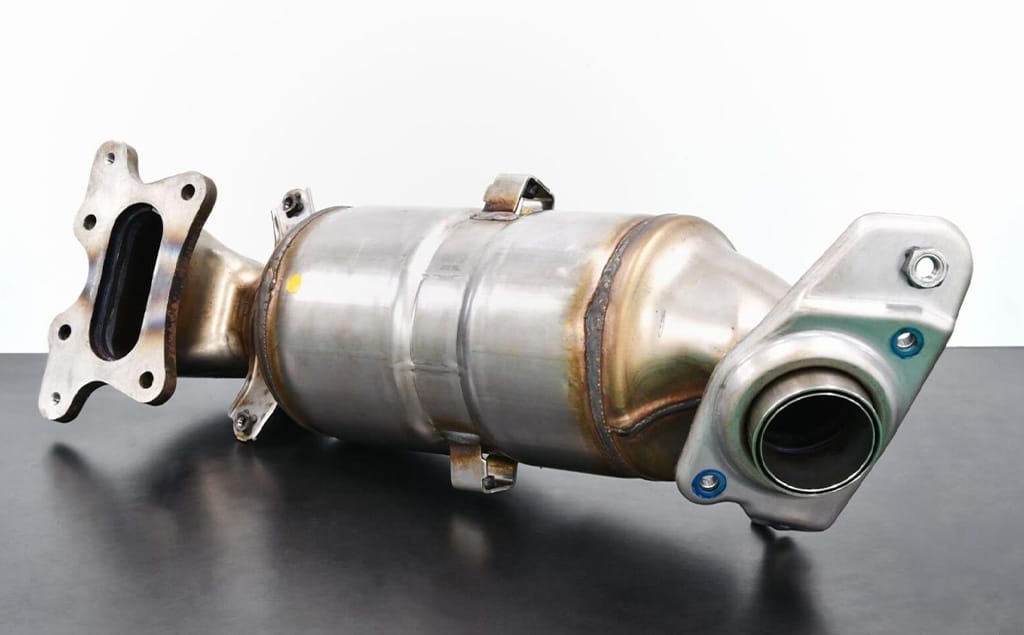
The three-way catalytic converter is one of the most important components of a modern vehicle’s exhaust system. Its job is simple yet crucial: it transforms harmful exhaust gases into less harmful substances through a series of chemical reactions. But for many car owners, the big question is: Where exactly is the three-way catalytic converter installed in a car?
In this article, we’ll explain the exact location of the three-way catalytic converter, why it is installed there, how it works, and what car owners should know about maintenance and potential issues.
What is a Three-Way Catalytic Converter?
A three-way catalytic converter (TWC) is designed to reduce the three most harmful pollutants produced by internal combustion engines:
- Carbon monoxide (CO) – a poisonous gas that is produced by incomplete combustion.
- Hydrocarbons (HC) – unburned fuel that contributes to smog and air pollution.
- Nitrogen oxides (NOx) – gases that cause acid rain and smog when nitrogen and oxygen combine at high engine temperatures.
The term “three-way” comes from the fact that the converter handles all three of these emissions at the same time, using a combination of oxidation catalysts and reduction and oxidation reactions. The metals inside the converter – usually platinum, palladium, and rhodium – act as the catalyst that speeds up these chemical reactions without being consumed.
When working properly, the converter transforms harmful gases into carbon dioxide and water, along with harmless nitrogen.
Where is the Three-Way Catalytic Converter Installed?
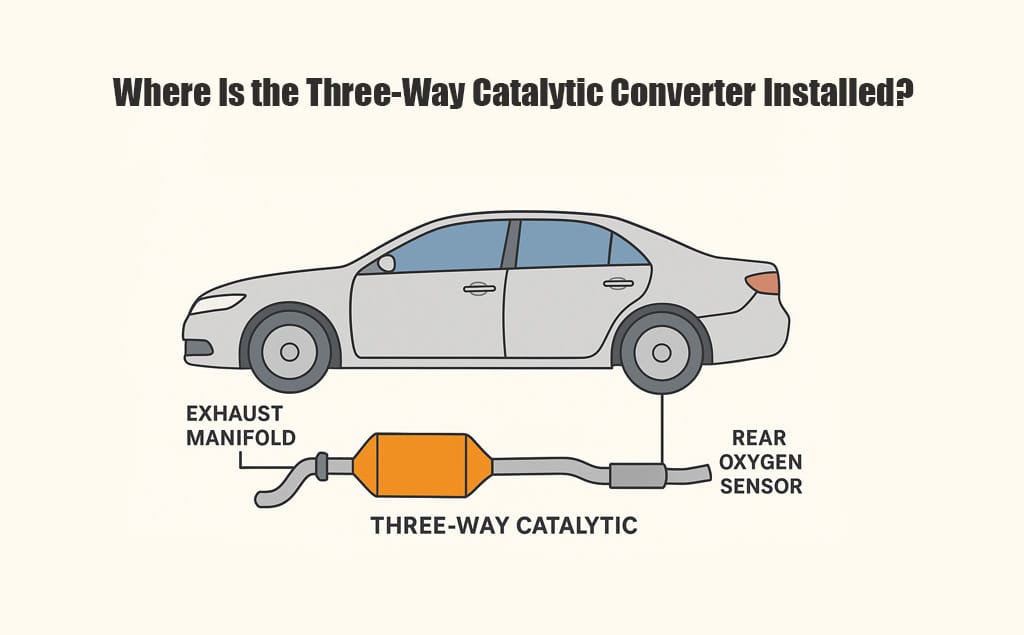
The three-way catalytic converter is installed in front of the exhaust pipe, close to the engine. If you lift the car and look underneath the lower rear chassis, the converter is the first large, kettle-shaped component you’ll notice in the exhaust system.
It is typically located between two important sensors:
- Front oxygen sensor – measures the oxygen content in the exhaust gases as they exit the engine.
- Rear oxygen sensor – measures the gases after they have passed through the converter to ensure the catalytic converter is an essential device working correctly.
This placement is deliberate. The converter must be close to the engine because it relies on hot exhaust gases to reach the high operating temperatures needed for effective chemical reactions. If it were placed further back, the gases would cool down, and the reaction would be less efficient.
So, the simple answer is: the three-way catalytic converter is installed at the front of the exhaust pipe, between the front and rear oxygen sensors, and just behind the exhaust manifold.
Why is the Converter Installed in This Location?
The placement of the converter is based on both engineering and environmental needs:
- High Temperature Requirement – The chemical reactions that transform harmful gases only happen effectively when the converter is very hot. Placing it near the engine ensures it receives hot exhaust gases directly.
- Efficient Emission Control – By being close to the engine, the converter begins working almost immediately after startup, reducing carbon monoxide emissions and other pollutants faster.
- Integration with Sensors – The oxygen sensor readings before and after the converter allow the car’s computer to check if the converter is working properly. If both sensors show similar data, the system triggers the check engine light, warning the driver that the converter may no longer function effectively.
How Does the Three-Way Converter Work Once Installed?
When installed at the front of the vehicle’s exhaust system, the three-way catalytic converter performs three main tasks:
- Oxidation of Carbon Monoxide: Converts carbon monoxide into carbon dioxide, a less harmful gas.
- Oxidation of Hydrocarbons: Turns hydrocarbon fuel residues into carbon dioxide and water.
- Reduction of Nitrogen Oxides: Breaks down nitrogen oxide into harmless nitrogen and oxygen.
This means the converter is constantly transforming toxic exhaust gases into less harmful substances, ensuring compliance with emission standards set by regulators like the Environmental Protection Agency.
What Happens if the Converter Fails?
If the three-way catalytic converter gets clogged or fails, you may notice several issues:
- The check engine light will turn on, often linked to oxygen sensor readings.
- Reduced vehicle performance and engine power due to restricted gas flow.
- Increased air pollution, as harmful gases are no longer converted into less harmful substances.
- Strong sulfur or rotten-egg smell from the exhaust gases.
Common reasons that damage the catalytic converter include using leaded fuel, engine misfires, or excessive exhaust gases with excess oxygen that overheat the converter.
Maintenance and Replacement
Since the three-way catalytic converter is exposed to high heat and constant automobile exhaust, it gradually loses efficiency. Deposits can block the porous ceramic substrate, reducing its ability to process gases.
If this happens, you’ll need to visit a repair shop for either cleaning or replacement. Depending on your vehicle, you may choose an OEM converter from the automaker (meeting strict federal catalytic converter regulations) or an aftermarket option, which may be less costly but not always compliant with strict emissions requirements.
Why Thieves Target This Component
Unfortunately, the risk of theft for catalytic converters has risen sharply in recent years. Thieves cut them out of vehicles because the metals inside the converter—platinum, palladium, and rhodium—are highly valuable. These valuable precious metals are worth thousands of dollars on the market, making converters a prime target.
To help prevent theft, many car owners now install protective cages or shields around the converter. Parking in well-lit areas and etching a serial number onto the unit can also deter converter thefts.
Summary: Key Things to Remember
- The three-way catalytic converter is installed in front of the exhaust pipe, between the front and rear oxygen sensors.
- It sits just behind the exhaust manifold, where it can receive hot exhaust gases directly.
- The converter transforms hydrocarbon and carbon monoxide and nitrogen oxide into less harmful substances like carbon dioxide and water vapor.
- Proper placement ensures compliance with emission standards and efficient reduction of vehicle emissions.
- If the converter fails, you may notice a check engine light, poor vehicle performance, or unusual smells.
- Due to the valuable metals inside, the risk of theft is high, so protective measures are strongly recommended.