Johdanto
An illuminated check engine light brings immediate frustration.Upon pulling diagnostic codes P0420 or P0430, technicians often immediately attribute the failure to the kolmitiekatalysaattori and recommend a replacement without further troubleshooting.
However, professional automotive diagnostic technicians know a critical industry rule: a kolmitiekatalysaattori premium component rarely fails on its own.
When a cat fails too early, it’s almost always a downstream reaction to a deeper, unaddressed issue with how the engine is running upstream. If you swap a damaged converter without fixing the root operating issue, the new component will likely fail within months.
We’re looking at recurring converter failures through an engineering lens—uncovering the main upstream culprits and laying out a step-by-step diagnostic checklist for a lasting repair.
Core Function and Structural Design
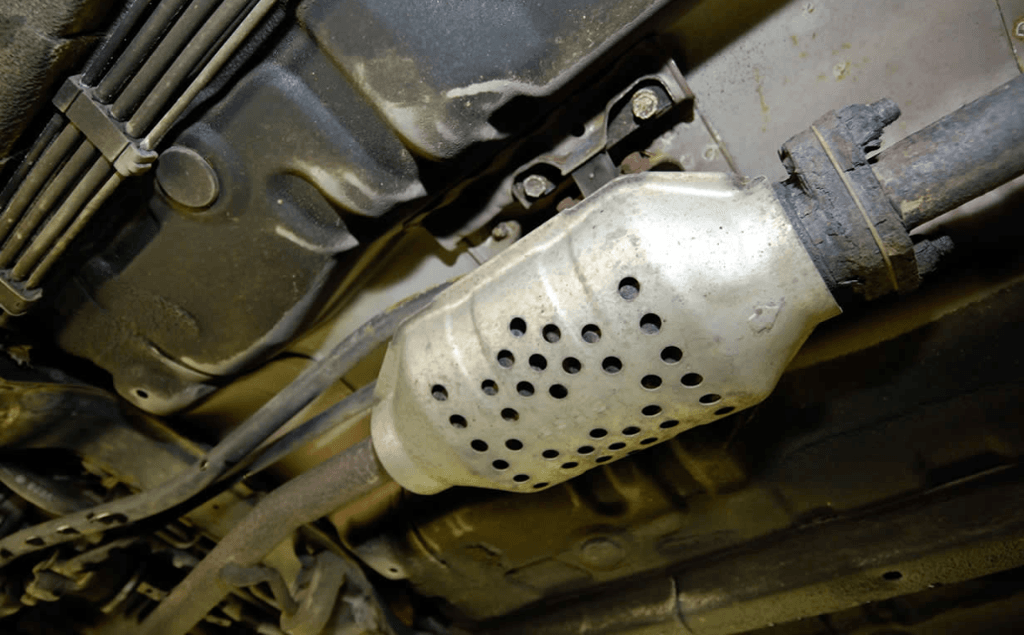
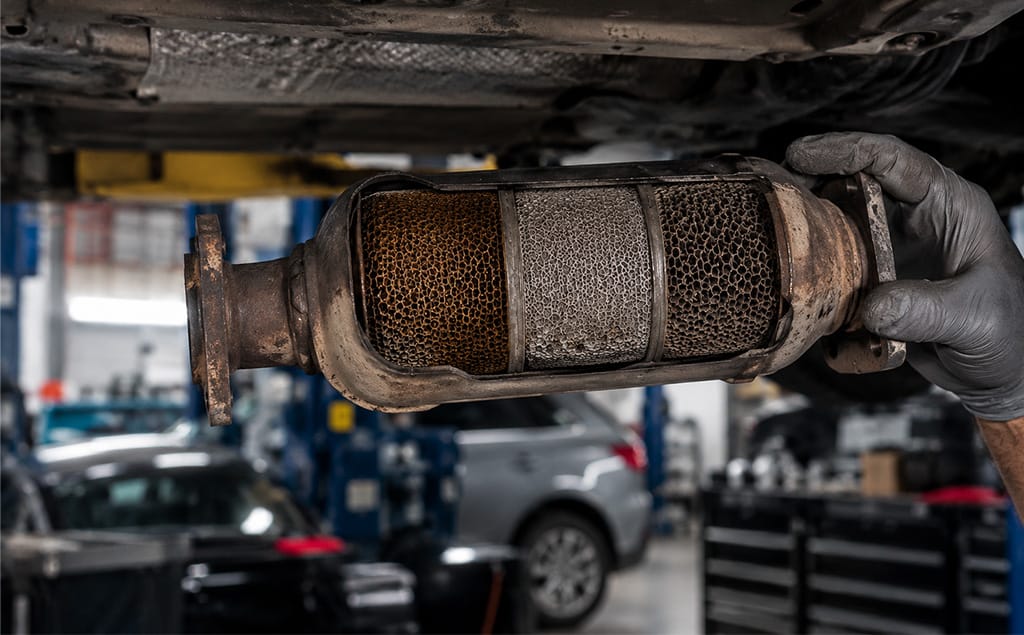
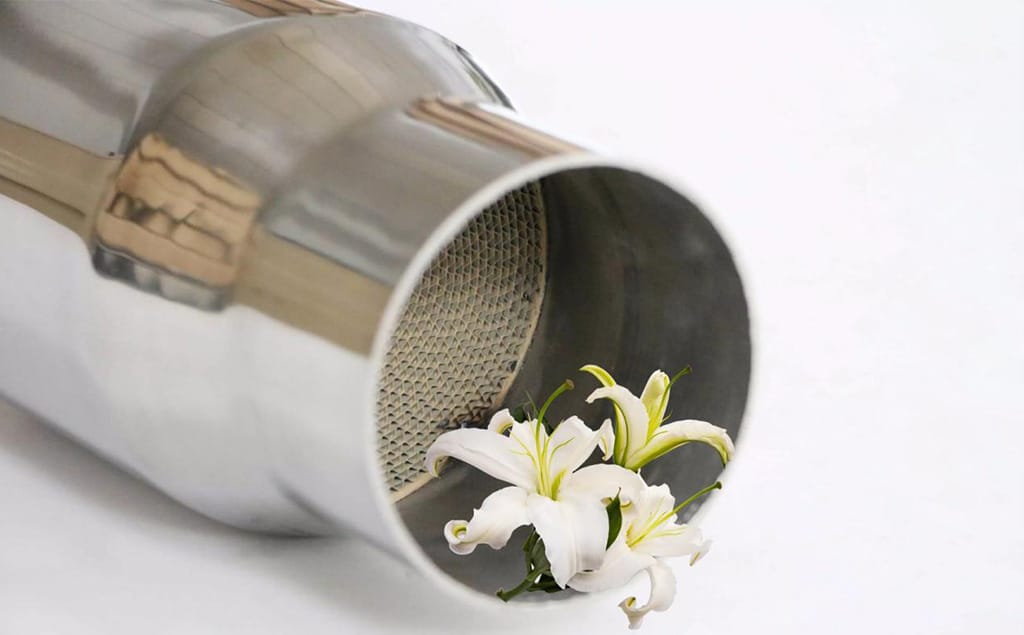
The kolmitiekatalysaattori serves as an advanced chemical reactor within your vehicle’s exhaust piping, processing toxic gases into safer compounds.
| Targeted Pollutant | Dynamic Chemical Transformation Triggered | Target Conversion Level |
|---|---|---|
| Carbon Monoxide ($CO$) | Driven by Platinum (Pt) / Palladium (Pd): Oxidizes $CO$ into Carbon Dioxide ($CO_2$). | Exceeds 95% efficiency |
| Hydrocarbons ($HC$) | Driven by Platinum (Pt) / Palladium (Pd): Oxidizes unburned raw fuel ($HC$) into Water ($H_2O$). | Exceeds 95% efficiency |
| Nitrogen Oxides ($NO_x$) | Driven by Rodium (Rh): Strips and reduces toxic $NO_x$ into harmless Nitrogen ($N_2$) and Oxygen ($O_2$). | Exceeds 95% efficiency |
Catalyst Monolith Substrate Comparison
Manufacturers construct the internal honeycomb brick using different core materials depending on the application:
| Performance Trait | Ceramic Monolith Core | Metallic Monolith Core |
|---|---|---|
| Primary Base Material | Cordierite Ceramic Compound | Ultra-Thin Structured Stainless Steel Foil |
| Standard Channel Density | 400 to 600 Cells Per Square Inch (CPSI) | 100 to 300 Cells Per Square Inch (CPSI) |
| Exhaust Gas Flow Rate | Standard restriction (Ideal for daily drivers) | High flow rates (Ideal for performance cars & heavy trucks) |
| Thermal Shock Resistance | Medium (Can crack under sudden external water splashes) | High (Resists extreme thermal expansion stresses) |
| Tärinänkestävyys | Fragile (Shatters easily from rough road impacts) | Extremely durable (Resists severe off-road vibration) |
Emissions Monitoring and Code Trigger Mechanisms
The Engine Control Module (ECM) monitors system health using two separate oxygen ($O_2$) sensors.
| Sensor Position | Location Relative to Catalyst | Healthy Functional Waveform | Failed Catalyst Waveform (P0420/P0430) |
|---|---|---|---|
| Upstream $O_2$ Sensor | Ahead of converter, near manifold | Rapidly fluctuates between 0.1V and 0.9V as air-fuel ratios adjust. | Rapidly fluctuates between 0.1V and 0.9V (Normal behavior). |
| Downstream $O_2$ Sensor | Immediately behind converter | Steady, flat-lined voltage reading around 0.5V to 0.7V. | Rapidly switches and mirrors the upstream waveform completely. |
[Engine] ──► Upstream O2 Sensor (Rapidly Fluctuating Voltage) ──► [Catalytic Converter] ──► Downstream O2 Sensor (Steady Flat-line)
Bank 1 vs. Bank 2 Target Areas
Diagnostic software localizes faults based on engine cylinder layout:
- P0420 (Bank 1): Affects the cylinder bank containing cylinder #1. This is the only bank present on standard inline 4-cylinder or inline 6-cylinder engines.
- P0430 (Bank 2): Affects the opposite cylinder row on V-configured engines (V6, V8).
Diagnostic Symptoms and Upstream Root Causes
Identifying Engine Fault Signs
The table below connects common secondary vehicle symptoms directly to the upstream engine issues destroying the kolmitiekatalysaattori:
| Accompanying Vehicle Symptom | Indicated Upstream Failure | Destructive Impact on Catalyst Structure |
|---|---|---|
| Strong “Rotten Egg” Odor | Uncontrolled rich fuel mixture | Excess raw fuel ignites inside, raising temperatures past $1,200^{\circ}\text{F}$ ($650^{\circ}\text{C}$) and melting the core. |
| Spiking Fuel Consumption | Leaking fuel injectors or bad MAF sensor | Floods the exhaust path with raw hydrocarbons, causing rapid thermal catalyst degradation. |
| Visible Black Exhaust Smoke | Running ultra-rich will melt the internal structure on the spot and choke the honeycomb passages with heavy soot. | |
| Visible Blue Exhaust Smoke | Internal engine oil burning | Phosphorus and zinc anti-wear additives form a permanent glassy glaze over precious metals. |
| Visible White Exhaust Smoke | Internal Coolant Leakage: Silicates and corrosion inhibitors compound into heavy, white scale deposits, masking the washcoat and neutralizing its catalytic activity. |
Professional Step-by-Step Diagnostic Procedures
Technicians must isolate the following operational parameters before replacing a suspected kolmitiekatalysaattori:
| Diagnostic Step | Target Component / Parameter | Professional Testing Procedure | Passing Benchmark Values | Failing Threshold (Replace Component) |
|---|---|---|---|---|
| 1. Module Scan | Concurrent fault data | Scan all modules for stored misfire or fuel codes. | No matching codes present | Active P0300-P0308, P0171, or P0172 codes (Fix these first!) |
| 2. Trim Check | Fuel Delivery Balance | Read Long-Term and Short-Term Fuel Trims via live data stream. | Combined total stays within $\pm 5\%$ | Combined total exceeds $\pm 10\%$ (Indicates severe leak or injector fault) |
| 3. Leak Test | Housing & Gasket Integrity | Pump low-pressure smoke into cold exhaust via smoke machine. | Zero smoke escapes system | Smoke leaks from manifold cracks or sensor bungs (Trips false lean codes) |
| 4. Thermal Test | Exothermic efficiency | Measure surface pipe temperature at catalyst inlet vs. outlet with infrared thermometer. | Outlet reads $100^{\circ}\text{F}$ to $200^{\circ}\text{F}$ hotter than inlet. | Outlet temperature matches or falls below inlet temperature (Dead catalyst) |
| 5. Pressure Test | Physical Core Integrity | Thread mechanical backpressure gauge into upstream $O_2$ sensor port. | Below 1.5 PSI at idle; below 3.0 PSI at 2,500 RPM | Sweeps past 4.0 to 10.0+ PSI (Indicates melted, collapsed, or clogged brick) |
Preventative Maintenance Framework
Vehicle operators can safeguard the kolmitiekatalysaattori premium performance by following a targeted engine care schedule:
| Target Component | Maintenance Action Required | Recommended Interval | Preventive Protection Mechanism |
|---|---|---|---|
| Ignition System | Suositeltu huolto: Uudet sytytystulpat, puolat ja johdot 48 000–160 000 kilometrin välein. Sytytyskatkosten estäminen on ehdoton edellytys. Muuten raakapolttoaine valuu kuumaan pakoputkeen ja aiheuttaa merkittäviä vaurioita. | ||
| Polttoaineen ruiskuttimet | Lisää korkealaatuista polttoainejärjestelmän puhdistusainetta, joka sisältää polyeetteriamiinia (PEA). | Käytä sitä 48 000 kilometrin välein poistaaksesi itsepäiset karstakertymät suuttimien kärjistä. Se pitää ruiskutuskuvion terävänä ja estää moottoria käymästä rikasta öljyä. | |
| Polttoaineen syöttö | Osta polttoainetta yksinomaan sertifioiduilta huippuluokan asemista. | Jokainen tankkaus | Minimoi raskaan hiilinoen kertymisen venttiileihin, kruunuihin ja katalysaattorin kanaviin. |
| Pakoputkistot | Aja ajoneuvoa jatkuvasti tasaisella moottoritienopeudella. | 30–45 minuuttia kaksi kertaa kuukaudessa | Lämmittää järjestelmän yli $600^{\circ}\text{F}$ ($315^{\circ}\text{C}$) sammuttaakseen valon ja polttaakseen kosteuden/noen pois. |
Johtopäätös
Jatkuva P0420- tai P0430-diagnostiikkakoodi on kiireellinen varoitus siitä, että moottorin ylävirran suorituskykyongelma vahingoittaa aktiivisesti ajoneuvosi pakokaasujärjestelmää. Kun katalysaattori palaa loppuun ennenaikaisesti, se yleensä vain ilmoittaa ratkaisemattomasta moottoriongelmasta, olipa kyseessä sitten jatkuva sytytyskatkos, rikkaalla seoksella käyminen tai sisäiset nestevuodot.
Jotta muuntimen korjaus onnistuisi, sinun on löydettävä ja korjattava perimmäinen syy ennen kuin heität autoon uusia osia. Älä pihistele vaihto-osissa – käytä alkuperäisiä tai alkuperäisiä osia. HIILIHYDRAATIT-yhteensopivia osia ja pidä huolta säännöllisestä tulppa- ja polttoainehuollosta. Oikein tekemällä varmistat, että moottorin tarkastusvalo pysyy sammuneena, autosi toimii niin kuin sen pitäisi, eikä sinun tarvitse huolehtia päästöjen tarkistuksista tulevaisuudessa.