Giới thiệu
Đèn báo lỗi động cơ sáng lên gây ra sự khó chịu ngay lập tức. Khi nhận được mã lỗi chẩn đoán P0420 hoặc P0430, các kỹ thuật viên thường ngay lập tức cho rằng lỗi này là do... bộ chuyển đổi xúc tác ba chiều và đề xuất thay thế mà không cần khắc phục sự cố thêm.
Tuy nhiên, các kỹ thuật viên chẩn đoán ô tô chuyên nghiệp biết một quy tắc quan trọng trong ngành: bộ chuyển đổi xúc tác ba chiều Linh kiện cao cấp hiếm khi tự hỏng.
Khi bộ chuyển đổi xúc tác (catalytic converter) bị hỏng quá sớm, đó hầu như luôn là phản ứng thứ cấp của một vấn đề sâu xa hơn, chưa được giải quyết liên quan đến hoạt động của động cơ ở phía trước. Nếu bạn thay thế bộ chuyển đổi bị hỏng mà không khắc phục được vấn đề gốc rễ, bộ phận mới rất có thể sẽ hỏng trong vòng vài tháng.
Chúng tôi đang xem xét các lỗi bộ chuyển đổi tái diễn dưới góc độ kỹ thuật—tìm ra các nguyên nhân chính gây ra sự cố và đưa ra danh sách kiểm tra chẩn đoán từng bước để sửa chữa lâu dài.
Chức năng cốt lõi và thiết kế cấu trúc
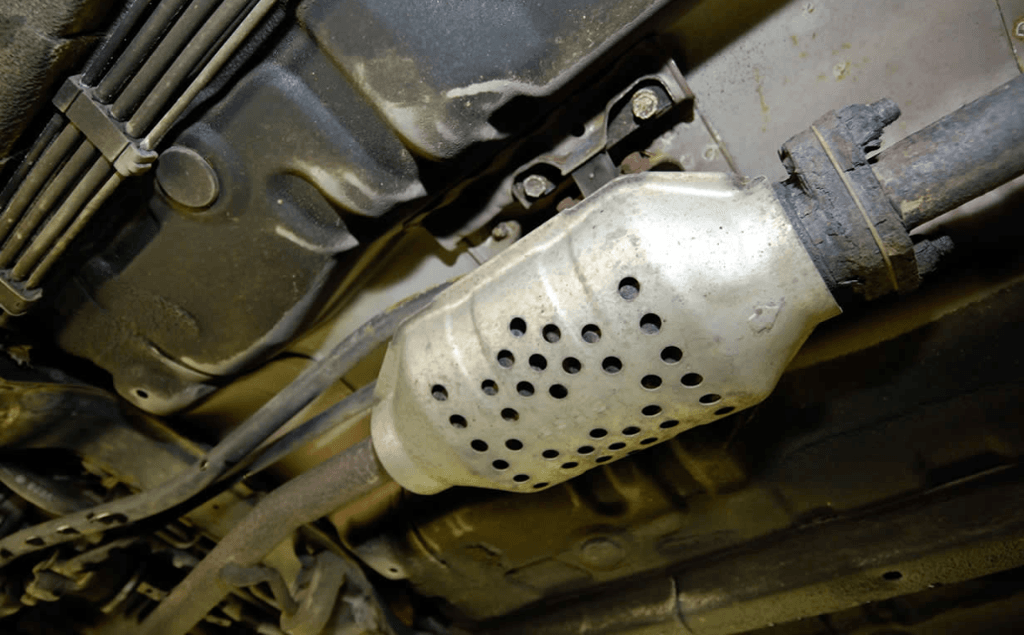
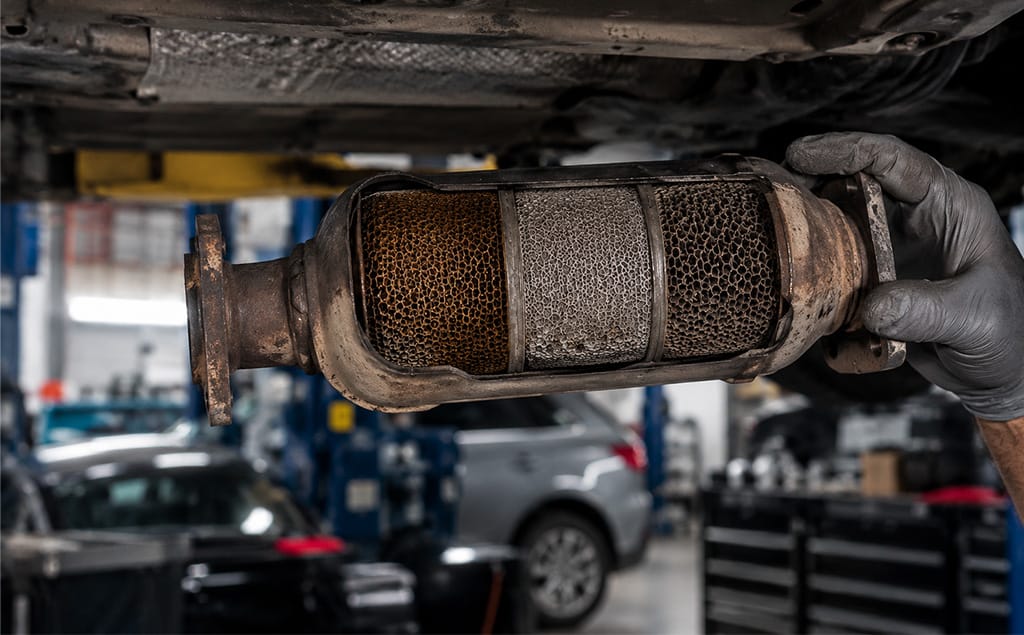
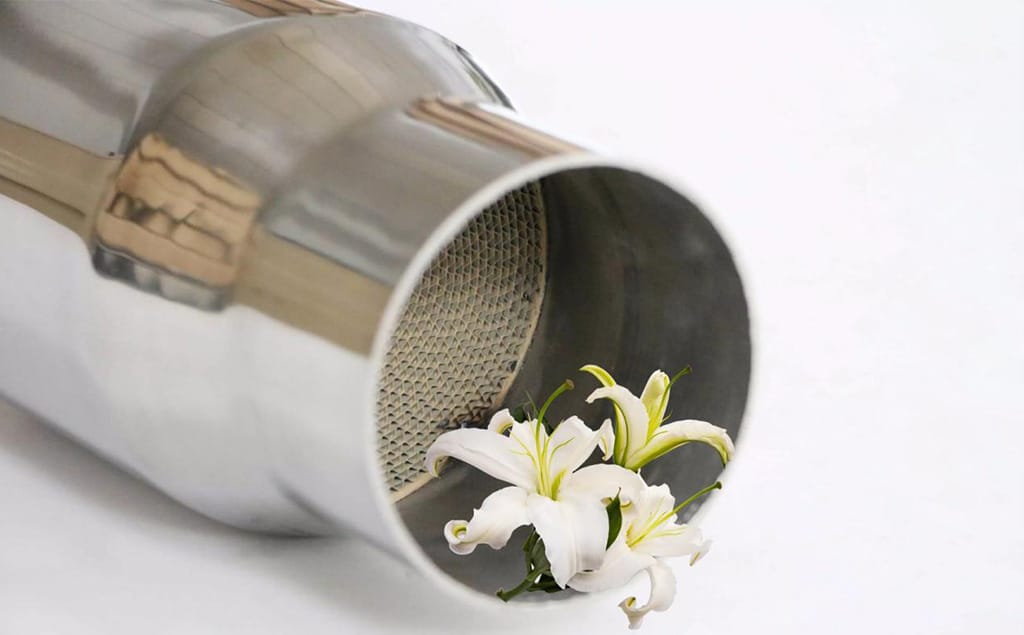
Các bộ chuyển đổi xúc tác ba chiều Nó hoạt động như một lò phản ứng hóa học tiên tiến bên trong hệ thống ống xả của xe, xử lý các khí độc hại thành các hợp chất an toàn hơn.
| Chất gây ô nhiễm mục tiêu | Sự biến đổi hóa học năng động được kích hoạt | Mức độ chuyển đổi mục tiêu |
|---|---|---|
| Khí cacbonic (CO) | Được thúc đẩy bởi Bạch kim (Pt) / Palladium (Pd): Oxy hóa CO thành carbon dioxide (CO₂). | Hiệu suất vượt quá 95%. |
| Hydrocarbon ($HC$) | Được thúc đẩy bởi Bạch kim (Pt) / Palladium (Pd): Oxy hóa nhiên liệu thô chưa cháy ($HC$) thành nước ($H_2O$). | Hiệu suất vượt quá 95%. |
| Oxit nitơ ($NO_x$) | Được thúc đẩy bởi Rhodium (Rh): Loại bỏ và phân hủy khí độc hại $NO_x$ thành Nitơ ($N_2$) và Oxy ($O_2$) vô hại. | Hiệu suất vượt quá 95%. |
So sánh chất nền dạng khối xúc tác
Các nhà sản xuất chế tạo viên gạch tổ ong bên trong bằng cách sử dụng các vật liệu lõi khác nhau tùy thuộc vào ứng dụng:
| Đặc tính hiệu suất | Lõi gốm nguyên khối | Lõi nguyên khối kim loại |
|---|---|---|
| Vật liệu cơ bản chính | Hợp chất gốm Cordierit | Lá thép không gỉ siêu mỏng có cấu trúc |
| Mật độ kênh tiêu chuẩn | 400 đến 600 ô trên mỗi inch vuông (CPSI) | Mật độ ô từ 100 đến 300 ô trên mỗi inch vuông (CPSI) |
| Exhaust Gas Flow Rate | Giới hạn tiêu chuẩn (Lý tưởng cho xe sử dụng hàng ngày) | Lưu lượng cao (Lý tưởng cho xe hiệu suất cao và xe tải hạng nặng) |
| Khả năng chống sốc nhiệt | Độ cứng trung bình (Có thể bị nứt khi bị nước bắn vào đột ngột) | Cao (Chống chịu được ứng suất giãn nở nhiệt cực độ) |
| Khả năng chống rung | Dễ vỡ (Dễ bị vỡ khi va chạm mạnh trên đường) | Cực kỳ bền bỉ (Chống chịu được rung lắc mạnh khi đi đường gồ ghề) |
Cơ chế giám sát khí thải và kích hoạt mã
Mô-đun điều khiển động cơ (ECM) giám sát tình trạng hệ thống bằng cách sử dụng hai cảm biến oxy ($O_2$) riêng biệt.
| Vị trí cảm biến | Vị trí so với chất xúc tác | Dạng sóng chức năng khỏe mạnh | Lỗi dạng sóng xúc tác (P0420/P0430) |
|---|---|---|---|
| Cảm biến $O_2$ phía thượng nguồn | Phía trước bộ chuyển đổi, gần ống góp | Điện áp dao động nhanh chóng giữa 0,1V và 0,9V khi tỷ lệ không khí-nhiên liệu điều chỉnh. | Điện áp dao động nhanh chóng trong khoảng từ 0,1V đến 0,9V (Đây là trạng thái bình thường). |
| Cảm biến $O_2$ phía hạ lưu | Ngay phía sau bộ chuyển đổi | Điện áp đo được ổn định, không đổi, ở mức khoảng 0,5V đến 0,7V. | Nó nhanh chóng chuyển đổi và phản chiếu hoàn toàn dạng sóng phía trước. |
[Engine] ──► Upstream O2 Sensor (Rapidly Fluctuating Voltage) ──► [Catalytic Converter] ──► Downstream O2 Sensor (Steady Flat-line)
Khu vực mục tiêu của Ngân hàng 1 so với Ngân hàng 2
Phần mềm chẩn đoán xác định vị trí lỗi dựa trên bố trí xi lanh động cơ:
- P0420 (Ngân hàng 1): Ảnh hưởng đến nhóm xi-lanh chứa xi-lanh số 1. Đây là nhóm xi-lanh duy nhất có trên các động cơ 4 xi-lanh thẳng hàng hoặc 6 xi-lanh thẳng hàng tiêu chuẩn.
- P0430 (Ngân hàng 2): Ảnh hưởng đến hàng xi-lanh đối diện trên các động cơ cấu hình chữ V (V6, V8).
Triệu chứng chẩn đoán và nguyên nhân gốc rễ
Nhận biết các dấu hiệu lỗi động cơ
Bảng dưới đây liên kết trực tiếp các triệu chứng phụ thường gặp của xe với các vấn đề động cơ phía trước gây hư hỏng. bộ chuyển đổi xúc tác ba chiều:
| Triệu chứng xe đi kèm | Lỗi được chỉ ra ở phía thượng nguồn | Tác động phá hoại lên cấu trúc chất xúc tác |
|---|---|---|
| Mùi "trứng thối" nồng nặc | hỗn hợp nhiên liệu giàu không kiểm soát | Lượng nhiên liệu thô dư thừa bốc cháy bên trong, làm tăng nhiệt độ lên trên 1.200°F (650°C) và làm tan chảy lõi. |
| Mức tiêu thụ nhiên liệu tăng đột biến | Kim phun nhiên liệu bị rò rỉ hoặc cảm biến MAF bị hỏng. | Làm ngập đường dẫn khí thải bằng các hydrocacbon thô, gây ra sự phân hủy nhiệt nhanh chóng của chất xúc tác. |
| Khói thải đen có thể nhìn thấy | Việc sử dụng nhiên liệu quá giàu sẽ làm tan chảy cấu trúc bên trong ngay lập tức và làm tắc nghẽn các đường dẫn dạng tổ ong bằng muội than dày đặc. | |
| Khói thải màu xanh có thể nhìn thấy | Động cơ bên trong bị cháy dầu | Các chất phụ gia chống mài mòn chứa phốt pho và kẽm tạo thành một lớp men bóng vĩnh cửu trên kim loại quý. |
| Khói thải màu trắng có thể nhìn thấy | Rò rỉ chất làm mát bên trong: Silicat và chất ức chế ăn mòn kết hợp thành các cặn trắng dày, che phủ lớp phủ bảo vệ và làm mất hoạt tính xúc tác của nó. |
Quy trình chẩn đoán chuyên nghiệp từng bước
Kỹ thuật viên phải xác định rõ các thông số vận hành sau trước khi thay thế một bộ phận nghi ngờ bị hỏng. bộ chuyển đổi xúc tác ba chiều:
| Bước chẩn đoán | Thành phần/Thông số mục tiêu | Quy trình kiểm tra chuyên nghiệp | Đạt các giá trị chuẩn | Vượt ngưỡng cho phép (Cần thay thế linh kiện) |
|---|---|---|---|---|
| 1. Quét mô-đun | Dữ liệu lỗi đồng thời | Quét tất cả các mô-đun để tìm các mã lỗi đánh lửa hoặc nhiên liệu đã lưu. | Không có mã nào phù hợp. | Mã lỗi P0300-P0308, P0171 hoặc P0172 đang hoạt động (Hãy khắc phục các lỗi này trước!) |
| 2. Kiểm tra độ cân bằng | Cân bằng giao nhiên liệu | Đọc các thông số điều chỉnh nhiên liệu dài hạn và ngắn hạn thông qua luồng dữ liệu trực tiếp. | Tổng số lần lưu trú trong $\pm 5\%$ | Tổng cộng vượt quá $\pm 10\%$ (Cho thấy rò rỉ nghiêm trọng hoặc lỗi kim phun) |
| 3. Kiểm tra rò rỉ | Độ bền vỏ và gioăng | Bơm khói áp suất thấp vào hệ thống xả lạnh thông qua máy tạo khói. | Hệ thống không khói thoát ra ngoài | Khói rò rỉ từ các vết nứt trên ống dẫn khí hoặc các đầu bịt cảm biến (Gây ra mã lỗi sai về hỗn hợp nhiên liệu nghèo) |
| 4. Thử nghiệm nhiệt | Hiệu suất tỏa nhiệt | Đo nhiệt độ bề mặt ống tại vị trí đầu vào và đầu ra của chất xúc tác bằng nhiệt kế hồng ngoại. | Nguồn tin cho biết Nóng hơn từ $100^{\circ}\text{F}$ đến $200^{\circ}\text{F}$ hơn cửa hút. | Nhiệt độ đầu ra bằng hoặc thấp hơn nhiệt độ đầu vào (Bộ chuyển đổi xúc tác bị hỏng) |
| 5. Kiểm tra áp suất | Tính toàn vẹn của lõi vật lý | Luồn đồng hồ đo áp suất ngược cơ học vào cổng cảm biến $O_2$ phía thượng nguồn. | Dưới 1,5 PSI khi động cơ chạy không tải; dưới 3.0 PSI ở 2.500 vòng/phút | Quét qua 4.0 đến 10.0+ PSI (Cho biết gạch bị chảy, sụp đổ hoặc tắc nghẽn) |
Khung bảo trì phòng ngừa
Người điều khiển phương tiện có thể bảo vệ bộ chuyển đổi xúc tác ba chiều Hiệu suất vượt trội nhờ tuân thủ lịch bảo dưỡng động cơ định kỳ:
| Thành phần mục tiêu | Cần thực hiện bảo trì | Khoảng thời gian khuyến nghị | Cơ chế bảo vệ phòng ngừa |
|---|---|---|---|
| Hệ thống đánh lửa | Khuyến nghị bảo dưỡng: Thay bugi, cuộn dây đánh lửa và dây dẫn mới sau mỗi 30.000–100.000 dặm. Việc ngăn ngừa hiện tượng bỏ lửa là điều không thể thiếu. Nếu không, nhiên liệu chưa cháy hết sẽ lọt vào đường ống xả nóng và gây hư hỏng nghiêm trọng. | ||
| Kim phun nhiên liệu | Thêm chất làm sạch hệ thống nhiên liệu cao cấp có chứa Polyether Amine (PEA). | Sử dụng dung dịch này cứ sau mỗi 30.000 dặm để làm sạch cặn carbon cứng đầu bám trên đầu kim phun. Nó giúp duy trì độ phun nhiên liệu sắc nét và ngăn động cơ hoạt động quá giàu nhiên liệu. | |
| Cung cấp nhiên liệu | Chỉ mua nhiên liệu tại các trạm xăng đạt chứng nhận Top Tier. | Mỗi lần đổ đầy | Giảm thiểu sự tích tụ muội than nặng trên van, đỉnh van và các kênh dẫn chất xúc tác. |
| Kênh thoát khí | Lái xe liên tục ở tốc độ ổn định trên đường cao tốc. | 30 đến 45 phút, hai lần một tháng | Làm nóng hệ thống lên trên 600°F (315°C) để đạt được trạng thái "bốc cháy" và đốt cháy hơi ẩm/muội than. |
Phần kết luận
Mã lỗi chẩn đoán P0420 hoặc P0430 xuất hiện liên tục là một cảnh báo khẩn cấp rằng vấn đề về hiệu suất động cơ ở phía trước đang gây hư hại cho hệ thống khí thải của xe. Khi bộ chuyển đổi xúc tác bị hỏng sớm hơn dự kiến, đó thường chỉ là dấu hiệu cảnh báo về một vấn đề động cơ chưa được giải quyết, cho dù đó là hiện tượng đánh lửa sai liên tục, hỗn hợp nhiên liệu quá giàu, hay rò rỉ chất lỏng bên trong.
Để việc sửa chữa bộ chuyển đổi khí thải đạt hiệu quả, bạn cần phải tìm ra và khắc phục nguyên nhân gốc rễ trước khi thay thế bất kỳ bộ phận mới nào. Đừng tiết kiệm chi phí thay thế—hãy sử dụng phụ tùng chính hãng (OEM) hoặc phụ tùng chất lượng cao. CARB- Sử dụng các bộ phận tuân thủ tiêu chuẩn và bảo dưỡng bugi và nhiên liệu định kỳ. Làm đúng cách sẽ đảm bảo đèn báo lỗi động cơ không sáng, xe hoạt động bình thường và bạn sẽ không phải lo lắng về việc kiểm tra khí thải trong tương lai.