Introduction
L'industrie automobile exige à la fois puissance et pureté. Au cœur de cette exigence se trouve le convertisseur catalytique à trois voies (TWC)Ce composant essentiel ne se contente pas de répondre aux normes légales ; il gère des transformations chimiques complexes en quelques secondes. Pour les fournisseurs B2B et les exportateurs techniques, TWC Ce guide représente un point de convergence essentiel entre la science des matériaux et le génie mécanique. Il détaille les mécanismes fondamentaux, le rôle des métaux précieux et les dernières évolutions en matière de technologie de filtration.
Logique interne d'un convertisseur catalytique trois voies
UN convertisseur catalytique à trois voies Fonctionnant comme un réacteur à haute température, ce système dépollue les gaz d'échappement en ciblant simultanément trois gaz toxiques spécifiques. Les ingénieurs le qualifient de « triple-voie » car il déclenche des réactions chimiques distinctes pour chaque polluant.
Premièrement, l'appareil traite les oxydes d'azote (NOx). Le catalyseur de réduction extrait l'oxygène de l'azote, libérant ainsi du diazote (N2), un gaz inoffensif. Deuxièmement, il s'attaque au monoxyde de carbone (CO). Par oxydation, il ajoute de l'oxygène pour convertir ce composé toxique en dioxyde de carbone (CO2), un gaz stable. Enfin, il oxyde les hydrocarbures imbrûlés (HC), transformant les résidus de carburant brut en vapeur d'eau et en CO2.
Le succès dépend entièrement du rapport air-carburant. Le système de gestion moteur doit atteindre le rapport stœchiométrique, soit environ 14,7 parts d'air pour 1 part de carburant. Sans cette précision, le convertisseur catalytique à trois voies ne peut atteindre son efficacité de conversion maximale de 99 %.
Composants principaux : structures alvéolaires et métaux précieux
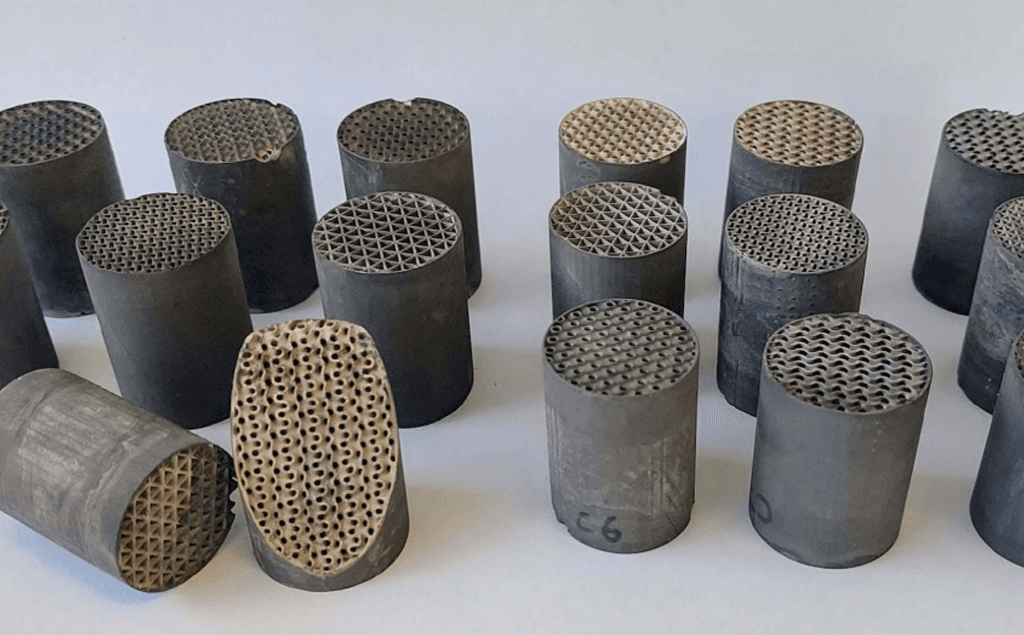
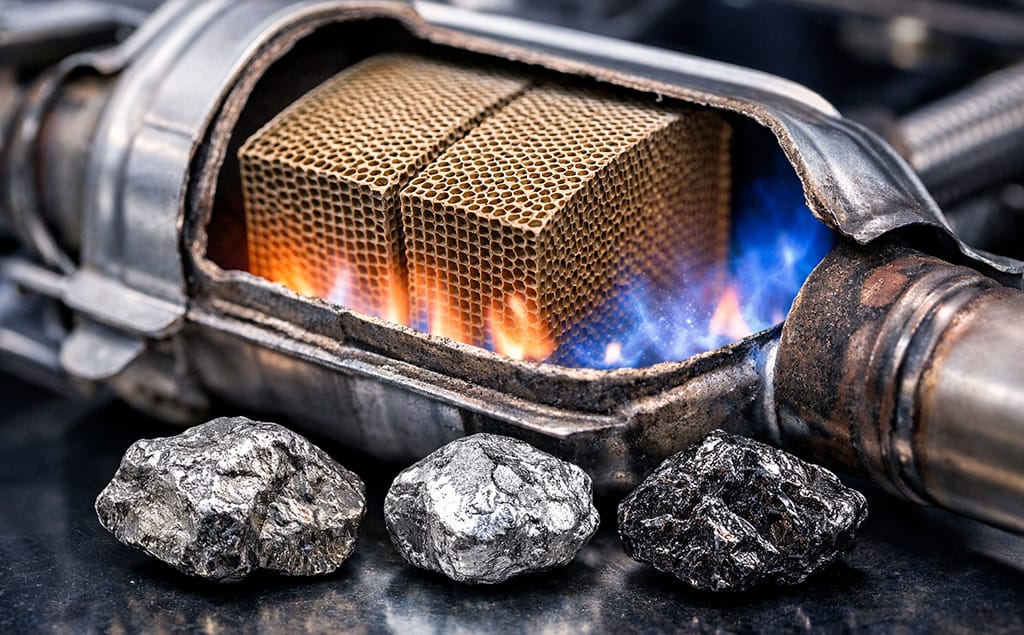
La qualité de fabrication d'un convertisseur catalytique à trois voies Elle détermine sa durée de vie. À l'intérieur de l'enveloppe en acier inoxydable se trouve un monolithe en céramique alvéolaire. Cette structure offre la surface massive nécessaire au contact rapide avec les gaz.
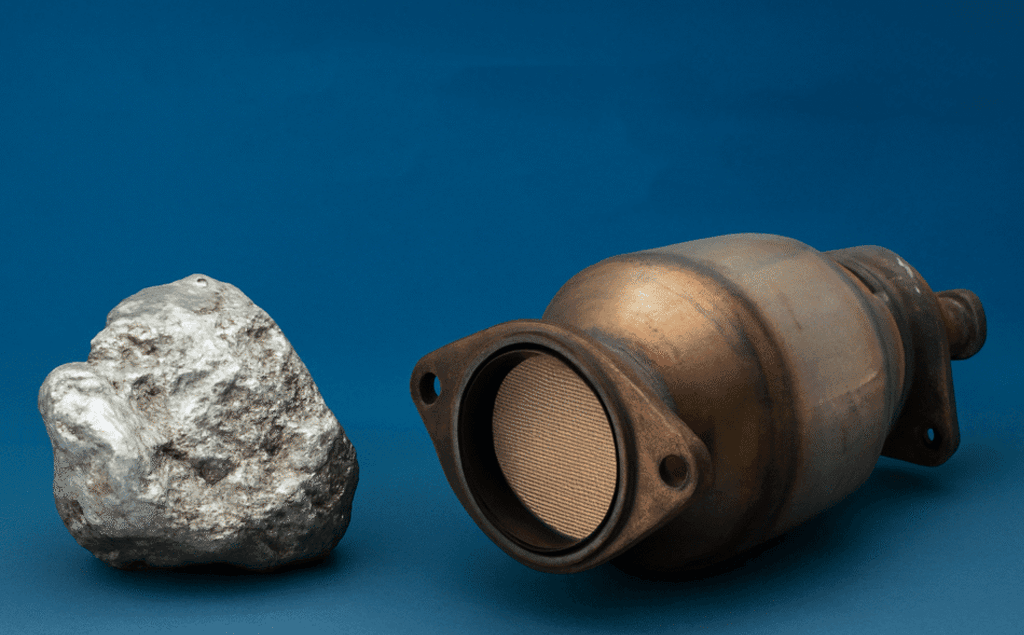
Les fabricants appliquent une couche de protection spéciale sur cette structure alvéolaire. Cette couche contient les métaux du groupe platine (MGP) qui sont à l'origine des réactions chimiques.
| Composant | Tâche chimique | Importance pour l'industrie |
|---|---|---|
| Rhodium (Rh) | Réduction de $NO_x$ | Essentiel pour le respect des normes anti-pollution |
| Palladium (Pd) | Oxydation CO/HC | Haute résistance à la chaleur pour une conduite à haut régime |
| Platine (Pt) | Oxydation à basse température | Essentiel pour l'efficacité du démarrage à froid |
Les acheteurs B2B privilégient la teneur en ces métaux. Une teneur plus élevée en PGM garantit généralement une durée de vie plus longue et une meilleure résistance à la contamination par des carburants de mauvaise qualité.
Innovation en matière de filtration : le filtre à trois voies (TWF)
Les moteurs modernes à injection directe d'essence (GDI) sont confrontés à un nouveau problème : la suie. Si un pot catalytique trois voies standard traite les gaz, il laisse passer les fines particules. Ce défaut a conduit au développement du Filtre à trois voies (TWF).
Le TWF utilise une conception à flux mural. Contrairement aux canaux ouverts d'un TWC standard, le TWF force les gaz d'échappement à travers des parois en céramique poreuse. Cette barrière physique retient 95 % des particules solides. Grâce au revêtement catalytique identique à celui d'un TWC, le dispositif purifie les gaz et élimine la suie en une seule étape. Pour les exportateurs ciblant les marchés européens et nord-américains, la technologie TWF est désormais un élément essentiel de leur inventaire.
Avis d'expert : Améliorer la durabilité et la conformité
Depuis 1974, la technologie catalytique a évolué, passant de simples filtres à des instruments de précision. Des entreprises de premier plan comme Johnson Matthey privilégient désormais la rapidité d'allumage. Les convertisseurs catalytiques modernes doivent se mettre en marche quelques secondes après l'allumage afin d'empêcher les polluants bruts de s'échapper.
Aujourd'hui, un véhicule sur trois dans le monde utilise ces catalyseurs de pointe. À cette échelle, on évite le rejet d'environ 40 tonnes de polluants par minute. Pour le secteur B2B, l'accent est mis sur des performances équivalentes à celles des équipements d'origine. Les acheteurs professionnels recherchent des convertisseurs conformes aux spécifications d'origine, tant en termes de densité cellulaire (CPSI) que de distribution des métaux du groupe du platine (PGM).
Conclusion
Le convertisseur catalytique à trois voies Le catalyseur reste le dernier rempart de la combustion moderne. Sa capacité à neutraliser les NOₓ, le CO et les HC grâce à une unité unique et compacte constitue une prouesse technique. Face au durcissement des normes d'émissions mondiales, telles que la norme Euro 6, la demande en catalyseurs haute performance et en technologie TWF ne fera que croître. Les exportateurs professionnels doivent maîtriser ces fondamentaux techniques afin de garantir la fiabilité exigée par les flottes et les réseaux de réparation internationaux.