Introduction
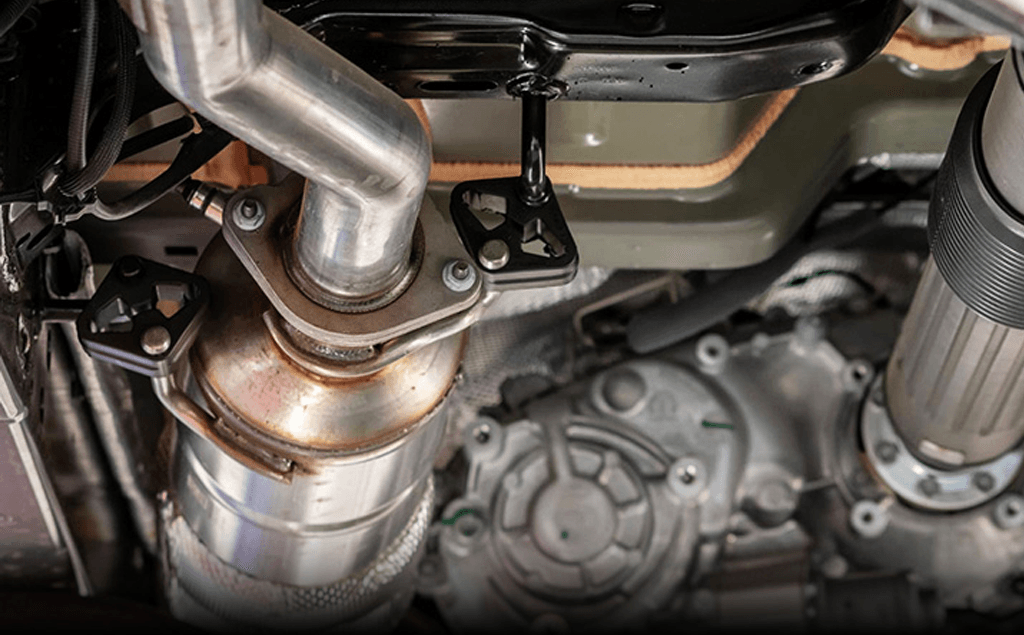
The automotive and industrial sectors demand high-efficiency emission control solutions. A three way catalytic converter serves as the primary defense against harmful pollutants. Standard factory units often fail to meet the needs of high-performance racing or specialized industrial machinery. Custom three way catalytic converter manufacturing services fill this gap. These specialists design, engineer, and fabricate bespoke units. They provide custom-fit alternatives when Original Equipment Manufacturer (OEM) parts disappear from the market. They also solve problems when factory parts cost too much or restrict performance. This article explores the technical depth, material science, and engineering precision behind custom manufacturing for these critical components.Our custom three way catalytic converter provides a reliable solution for global emission standards.
The Science of a Custom Three Way Catalytic Converter
A three way catalytic converter performs three simultaneous tasks. It reduces nitrogen oxides to nitrogen and oxygen. It oxidizes carbon monoxide to carbon dioxide. It also oxidizes unburnt hydrocarbons to water and carbon dioxide. This process requires a precise chemical environment.
Custom three catalytic converter manufacturers focus on the “light-off” temperature. This is the temperature where the catalyst begins to function effectively. Most units require temperatures above 300°C. Custom designs optimize the heat retention of the casing. They ensure the internal core reaches operating temperature quickly. Engineers select specific precious metals to facilitate these reactions. Platinum, palladium, and rhodium act as the primary agents. Platinum and palladium handle the oxidation of $CO$ and $HC$. Rhodium manages the reduction of $NOx$.
Substrate Engineering and Tailoring
The substrate forms the internal skeleton of the three way catalytic converter. Custom services choose between ceramic honeycomb filters and metallic substrates. Each material offers distinct advantages for different applications.
Ceramic Substrates
Most OEM units use cordierite ceramic. This material resists high temperatures. It also features a low thermal expansion coefficient. Manufacturers extrude these into a honeycomb structure. The walls are thin to maximize surface area. However, ceramic cores are brittle. They may crack under high vibration or physical impact.
Metallic Substrates
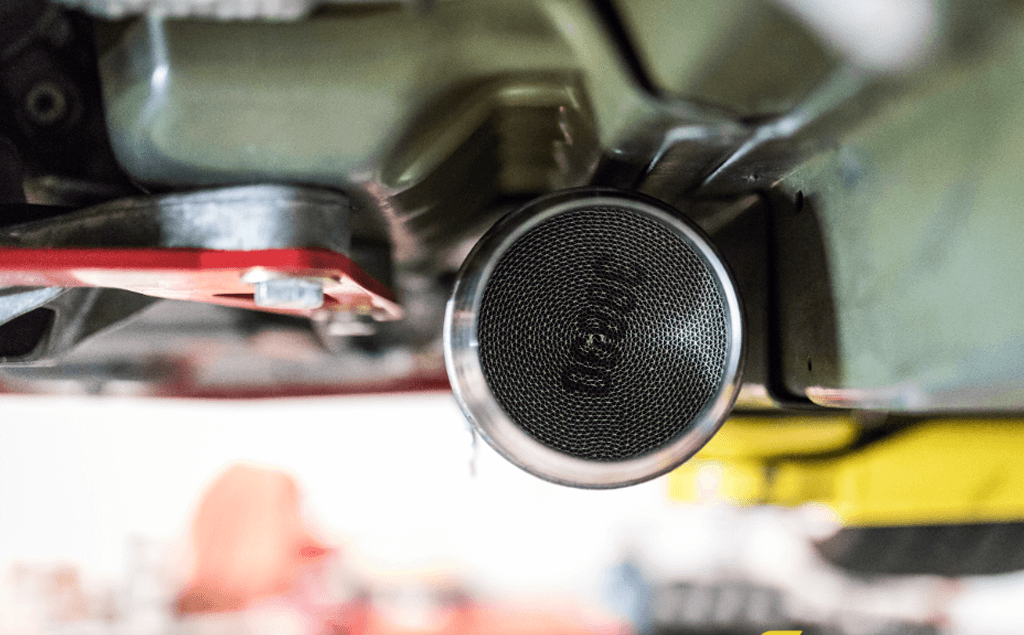
A metallic custom three way catalytic converter offers superior durability in high-vibration environments.Motorsports and heavy machinery often require metallic substrates. Fabricators use high-temperature stainless steel foils. They wind these foils into a spiral or S-pattern. Metal cores offer superior durability. They also provide better thermal conductivity. This allows the three way catalytic converter to reach light-off temperatures faster. Metal cores have thinner walls than ceramic. This increases the total open area and reduces backpressure.
Cell Density Optimization (CPSI)
Engineers measure the internal structure in Cells Per Square Inch (CPSI). Custom manufacturing allows for precise CPSI selection.
- 600+ CPSI: These dense cores offer maximum surface area. They ensure strict emissions compliance for road-legal vehicles.
- 300-400 CPSI: This represents a balance for modern performance cars. It maintains clean air standards while improving exhaust flow.
- 100-200 CPSI: Racing teams demand these high-flow cores. They minimize backpressure and maximize horsepower. They provide enough surface area to pass basic racing regulations without choking the engine.
We adjust cell density in each custom three way catalytic converter to balance flow and filtration.
Custom Three Way Catalytic Converter Substrate Comparison
| Feature | Ceramic (Cordierite) | Metallic (Stainless Foil) |
|---|---|---|
| Durability | Moderate (Brittle) | High (Vibration Resistant) |
| Heat Conductivity | Low | High |
| Wall Thickness | Thicker (approx. 0.1mm) | Ultra-thin (approx. 0.04mm) |
| Backpressure | Higher | Lower |
| Common Use | OEM Road Vehicles | Racing & Industrial |
| Recyclability | Complex | Simple |
Advanced PGM Loading and Washcoat Technology
The “washcoat” carries the precious metals. It is a mixture of aluminum oxide, silicon dioxide, and titanium dioxide. Manufacturers apply this slurry to the substrate. The washcoat creates a rough, irregular surface. This dramatically increases the surface area for chemical reactions.
Custom services adjust the PGM (Platinum Group Metals) loading. High-performance engines produce more pollutants per second. Therefore, they require a higher concentration of palladium or rhodium. A custom three way catalytic converter might feature a “heavy loading” strategy. This ensures the unit remains effective even under extreme heat. Engineers also add “promoters” like cerium or zirconium. These elements store oxygen. They help the catalyst function during brief periods of rich or lean fuel mixtures.
Custom Three Way Catalytic Converter Casing and Materials
The external shell must withstand road salt, heat cycles, and high pressure. Custom fabricators avoid low-grade steels. They prioritize high-quality alloys.
304L Stainless Steel
This alloy contains low carbon levels. It resists intergranular corrosion after welding. Fabricators use 304L for end cones and mounting flanges. It maintains its structural integrity even in the wet environments of an exhaust system.
409 Grade Stainless Steel
Many manufacturers prefer 409 for the main body. It handles thermal expansion better than 304. It prevents the shell from warping or cracking during rapid temperature changes.
Welding Techniques
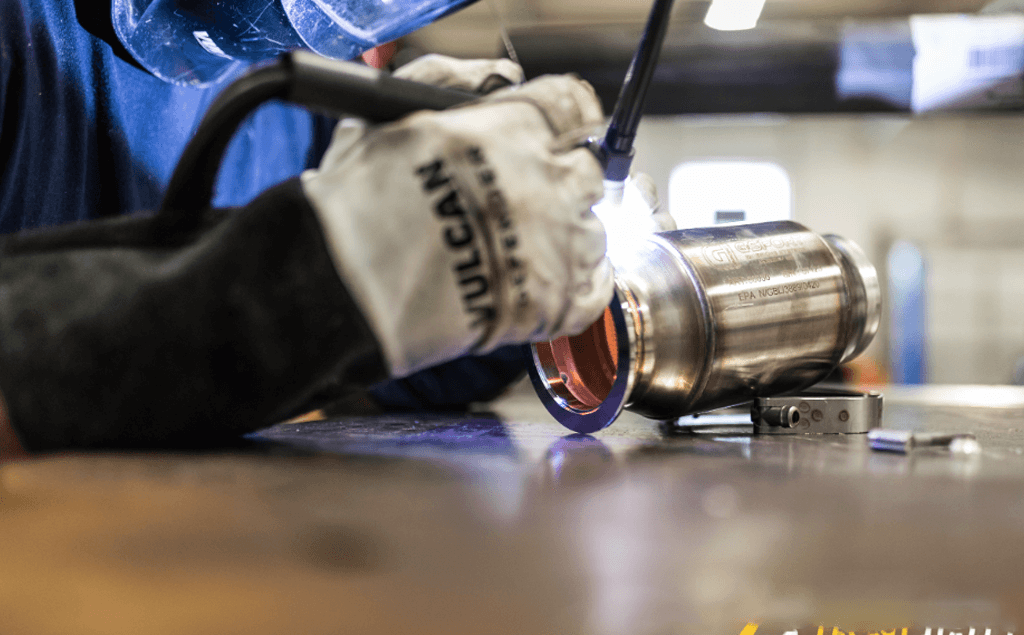
Precision welding prevents leaks. Custom shops use TIG (Tungsten Inert Gas) welding for the highest quality. TIG welding offers superior control. It creates clean, strong beads that resist high-pressure exhaust pulses. Fabricators also use MIG (Metal Inert Gas) welding for larger industrial components where speed and deep penetration are necessary.
Industrial and Specialty Scalability
Custom services do not limit themselves to cars. They scale their designs for massive stationary generators. These units must run for thousands of hours. They require heavy-duty three way catalytic converter designs with easy-access service ports.
Agricultural equipment also benefits from custom solutions. Tractors operate in dusty environments. Standard filters clog quickly. Custom manufacturers design wide-cell substrates to prevent soot buildup. They also build specialized housings for vintage vehicle restoration. These units fit into the small spaces of classic cars while meeting modern environmental rules.Agricultural custom three way catalytic converter units prevent soot buildup in heavy machinery.
CPSI Selection for Specific Applications
| Application | Recommended CPSI | Primary Benefit |
|---|---|---|
| Daily Driver (Euro 6) | 600 CPSI | Maximum filtration |
| Track Day Car | 200 CPSI | Reduced backpressure |
| Pro Racing / Turbo | 100 CPSI | Max exhaust velocity |
| Industrial Generator | 300 CPSI | Long-term durability |
| Classic Car Upgrade | 400 CPSI | Balanced fit and flow |
The Engineering Workflow for Custom Units
The process begins with a flow analysis. Engineers calculate the exhaust volume of the engine. A 5.0L V8 engine requires a much larger three way catalytic converter than a 1.6L inline-four.
- Data Collection: Technicians measure the physical space available under the chassis.
- CFD Modeling: Designers use Computational Fluid Dynamics. This software simulates how gas flows through the core. It identifies “dead zones” where no reaction occurs.
- Core Selection: The team picks the substrate material and CPSI based on the goal (power vs. emissions).
- Canning: Technicians wrap the substrate in an intumescent mat. This mat expands when heated. It holds the core tightly inside the stainless steel shell.
- Assembly: Welders attach the end cones and sensors bungs. They ensure the O2 sensor sits at the correct depth.
Leading Specialists in Custom Fabrication
Regional experts provide localized solutions for complex emissions problems. They bridge the gap between mass production and artisanal engineering.
The Dublin Expertise: Auto Exhausts
Auto Exhausts in Crumlin serves as a prime example of custom adaptation. They do not just sell parts. They modify universal units to fit unique vehicle architectures. Their service includes integrated pre-NCT (National Car Test) checks. This ensures the three way catalytic converter actually works before the owner goes to the testing center. They specialize in welding adapters for rare classic models.
Performance Masters: IceTronix / ExhaustWorx
Rathcoole is home to IceTronix. They focus on the performance sector. They build complete exhaust systems from scratch. Their technicians use TIG welding exclusively for high-flow catalytic setups. They prioritize 304-grade stainless steel piping. This prevents rust and ensures the system lasts the lifetime of the vehicle.
Industrial Strength: Souhan’s Shop
Souhan’s in Co. Meath handles the heavy-duty side of the industry. They operate proprietary machinery to fabricate exact components. Their capability extends to 4x4s and commercial fleets. They provide emissions solutions for agricultural vehicles and large-scale industrial generators. Their workshop handles the entire process from raw sheet metal to a finished three way catalytic converter.
Why Custom Units Outperform OEM Parts
OEM parts focus on cost-saving for mass production. They often use ceramic cores with restrictive cell densities. Choosing our custom three way catalytic converter offers better performance and weight reduction.
- Weight Reduction: Metal cores are lighter than ceramic equivalents.
- Heat Management: Custom shells can include integrated heat shields. This protects sensitive engine components from radiant heat.
- Longevity: Custom units use thicker stainless steel. They resist the “blowouts” common in cheap aftermarket parts.
- Sound Tuning: The internal volume of the converter affects the exhaust note. Custom fabricators can tune the shell to provide a deeper, more refined sound.
Conclusion
Custom catalytic converter manufacturing services represent the pinnacle of emission control technology. They combine chemical science with advanced metallurgy. A high-quality three way catalytic converter does more than just clean the air. It optimizes engine efficiency and ensures long-term reliability. Whether for a vintage Porsche or a massive industrial generator, these services provide the precision that mass-produced parts lack. By choosing a custom-engineered solution, operators ensure their machinery meets the strictest environmental standards without sacrificing performance.Investing in a custom three way catalytic converter ensures long-term compliance for any fleet.